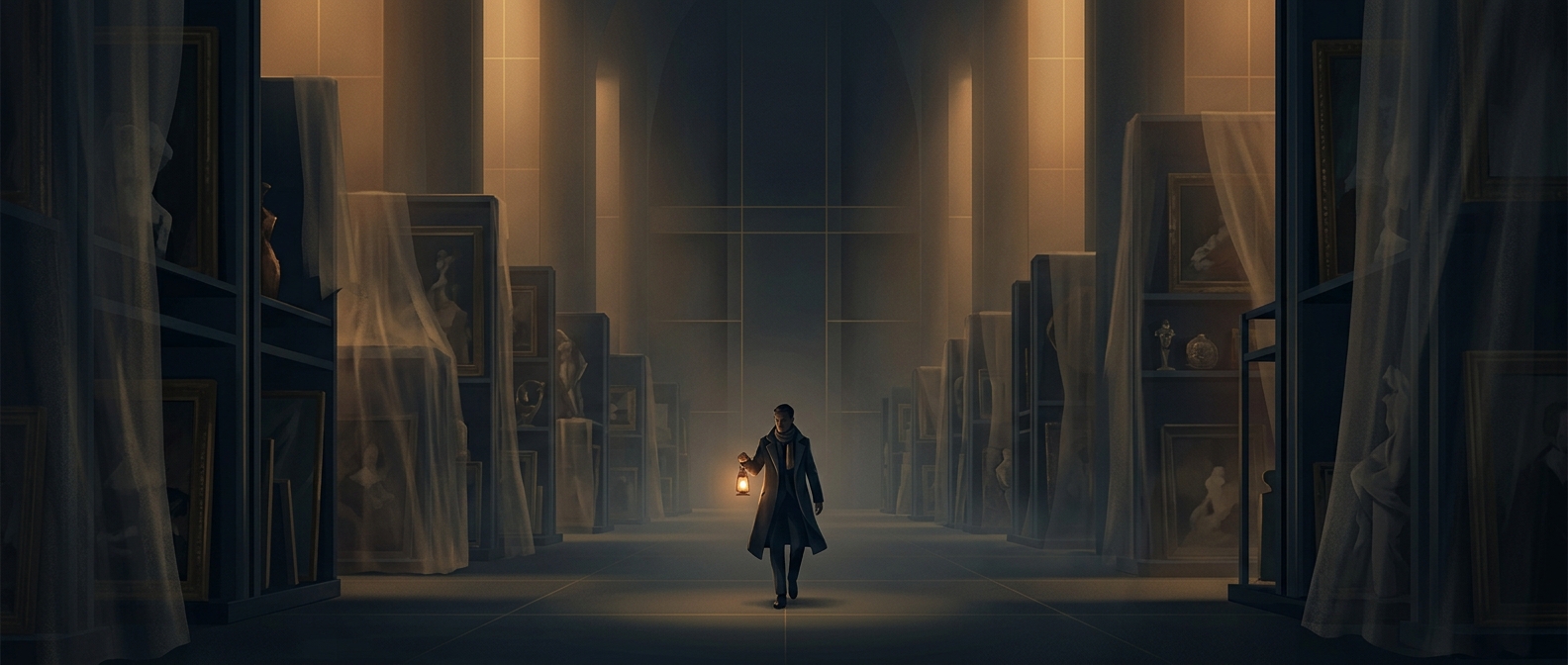
Why a collection outgrows its galleries
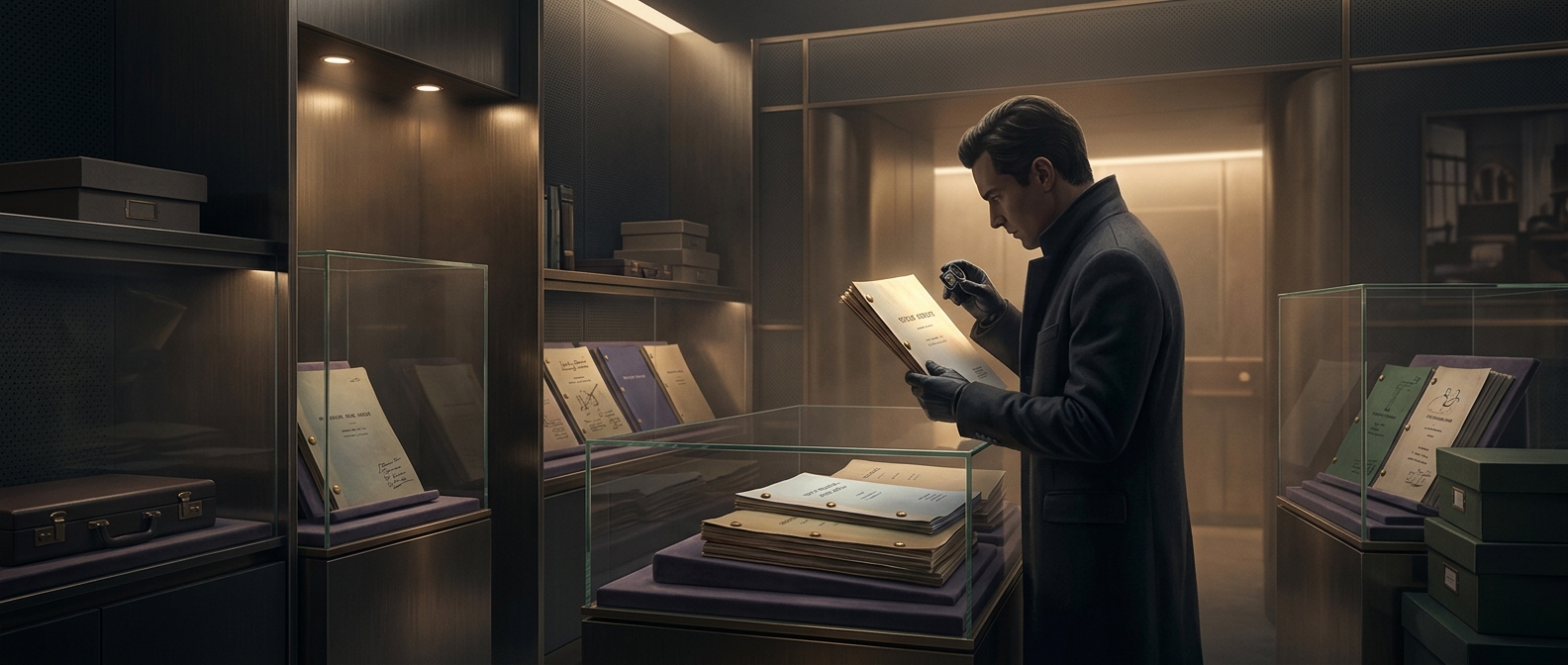
Museums often acquire, inherit, or receive far more objects than their galleries can hold. A painting or artifact may also need to remain available for study, conservation, or future exhibitions, even when it is not part of the current display. Storage is therefore not simply a waiting room for works that failed to make the cut; it is part of how a museum cares for a collection over time.
Preservation has ongoing costs
A storage room must do more than keep objects behind a locked door. Staff monitor temperature and humidity—the amount of moisture in the air—because fluctuations can make materials expand, contract, crack, or grow mold. Light-sensitive works may need darkness between display periods. Shelving, padded supports, secure access, inspections, and conservation work add further costs, while climate-control systems consume energy every day.
These safeguards can also shape how objects are stored. High-density shelving saves space, but objects still need safe supports and enough room for staff to retrieve them without damage. A cheaper, crowded arrangement can create more handling risks and make future research or conservation harder.
The budget tradeoff behind the empty walls
Museums balance spending on storage and care against spending on exhibitions, education, and public access. Putting more objects on view is not always the cheaper choice: galleries also require space, lighting, security, and staff, and some works cannot safely remain under display conditions for long. Rotating objects can let visitors see more of a collection while giving vulnerable pieces time out of the light, but rotation itself requires careful handling and planning.
The result is a practical constraint, not just a curatorial preference: a museum may preserve an object for decades while displaying it only briefly, because protecting the thing is a continuous expense and showing it is a temporary use of it.