Two systems of rulership
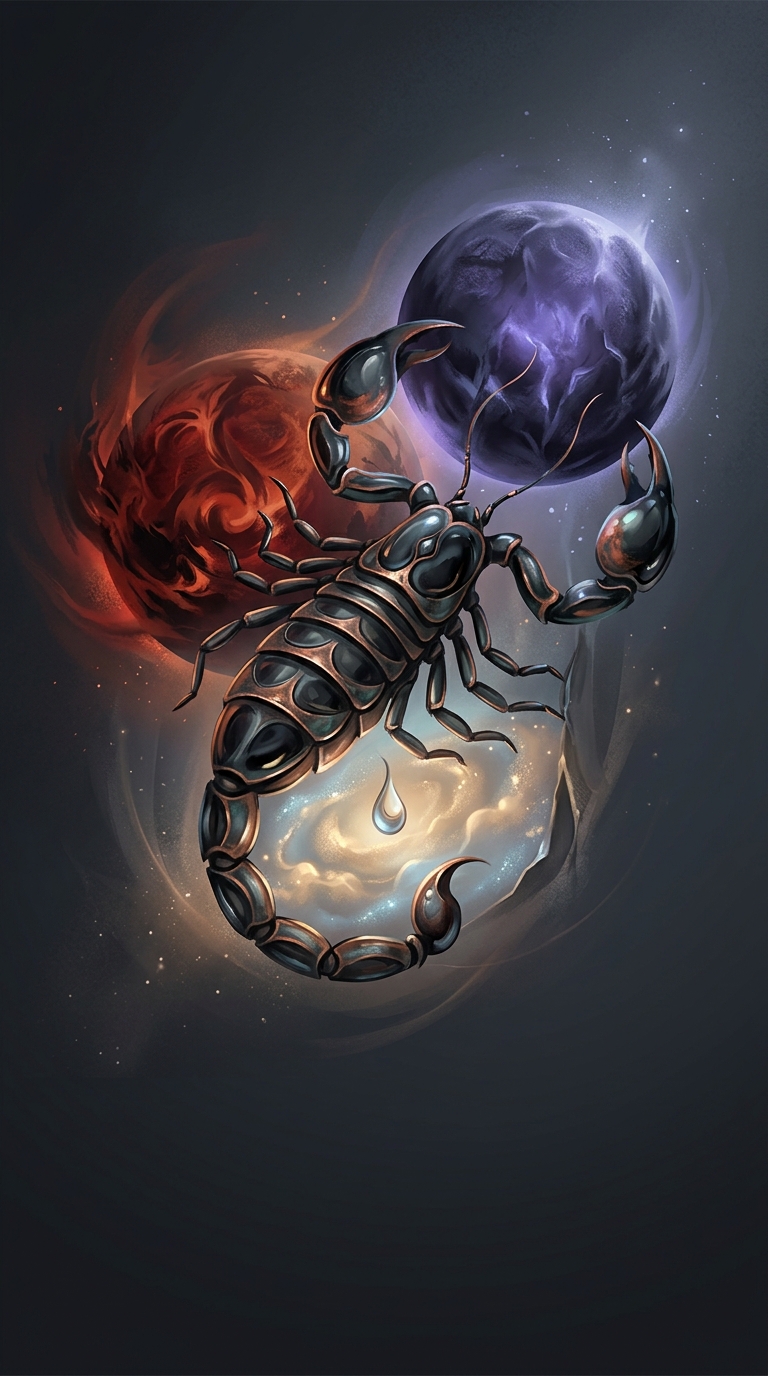
In astrology, a planet’s “rulership” is a symbolic assignment: each zodiac sign is associated with a planet whose traditional themes are used to interpret that sign. Scorpio has Mars as its traditional ruler. In modern astrology, Pluto is often added as a co-ruler, creating a pairing of two planets with sharply different histories and images.
The distinction matters. Mars has been linked with Scorpio since long before Pluto was known to astronomers. Pluto entered the astrological picture after its discovery in 1930, and modern astrologers connected it with Scorpio’s associations with intensity, secrecy, crisis, and transformation. Traditional astrologers may still use Mars alone; the two approaches coexist rather than replacing one another completely.
How the pairing is interpreted
Mars gives Scorpio an image of action under pressure: desire, confrontation, and the will to persist. Pluto adds a different symbolic layer—buried forces, profound change, and what must be faced or relinquished. In a reading, an astrologer might use Mars to describe how someone pursues or defends something, and Pluto to explore the deeper stakes or transformations attached to it.
This is an interpretive vocabulary, not a claim that the planets cause personality or events. The “intensity” of the pairing comes from combining two potent symbols, not from a measured astronomical effect. Its memorable edge is that Scorpio’s astrological story spans two eras: an ancient association with Mars and a modern one shaped by Pluto’s arrival in the sky’s catalog.