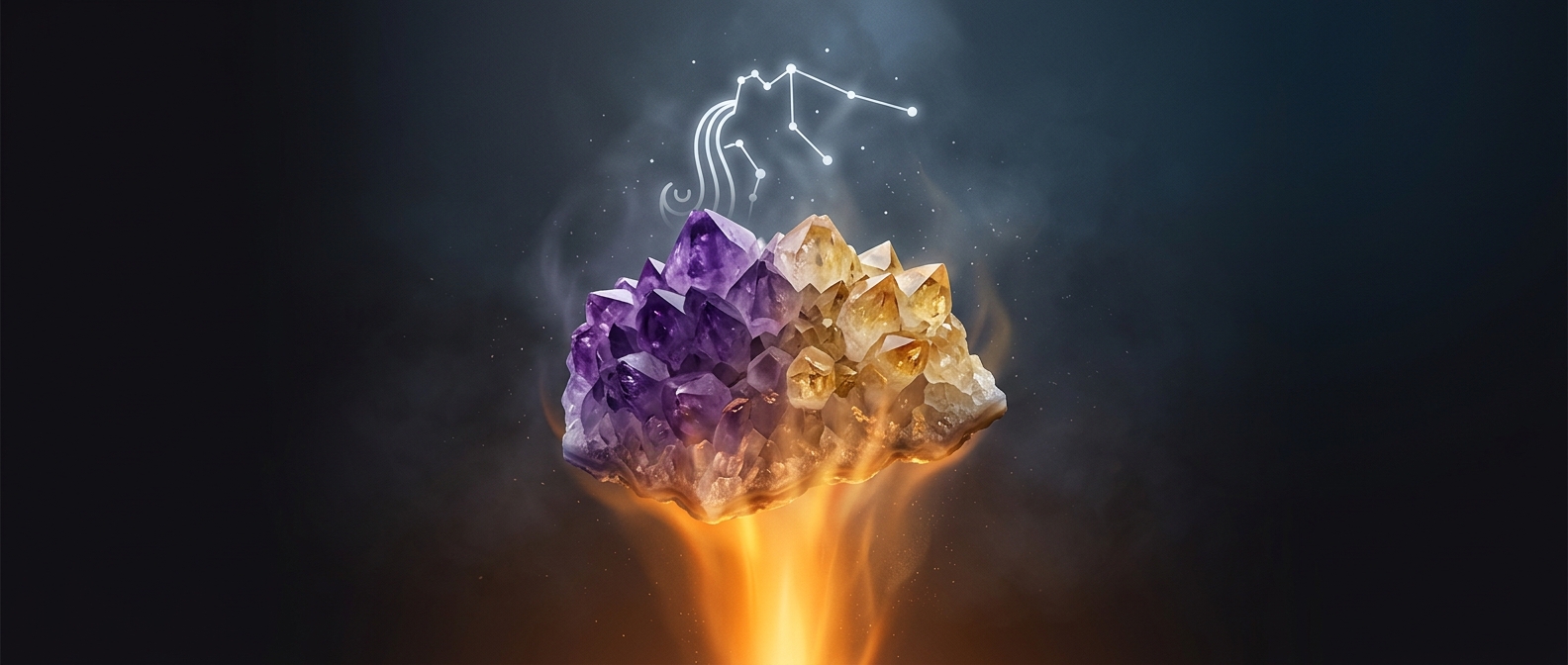
Heat rearranges color centers in quartz
Amethyst and citrine are both varieties of quartz. Amethyst’s purple color comes from trace iron in the crystal combined with natural radiation from surrounding rock. That radiation changes how some iron atoms sit in the crystal structure, creating tiny color-producing regions called color centers.
When amethyst is heated, those centers can change. Depending on the stone’s chemistry and the temperature, the purple may fade or shift toward yellow, orange, or brown. The heat is altering the way the crystal absorbs light—not coating it with a new color.
A color change does not tell the whole origin story
People have long used heat to change amethyst’s appearance, including in commercial gem treatment. The resulting yellow stone can resemble citrine, another quartz variety whose color is also associated with iron. Some citrine is naturally colored; some is amethyst that has been heated by nature or by people.
That resemblance is why color alone may not reveal a gem’s history. Heating can produce attractive golden hues, but the exact result depends on the individual crystal, and not every amethyst will turn yellow. A purple crystal’s transformation is a reminder that a gemstone’s color can record changes in its atomic structure as well as its geological past.