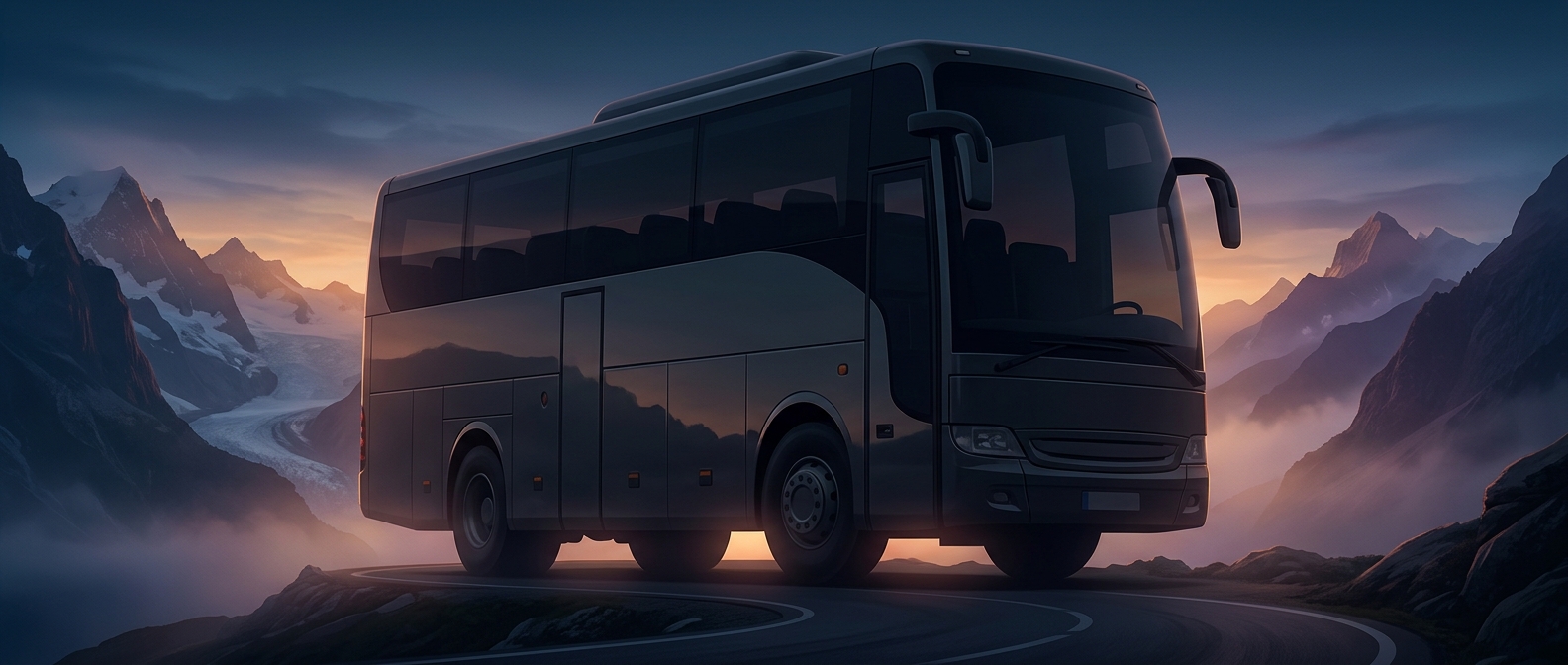
Why One Coach Can Swallow a Whole View
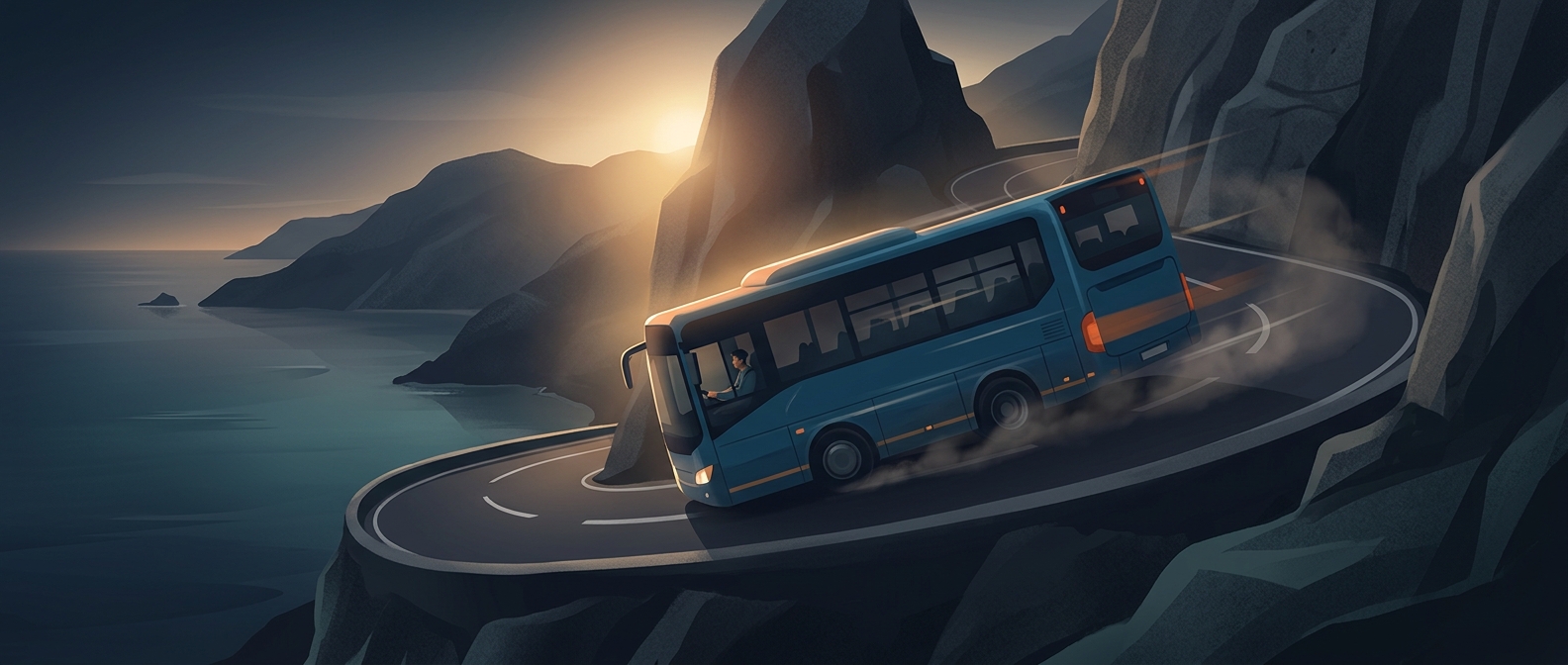
A distant valley may stretch for miles, but a coach parked close to the camera occupies a surprisingly large part of the scene. The reason is perspective: apparent size depends not only on an object’s actual dimensions, but also on how near it is. From a roadside lookout, a bus can sit directly between the photographer and the landscape, covering the very ridgelines or river bends that make the view distinctive.
The Viewpoint Is Also a Loading Zone
Many scenic stops serve two purposes. They offer a place to admire the landscape, but they also give tour groups room to get off, stretch, take pictures, and board again. A large coach needs space to pull over safely, so it may stop in the foreground rather than somewhere that leaves the panorama unobstructed. The driver is solving a practical parking problem, not framing a photograph.
That mismatch is especially noticeable at compact overlooks, where the viewing area and vehicle pullout are close together. A bus can block the sightline for everyone behind it even while the valley remains perfectly visible from a few steps to one side.
A Small Change in Timing or Position
Waiting for the coach to move is often enough; a tour stop is temporary, and the panorama reappears when the vehicle pulls away. If there is room, shifting sideways can also change the alignment between the bus and the distant view. The landscape has not disappeared—the foreground object has simply taken over the camera’s line of sight.