When dancing became a public crisis
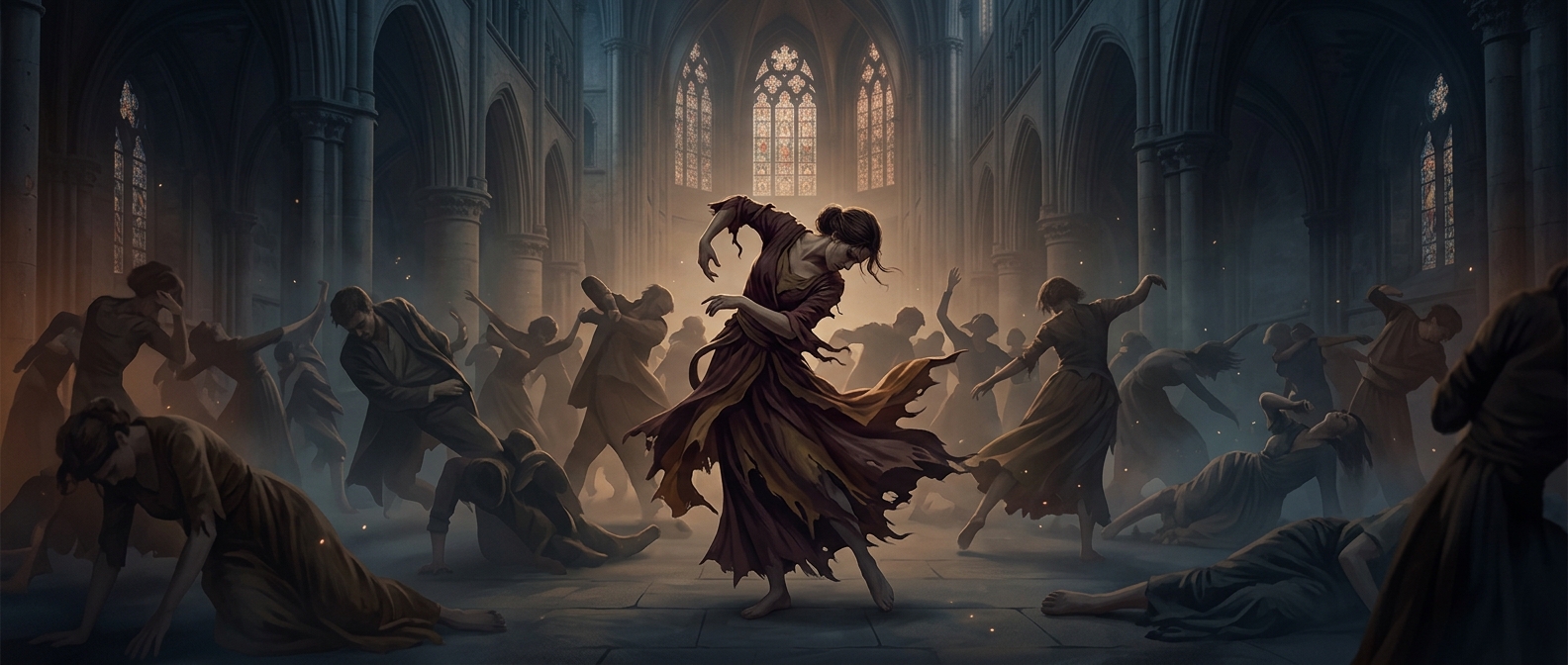
Choreomania is a name given to episodes in which groups of people danced for prolonged periods, sometimes in streets or other public places. The word combines choreia, meaning dance, with mania. It describes the behavior; it does not identify a single, settled medical cause.
The striking feature was not simply that people danced, but that the movement seemed difficult to stop. Accounts tell of exhaustion and bodily distress, yet some participants reportedly understood their experience as spiritually meaningful. In a religious culture, unusual behavior could be interpreted through ideas about saints, divine influence, or spiritual affliction. Those interpretations shaped what the dancing meant to participants and to the people watching.
How an episode could spread
Once dancing began in public, it could draw a crowd and become a shared spectacle. Watching others move, hearing their explanations, and responding within the same religious and social world may have helped sustain the behavior. This does not mean participants were pretending: intense bodily experiences and sincere spiritual interpretations can coexist.
Historians and researchers have proposed different explanations for choreomania, but the surviving accounts are too limited to establish one mechanism for every episode. The term therefore captures a recognizable pattern without resolving what caused it. Its enduring significance lies in that intersection: a body in motion could be at once a source of physical danger, a public disturbance, and—according to those experiencing it—a sign of spiritual force.