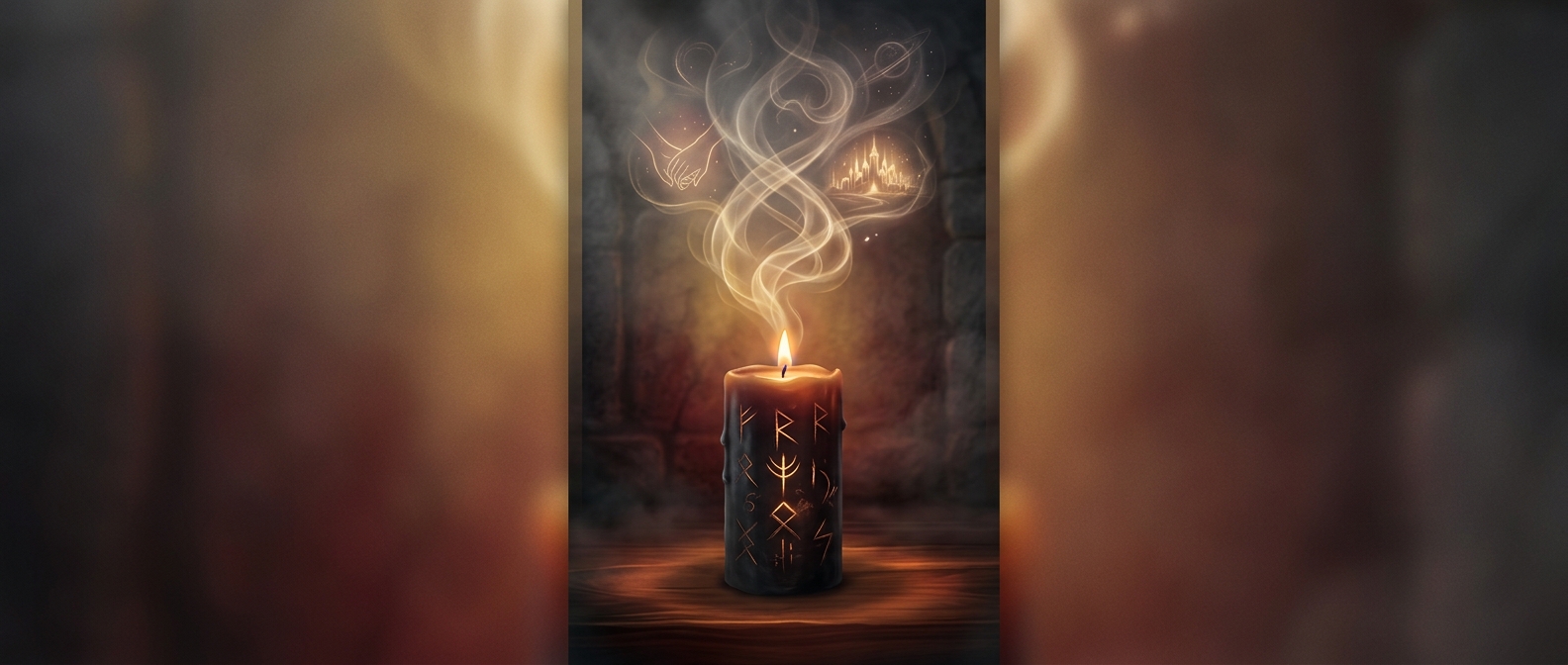
Turning a sentence into a symbol
A sigil is a deliberately made symbol assigned to a particular intention. In one common method, a practitioner writes a desire as a short sentence, removes repeated letters, and reshapes what remains into a design. The result is not meant to be a readable code. Its personal meaning matters more than whether another person can decipher it.
That change in form is part of the practice’s appeal: a broad, emotionally loaded wish becomes a small object the maker can look at and handle. Practitioners may treat the symbol as a way to direct desire toward the subconscious—thoughts and impulses outside immediate awareness—rather than keep arguing with the intention in ordinary language.
Why focus, then let go?
The ritual often has two contrasting stages. First, the maker concentrates on the sigil, sometimes during an intense or absorbing moment. Then they destroy it, commonly by burning it. Within the practice, this is understood as releasing the intention rather than continually worrying over it. The symbol is meant to be charged with attention and then removed from everyday thought.
There is also a straightforward psychological reading, without assuming that the ritual has supernatural effects. Making a symbol can help someone clarify what they want; focusing on it can make the goal more memorable. Destroying it can mark a transition from deliberation to action, much like closing a notebook after making a plan. That does not establish that a sigil can bypass conscious judgment or cause an outside outcome. The ritual’s most tangible effect may be on how the practitioner organizes attention and intention.
The striking detail is that destruction is not a rejection of the wish. In the ritual’s own logic, the brief act of burning the symbol is what allows the maker to stop staring at it and carry the intention away without the paper.