Why a drink minimum made business sense
A drink minimum turns each occupied seat into a more predictable source of revenue. During Prohibition, speakeasies faced the costs of running hidden, illegal drinking rooms; requiring customers to spend a minimum helped ensure that a full room brought in enough to cover overhead. The rule tied the price of admission to what patrons bought once they were inside.
The same calculation in a comedy club
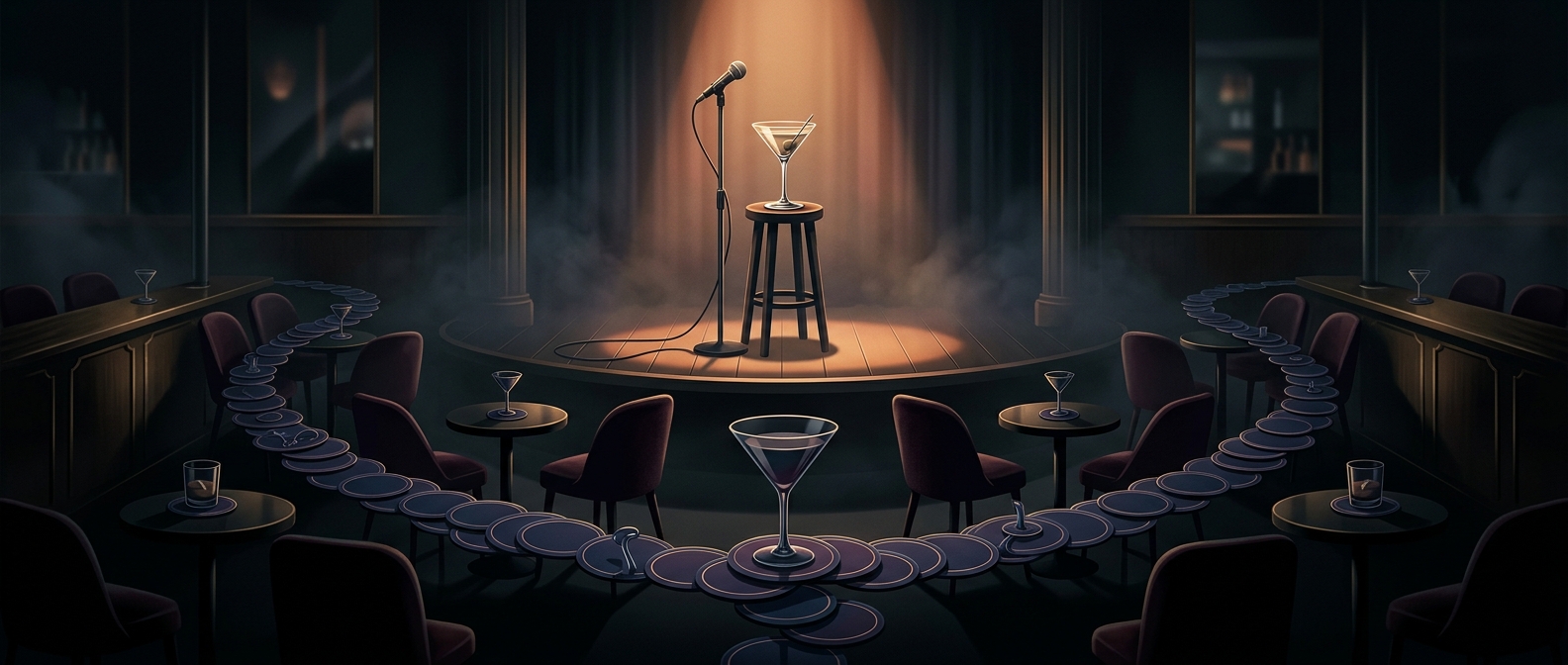
Comedy clubs have carried that spending rule into a different kind of venue. A show needs a room, staff, and performers whether every seat sells out or not. A minimum purchase helps the club earn money beyond ticket sales, especially when guests stay through a set but might otherwise order little or nothing.
That arrangement also shapes the evening: customers are not just buying a seat to watch a show; they are expected to spend at the table. For the club, the minimum makes revenue less dependent on ticket prices alone. For the audience, it can make an inexpensive ticket cost more than it first appears.
A rule that changes the meaning of the ticket
The minimum is a small policy with a clear tradeoff: it helps keep a venue’s finances workable, but shifts part of the cost from the ticket to the customer’s drink bill. So the next time a comedy club lists a two-drink minimum, that number is doing more than encouraging another round—it is helping pay for the room the show needs.