A computer game, a magazine prize
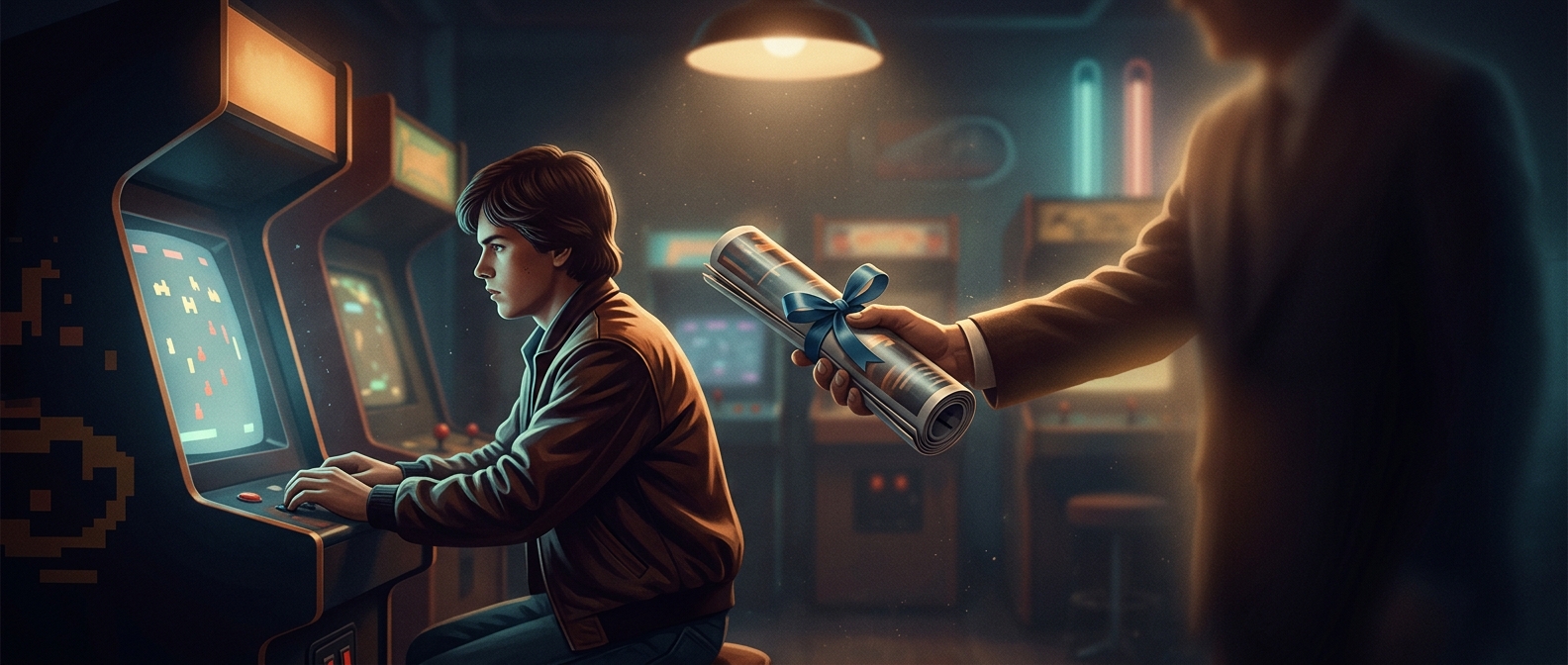
At Stanford in 1972, competitors gathered to play Spacewar!—a game in which two pilots maneuvered spaceships, fired at each other, and had to contend with a star’s gravitational pull. The winner’s prize was a one-year subscription to Rolling Stone, an unexpected reward for a contest built around a game running on university computer equipment.
That prize gives the event a distinctly early-1970s feel, but it also marks how far video games were from the commercial culture that later surrounded them. Spacewar! was not a boxed product played on a home console. It was software people encountered where a suitable computer was available, and play depended on access to that machine and its controls. A magazine subscription was a tangible prize without requiring the tournament to resemble a modern esports event, with cash awards, sponsors, and a professional circuit.
What the contest made possible
The game’s appeal came from turning a powerful, shared computer into a face-to-face contest. Each player had to steer while judging an opponent’s movement and the star’s pull; a shot could miss, and a careless maneuver could send a ship into danger. The computer handled the motion and collisions, making the contest dynamic in a way that a board game could not replicate.
The Stanford competition is often remembered as an early video game tournament, and its modest prize captures the setting: a new kind of digital competition, still close to campus computing and student culture. The winner took home not a console or a check, but a year of reading Rolling Stone.