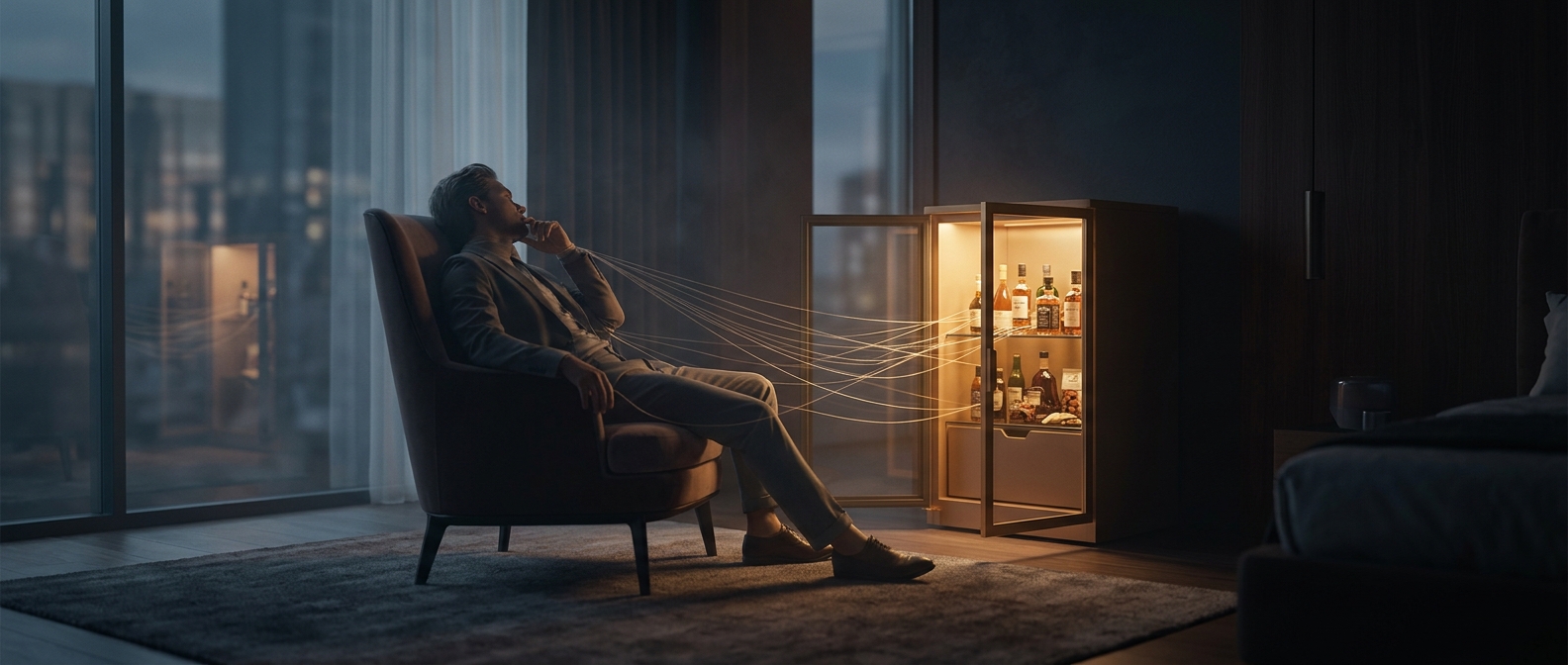
Why a Drink in the Room Costs More
A minibar sells more than a can of soda: it sells the chance to avoid another decision and another trip. After travel, a guest may be tired, dressed for bed, or reluctant to leave a room in an unfamiliar building. The hotel puts a ready-to-drink option within arm’s reach precisely when that small inconvenience can feel unusually large.
The Price of Convenience
That is a form of price differentiation: charging more for an option that saves time and effort, while leaving guests free to seek a cheaper alternative elsewhere. The extra cost is not only about the drink itself; it reflects the value some guests place on immediate access. A guest who cares more about the price can plan ahead or go to a shop. Someone who wants the drink now may accept the markup.
This works because the choice is made in a very specific moment. At home, a person can easily compare prices or walk to the kitchen. In a hotel room, the minibar makes the convenient option visible and immediate, while the cheaper option requires action. Tiredness and unfamiliar surroundings can make that difference matter more.
A Small Convenience With a Tradeoff
For the hotel, the minibar can generate extra sales from guests who would not make a separate trip for a drink. But stocking and checking the items takes work, and the hotel must set prices high enough to make the service worthwhile. Guests, meanwhile, pay for convenience only when they choose to use it.
That is why a minibar can sit untouched in one room and earn a premium in another: its value depends less on the beverage than on how far the guest is willing to go to avoid getting it.