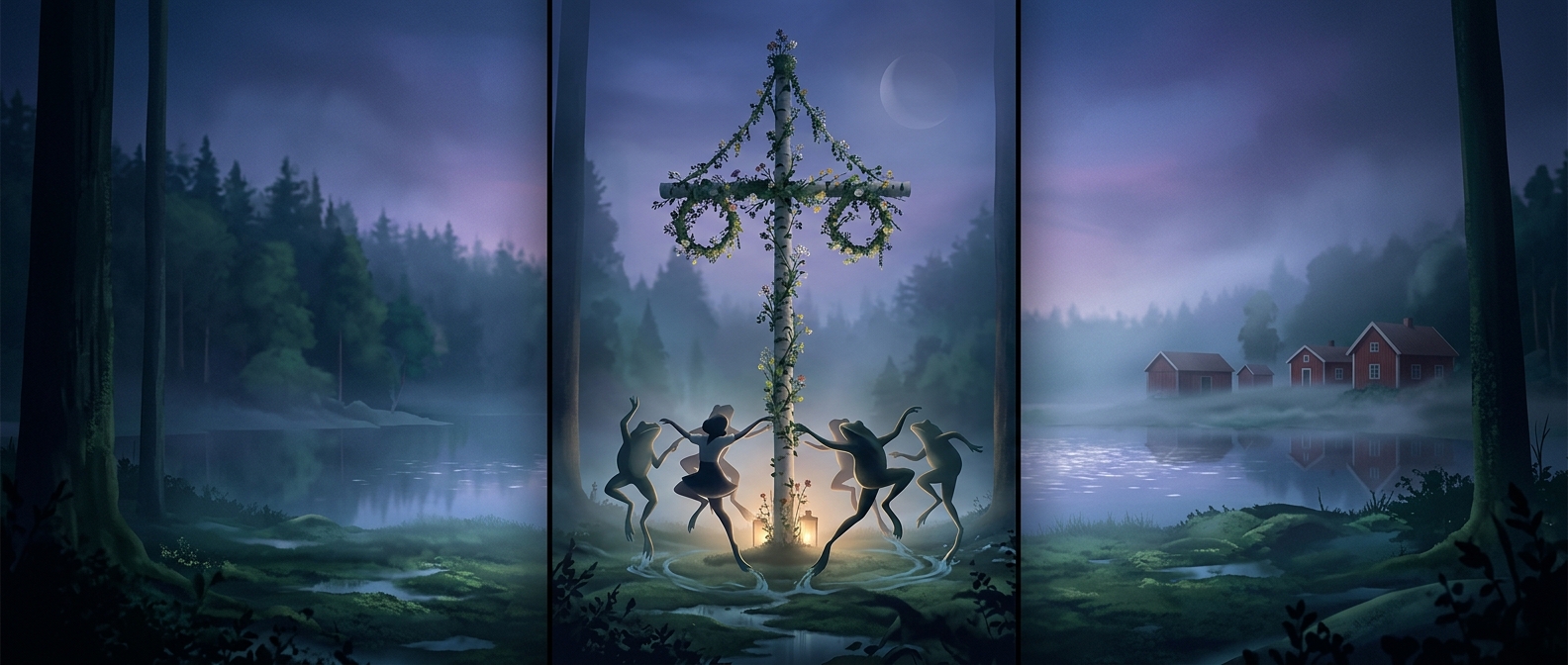
A song turns the dance into a frog act
The frog-like movements come from a particular Midsummer song, “Små grodorna,” or “The Little Frogs.” Its lyrics describe frogs as funny to look at because they have neither ears nor tails. As the song goes on, dancers imitate the animals, hopping around the pole and making gestures to match the words.
That makes the dance less a formal display of folk technique than a bit of shared physical comedy. The motions are simple enough to pick up on the spot, so children and adults can join the same circle without rehearsing. The joke is built into the song: everyone knows what to do when the frogs appear.
A playful interlude in the celebration
The frog dance is one familiar part of Swedish Midsummer festivities, not a rule that every gathering must follow. Its silliness also helps explain why it remains memorable: a celebration with old songs and customs makes room for people to bounce around pretending to be frogs.
So the hopping is not a secret symbol of the season. It is the lyrics made visible—and a way for a circle of strangers, relatives, or neighbors to share the same joke.