How alebrijes became Oaxacan creatures of wood and color
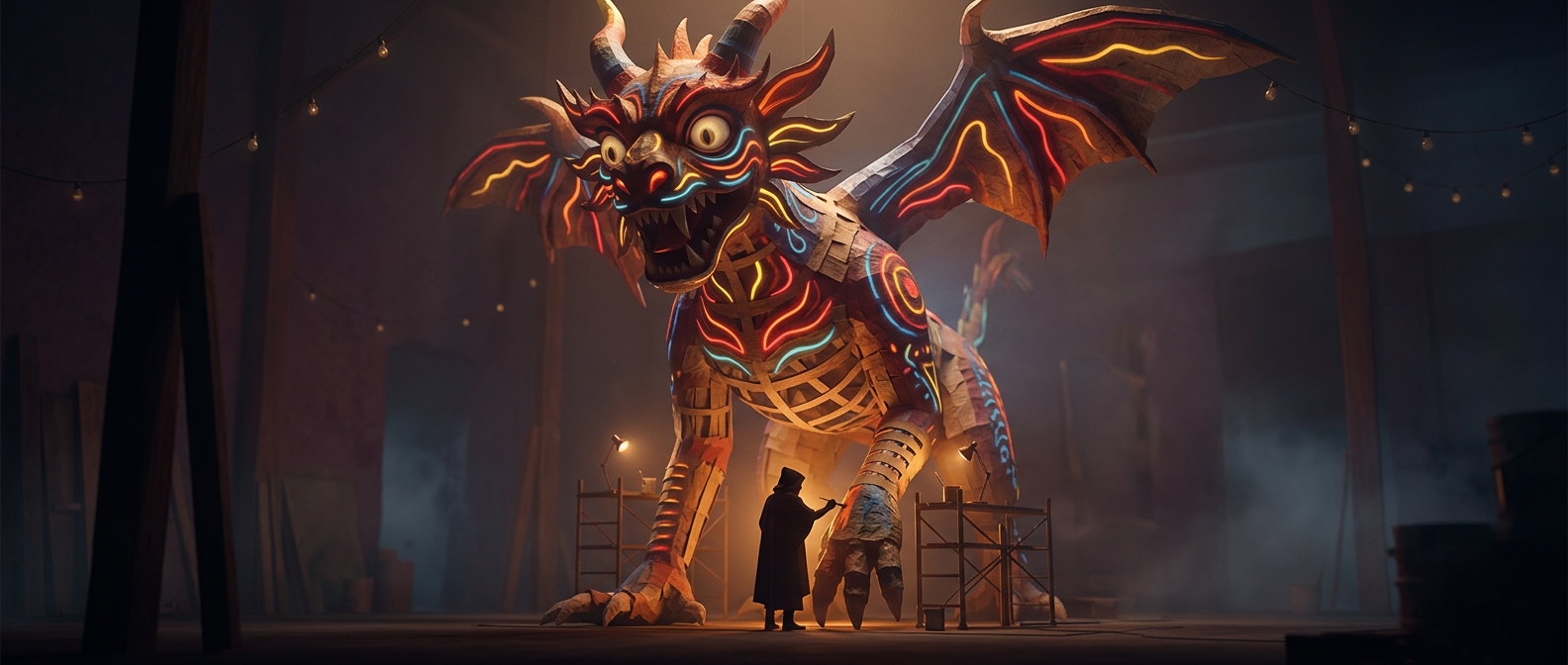
Alebrijes are fantastical figures assembled from features that do not normally belong together: a jaguar’s body might carry wings, horns, or a long, curling tail. Their vivid patterns make the creatures feel less like portraits of real animals than inventions with their own rules.
The name is commonly traced to Mexico City artisan Pedro Linares, who described dreaming of strange creatures while ill and hearing them call themselves “alebrijes.” His figures were made from papier-mâché. In Oaxaca, artisans later developed a distinct version by carving the creatures from copal wood, turning the dreamlike idea into a local craft.
From a block of wood to a creature
A carver begins by finding an animal shape in the wood and cutting away what does not belong. The design may combine several animals, but it still has to work as a physical object: thin legs, horns, or wings can break, so the imagined creature must be adapted to the limits of the material. Once carved and smoothed, it is painted with bright colors and fine patterns that make its different parts stand out.
That sequence—imagining, carving, and painting—means no two figures need to follow a fixed model. The maker decides which features to combine and how far to push them, while the wood itself helps determine the final pose and shape.
A craft that visitors can see taking shape
In Oaxacan communities known for wood carving, including San Martín Tilcajete and San Antonio Arrazola, alebrijes are more than finished souvenirs: they are the visible result of decisions made by hand at every stage. Seeing a carved figure beside its unpainted form reveals the transformation most easily missed in a shop display—the painted details do not create the creature from nothing; they bring a carefully carved, impossible animal into focus.