When adaptation only keeps pace
Evolution has no finish line or plan for making every species “better.” Natural selection spreads inherited traits when they help organisms survive and reproduce in a particular setting. But that setting can include other evolving organisms. If a rival, predator, prey species, or parasite changes, the traits that once worked may no longer be enough.
A familiar example is the contest between a host and a parasite. A host population with stronger defenses may leave more offspring. Parasites that can overcome those defenses then gain an advantage, and their descendants become more common. The host is once again under pressure to respond. Each side’s adaptation changes the conditions facing the other.
Better is relative to the contest
An adaptation can be an improvement in one matchup without making its bearer universally superior. A defense might help against one parasite but carry a cost, such as requiring resources that could otherwise support growth or reproduction. Meanwhile, the opposing species is changing too. Selection therefore favors what works under the current conditions, not an all-purpose upgrade.
This back-and-forth can preserve a species’ relative position without producing a lasting winner. It can also keep selection active even when the participants appear broadly unchanged: traits may be changing beneath the surface as each population counters the other.
Why the race can continue
Because no side controls the pace or direction of the other’s evolution, a temporary advantage can invite a counter-adaptation. The result is not guaranteed progress toward greater complexity or strength; it is a shifting fit between organisms that affect one another’s chances of reproducing.
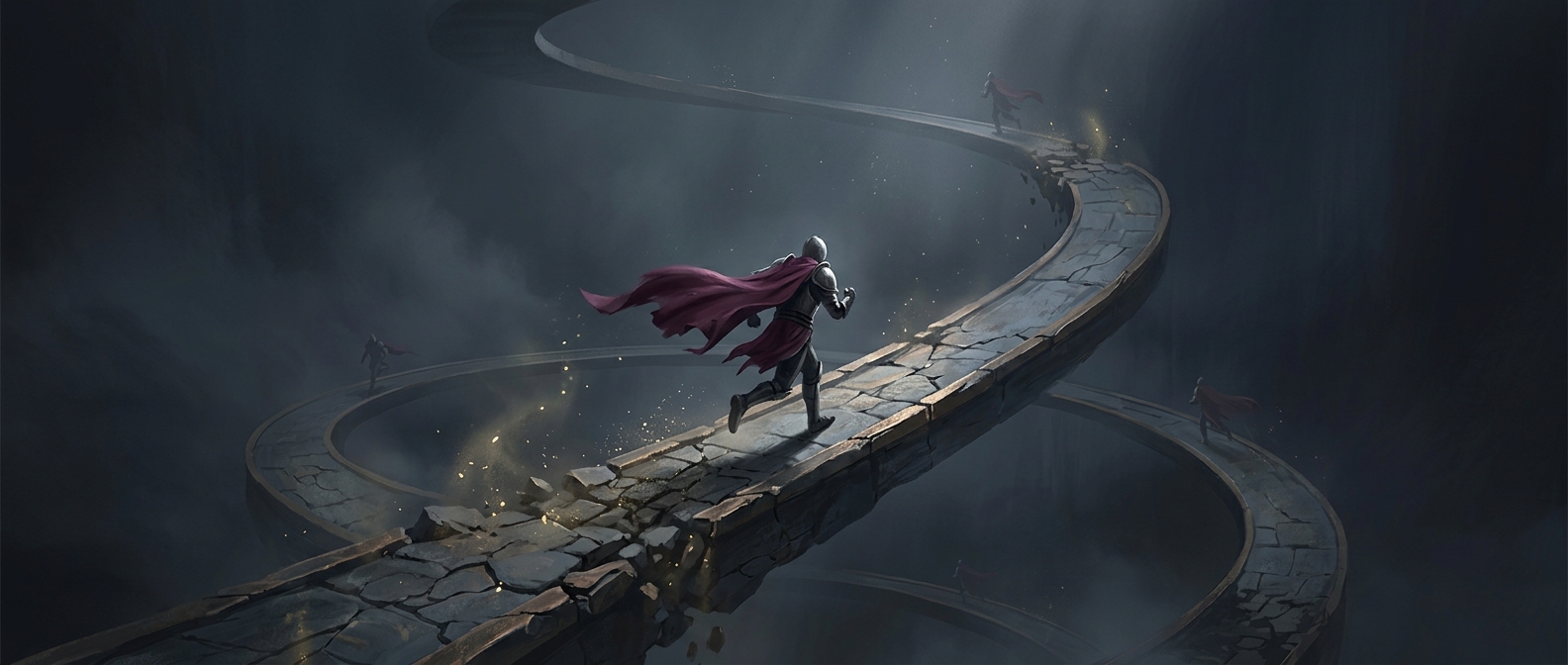
That makes “standing still” a misleading image. A species may look much the same over time while continually adapting just to preserve its place in a changing biological contest.