Why a Small Bump Can Topple a Desk Statue
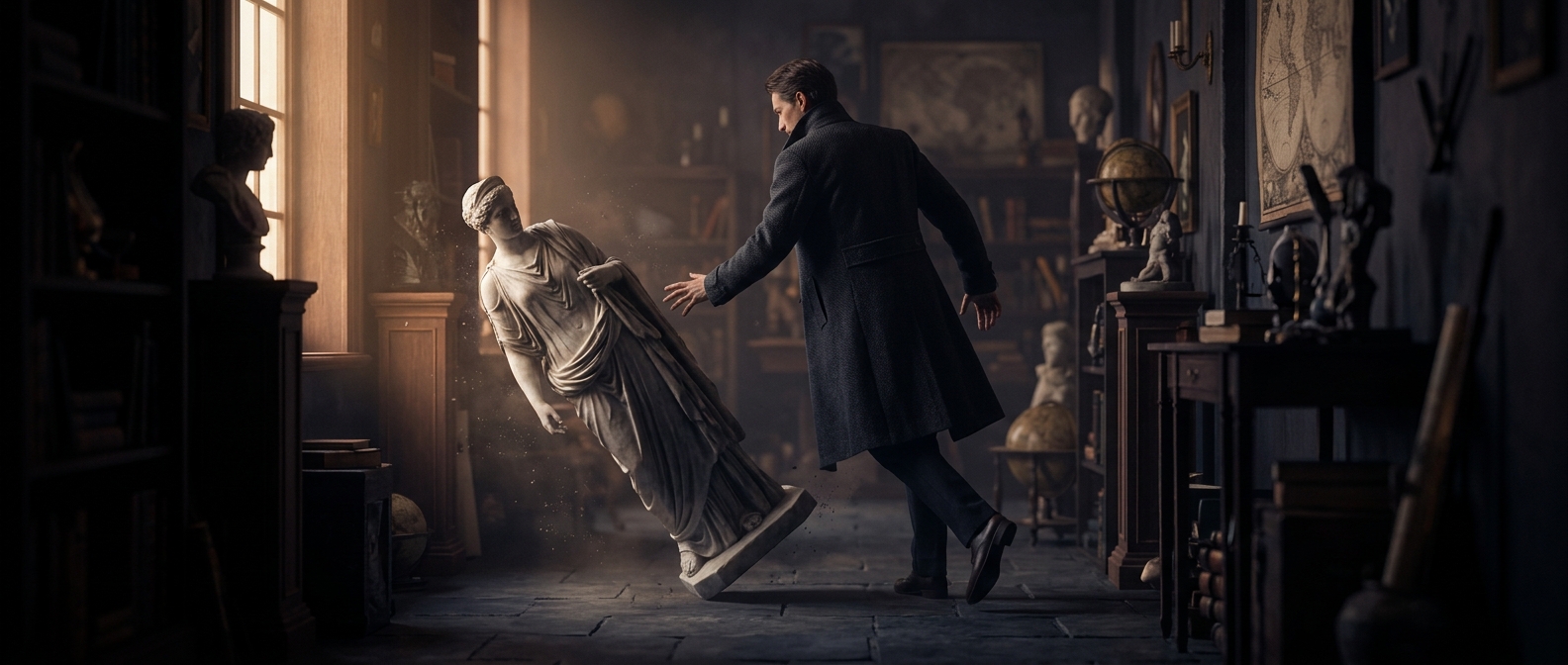
A statue does not need a hard hit to fall. What matters is where the push lands: a sleeve brushing the upper part of a tall ornament creates more leverage than the same brush near its base. That turning effect is called torque. If it rotates the statue far enough that its weight no longer falls over the base, gravity finishes the job.
A narrow footprint leaves less room for the statue to tilt before its center of mass—the point where its weight effectively acts—moves beyond the base. A broad, stable base provides a larger margin. Height, shape, and how securely the piece rests all affect how much accidental contact it can withstand.
Why Desk Clutter Makes the Risk Hard to Notice
On a crowded desk, hands and sleeves take indirect routes around keyboards, papers, cups, and other objects. A statue may sit just outside the hand’s intended path, yet still be within reach of a cuff or the edge of a bag. Because the contact can be light and peripheral, the person may not notice it until the decoration is already tipping.
The simplest protection is not mystical luck but space: keep fragile figures away from routine hand movements, or place them on a stable surface with room around them. A little clearance can prevent a casual reach from turning into a rescue attempt.