How a Dandelion Becomes a Little Traveler
A dandelion seed is attached to a tuft of fine, radiating bristles called a pappus. The tuft acts like a tiny parachute: it slows the seed’s fall and lets moving air carry it farther than the seed could travel on its own. Gusts and swirls can lift and redirect the seed, so its landing place is difficult to predict.
That mobility helps dandelions take advantage of open ground. A seed that reaches a bare patch may find room to grow without competing with taller plants. The familiar puffball is therefore more than a delicate stage of the flower; it is a launch point for the plant’s next chance to settle somewhere new.
Why Astrology Connects It to Sagittarius
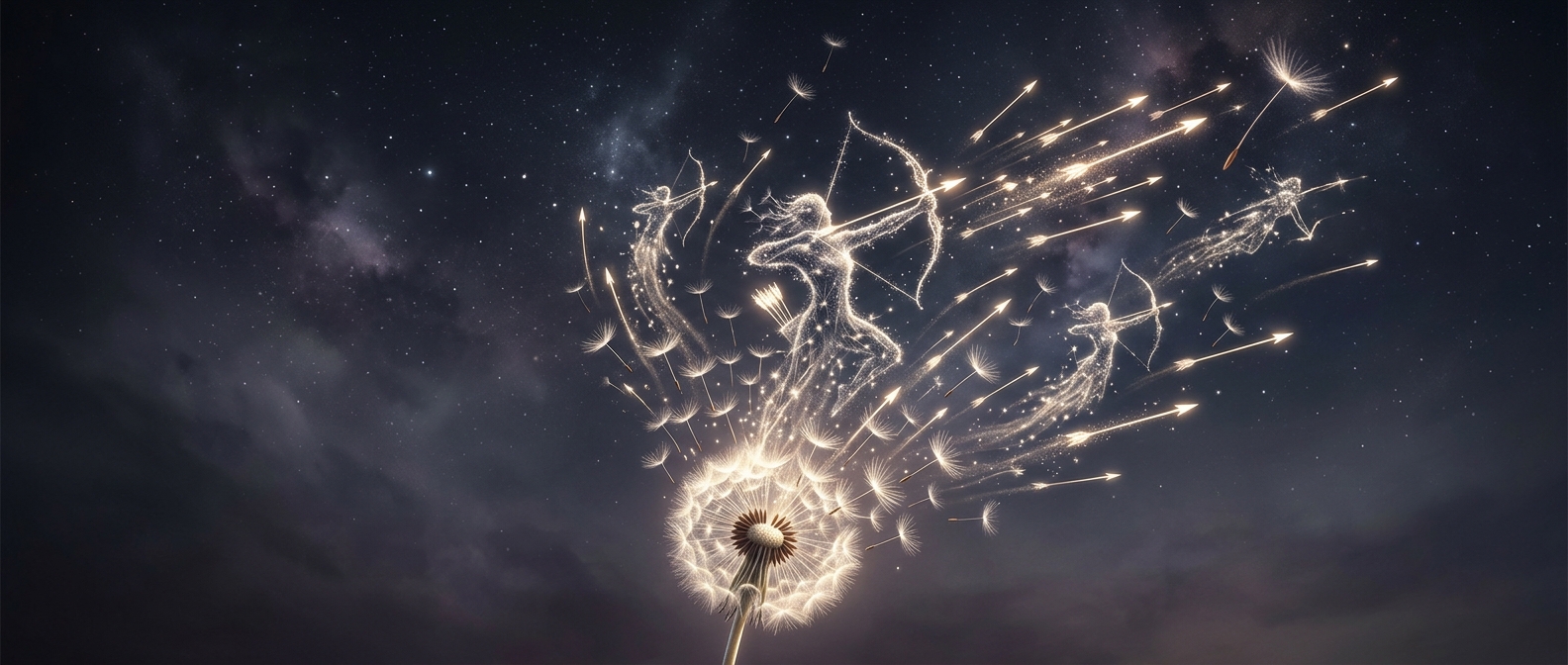
In astrology, Sagittarius is commonly associated with exploration, movement, and a desire to range beyond familiar surroundings. The dandelion’s windborne seeds make a vivid natural image for that archetype: they do not remain where they formed, but drift outward and take their chances elsewhere.
The comparison is symbolic, not a claim that a zodiac sign causes a plant’s behavior. Its appeal comes from a shared image of restlessness—one expressed through an astrological story, the other through a seed built to catch the wind.