Geometry as a language of sacred order
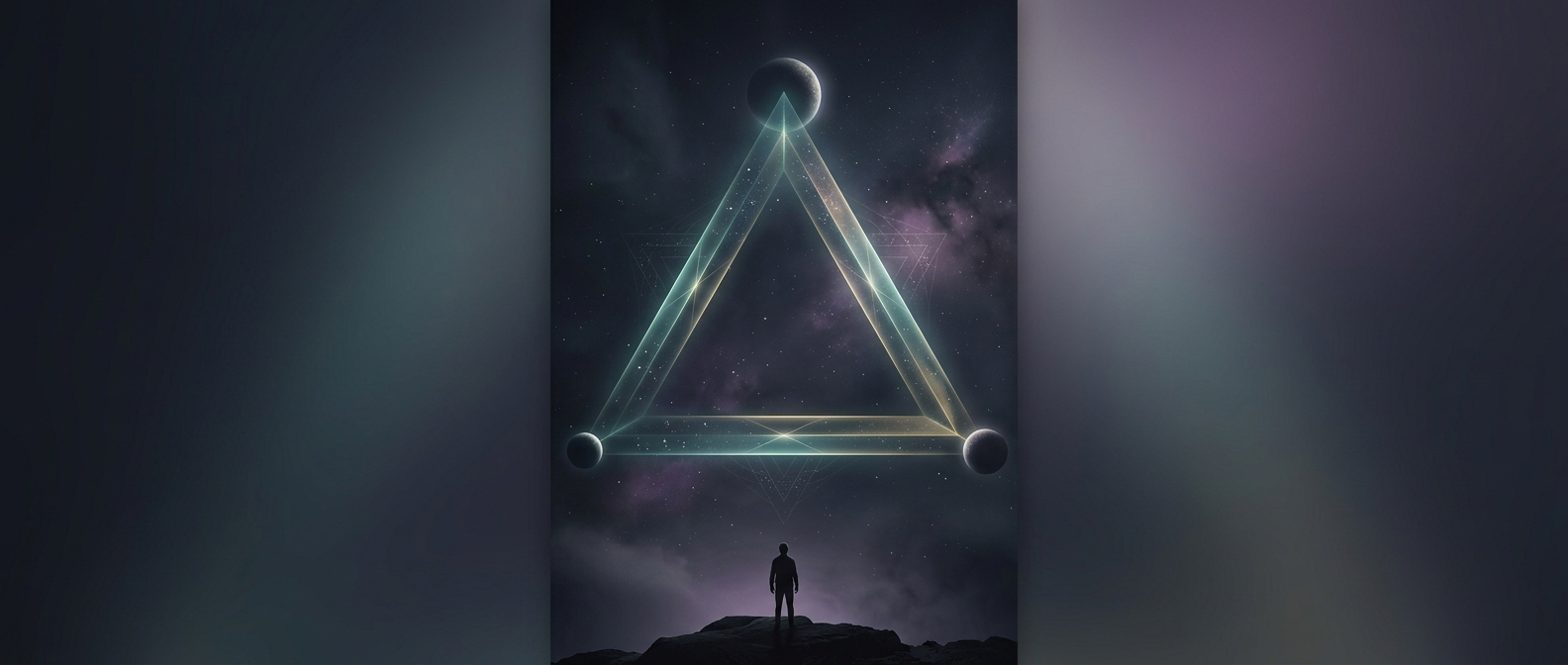
In sacred-geometry traditions, shapes are more than useful ways to measure space. A circle may suggest unity or wholeness; a square, stability and the ordered world. Repeated patterns can make those ideas visible, turning abstract beliefs about harmony into forms people can draw, build, or contemplate.
The appeal is partly in geometry’s ability to connect unlike things. A small pattern can be repeated across a floor, a dome, or a diagram of the cosmos. To someone who sees creation as an ordered whole, that repetition can feel like a sign that the same underlying principles operate at every scale.
Why ratios can seem divine
The golden ratio is a proportion in which a whole relates to its larger part in the same way that the larger part relates to the smaller one. It has acquired a special role in some modern accounts of sacred geometry, where it is treated as a clue to beauty or cosmic design. But its spiritual force comes from interpretation: mathematics describes the relationship, while belief gives it meaning.
That distinction matters. Finding a proportion in a pattern does not, by itself, show that the pattern was designed to express a divine plan—or that the same ratio governs everything from tiny structures to galaxies. Sacred geometry is best understood as a way of reading form symbolically, not as proof of a universal physical law.
From pattern to practice
A geometric design can guide attention as well as decorate a space. Tracing a repeated figure, studying its symmetry, or moving through a building organized around it can offer a person a tangible focus for reflection. The shape becomes a bridge between an idea of cosmic order and an experience a person can see and handle. That is why the same simple forms can carry significance across scales: their importance lies not only in their proportions, but in the meaning people learn to see in them.