Why a Wasteland Might Pay in Bottle Caps
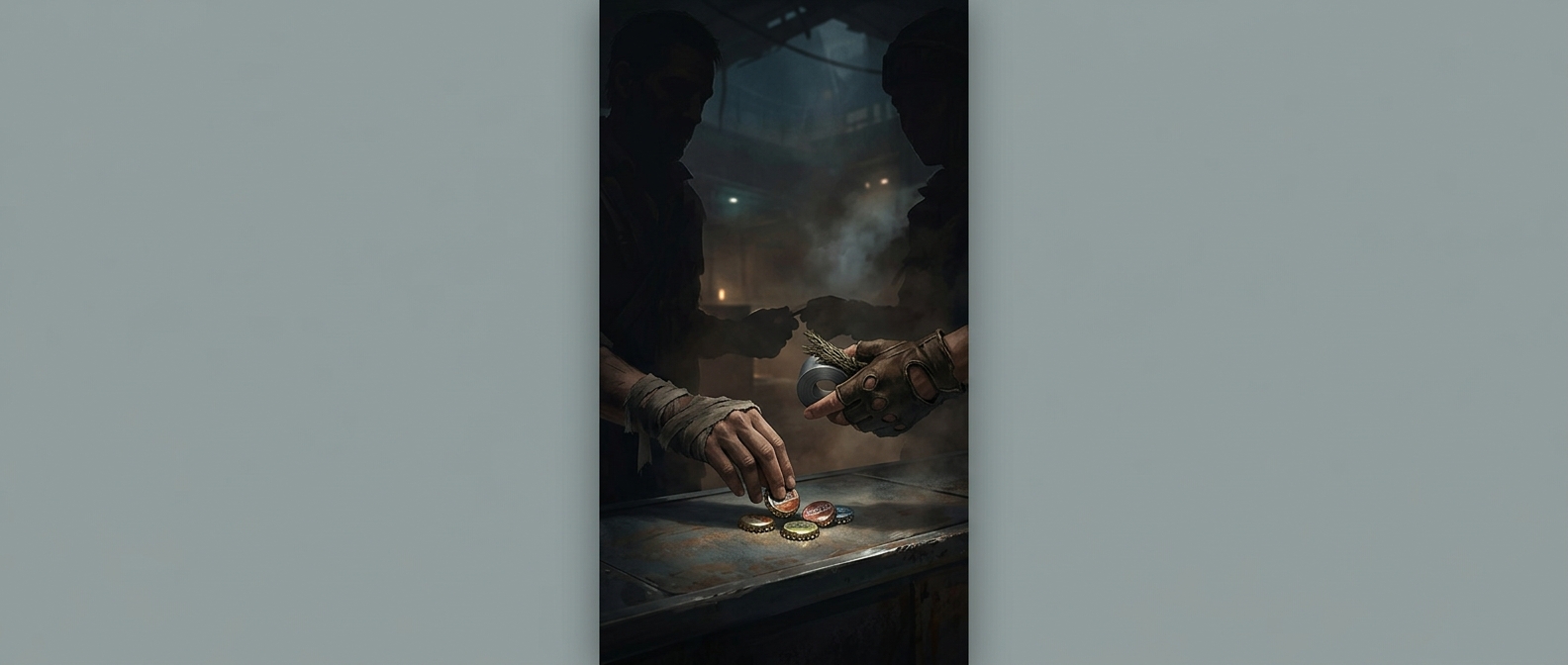
A cap has almost no use as money by itself. Its value comes from a shared agreement: traders expect other traders to accept it later. Once that expectation spreads, a scavenged scrap of metal can buy food, ammunition, or even a weapon—not because the cap is precious, but because people trust the exchange system around it.
Caps also suit a world where ordinary institutions have broken down. They are small, durable, easy to carry, and already scattered through abandoned settlements. A trader does not need a bank, a mint, or a government to issue them. People can count them by hand and move on with the deal.
Scarcity Makes the System Hold Together
For a token to keep its value, it cannot be effortless to produce in unlimited quantities. If anyone could make convincing new caps by the bucket, sellers would demand more of them for the same goods. Their purchasing power would fall—a process called inflation, in which money buys less as its supply grows faster than the goods available.
In fiction, caps can function as money because the wasteland treats genuine ones as limited and familiar. Their distinctive shape and finish make them recognizable, while their origins in the old world give survivors a common object to rally around. These traits do not guarantee stability: if a settlement floods the market with caps, or traders stop trusting them, the system can unravel.
The Price Is Really a Measure of Trust
A stack of caps for a heavy weapon makes the trade’s hidden cost visible. The buyer must gather and transport many small tokens; the seller must believe those tokens will still be accepted at the next settlement. For expensive goods, both sides are relying on a network of shared expectations stretching beyond the immediate bargain.
That is the useful fiction in the joke: civilization’s money need not be gold or printed bills. It can be leftover packaging—so long as enough people agree that the next person will take it, too.