Why the Smoke Sauna Is Different
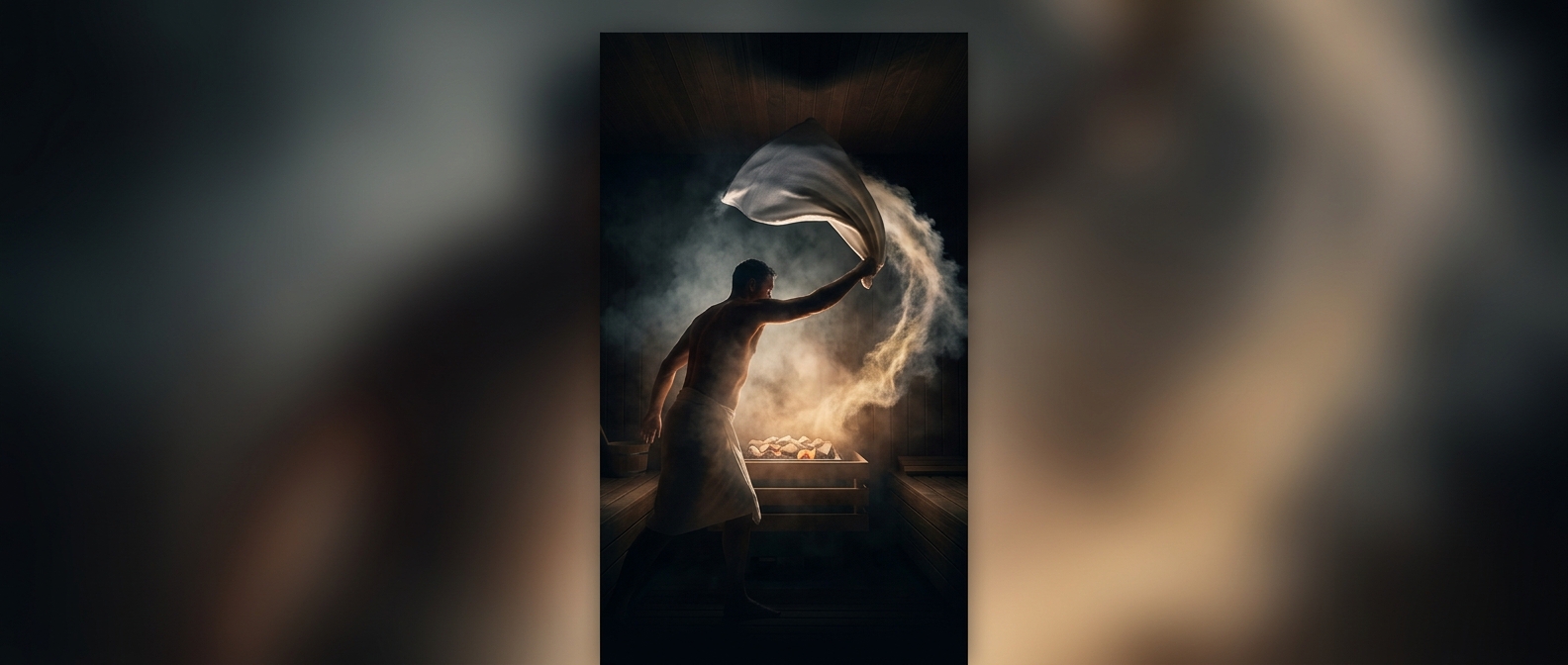
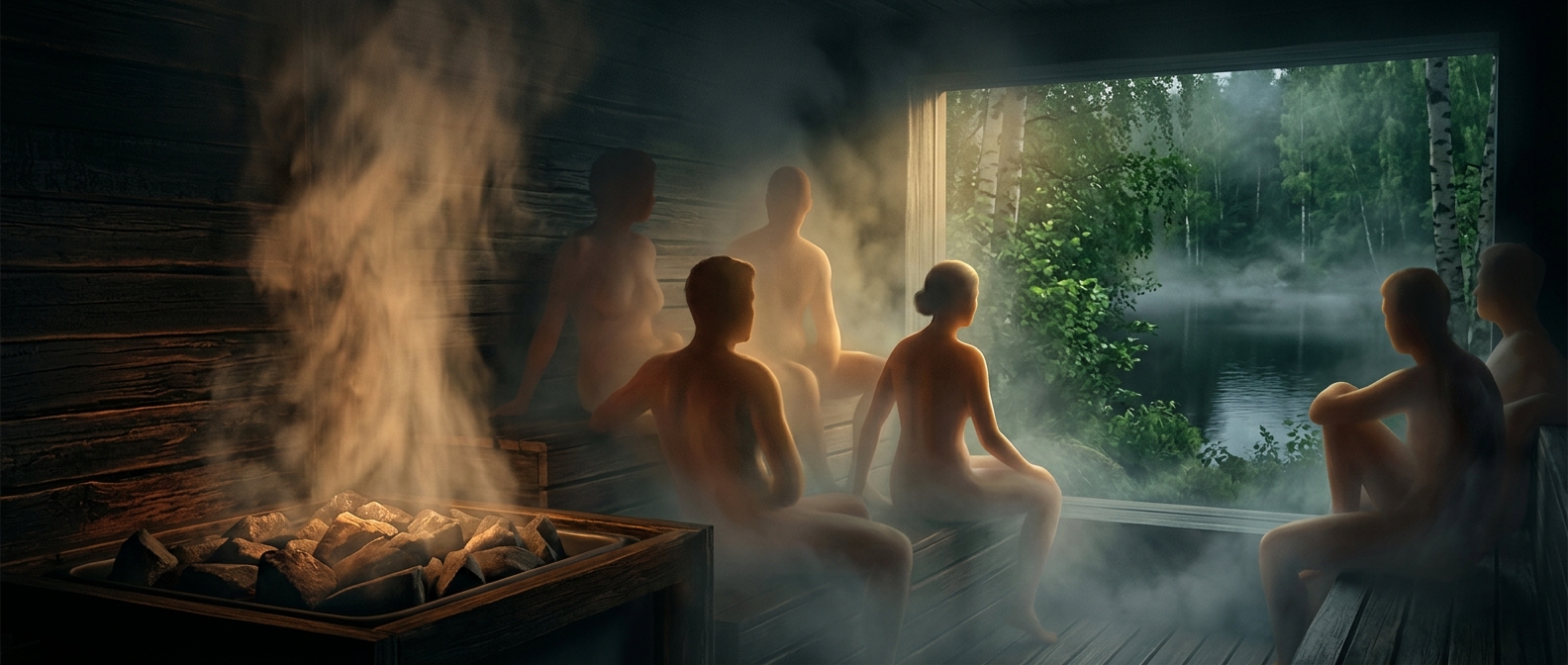
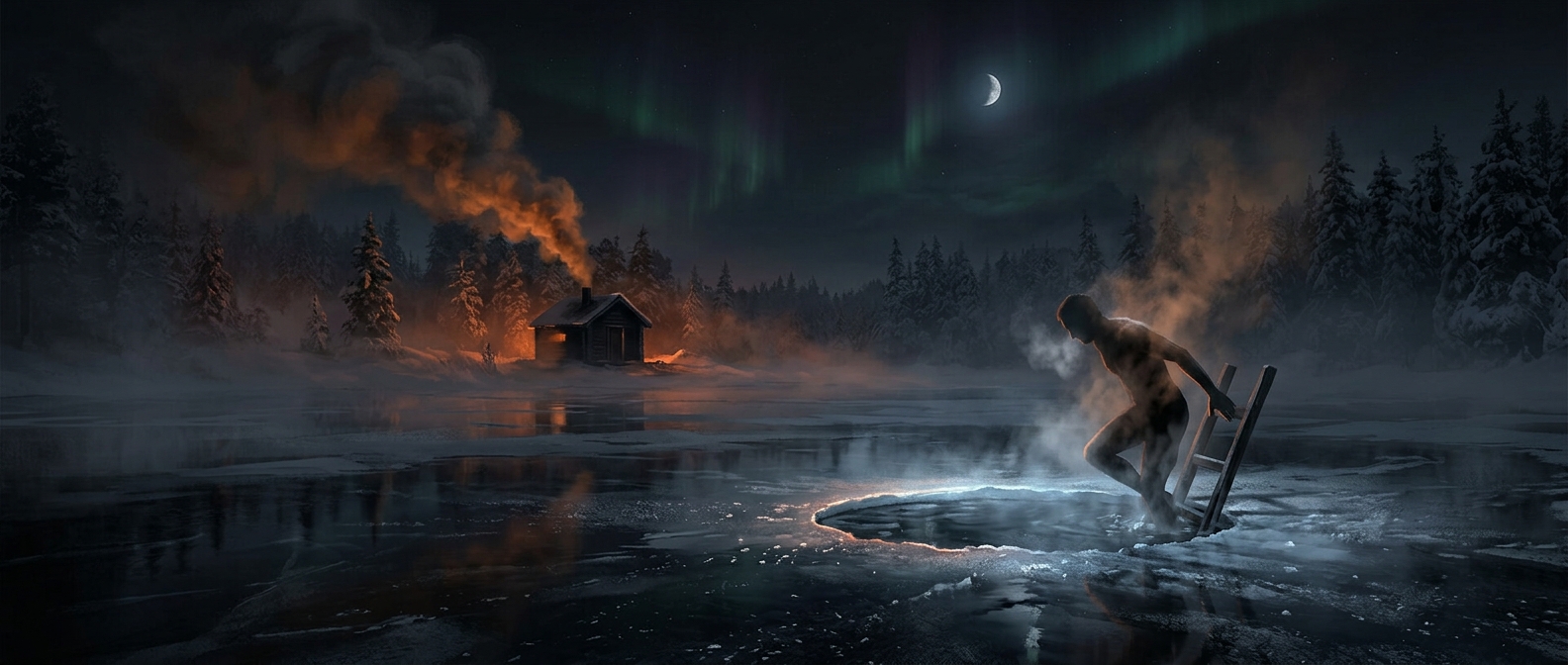
A Finnish smoke sauna, or savusauna, is heated in a way that leaves no chimney carrying smoke outside. A wood fire warms a large pile of stones; before anyone bathes, the fire is allowed to die and the room is aired. The stones keep their heat, so water poured over them releases löyly—the enveloping wave of hot steam that makes the sauna feel alive rather than simply dry and warm.
That long heating process is part of the experience. The room is used only after it has cleared, and its darkened surfaces and lingering wood-smoke scent distinguish it from a modern, quickly heated sauna.
The Lake Makes the Contrast
After the heat, stepping into a cut opening in the ice is a sudden change in temperature and sensation. The contrast is the point: warmth gives way to cold water, then the bather can return to the sauna to warm up. The sequence turns a winter swim into part of the sauna visit, not just a dip taken for its own sake.
The practice is often shared, with time in the sauna and by the water unfolding at an unhurried pace. That social rhythm helps explain why the ritual is more than a test of toughness. Claims that it improves circulation are not needed to understand its appeal: the memorable detail is the deliberate passage from a room that holds the day’s heat to a small, dark opening in a frozen lake.