Why the Beetle could bob briefly
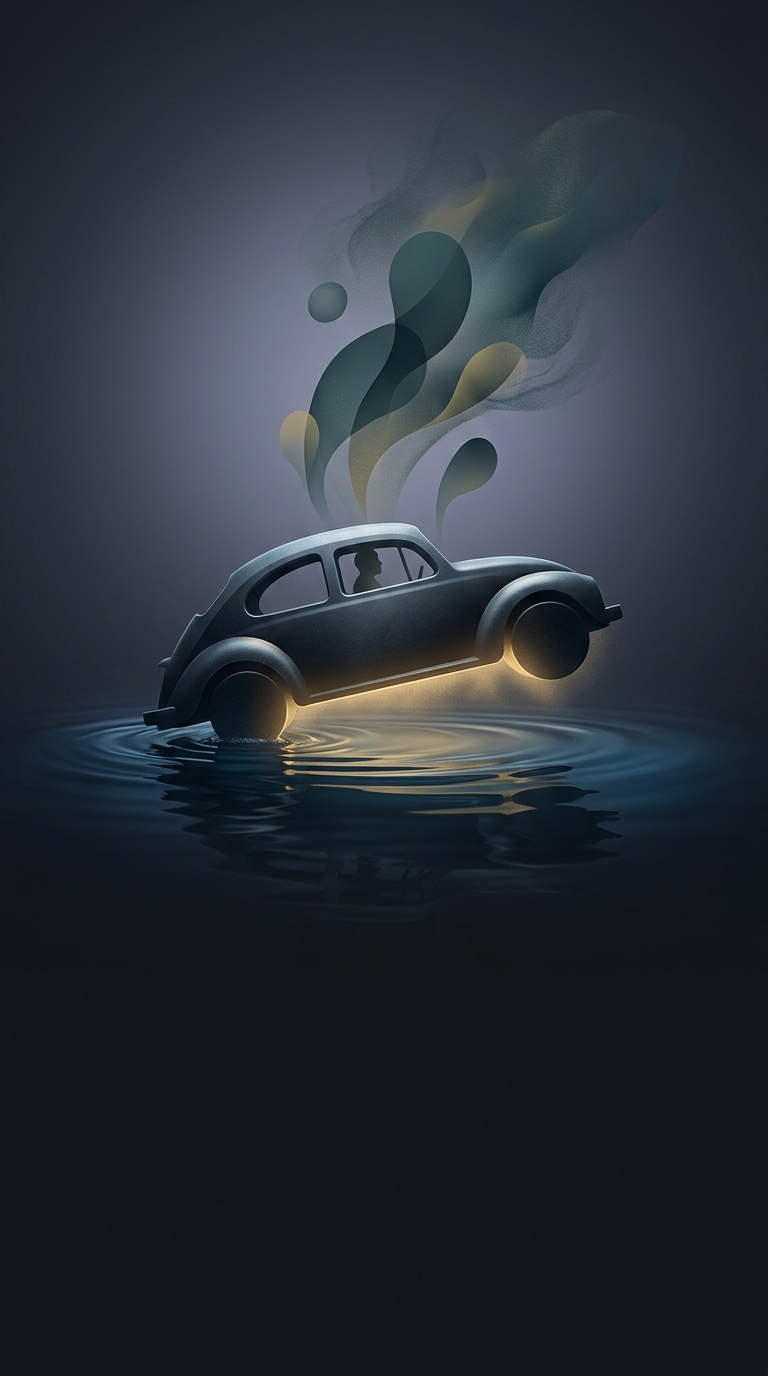
A car floats when it pushes aside enough water to support its weight. The Beetle’s relatively light body and enclosed spaces beneath the cabin could trap air, adding a short-lived reserve of buoyancy when the car entered water. That air did not make the car watertight; it simply slowed the moment when waterlogged spaces and incoming water overwhelmed the lift.
The floorpan—the metal structure forming the cabin’s bottom—was part of the effect, but it was not a boat hull. Seams, openings and damage could let water in, and the result depended on how the car hit the water and how quickly it flooded. As water filled the available air spaces, the Beetle’s ability to stay afloat faded.
A stunt with a real engineering limit
Volkswagen could make the brief float look charming in advertisements because the Beetle’s rounded shape and bright paint made it seem almost toy-like on the water. The visual joke rested on a genuine physical effect, but it could obscure the essential distinction: temporary buoyancy is not safe flotation. A car in water can become unstable, and doors may be difficult to open against the pressure outside. Getting out quickly matters far more than whether the vehicle bobs for a moment.
The Beetle’s waterborne image was therefore less a demonstration of amphibious engineering than a clever use of an incidental property. Its usefulness had a strict endpoint: once water displaced the trapped air, the little car’s duck act was over.