A finger becomes the instrument’s keyboard
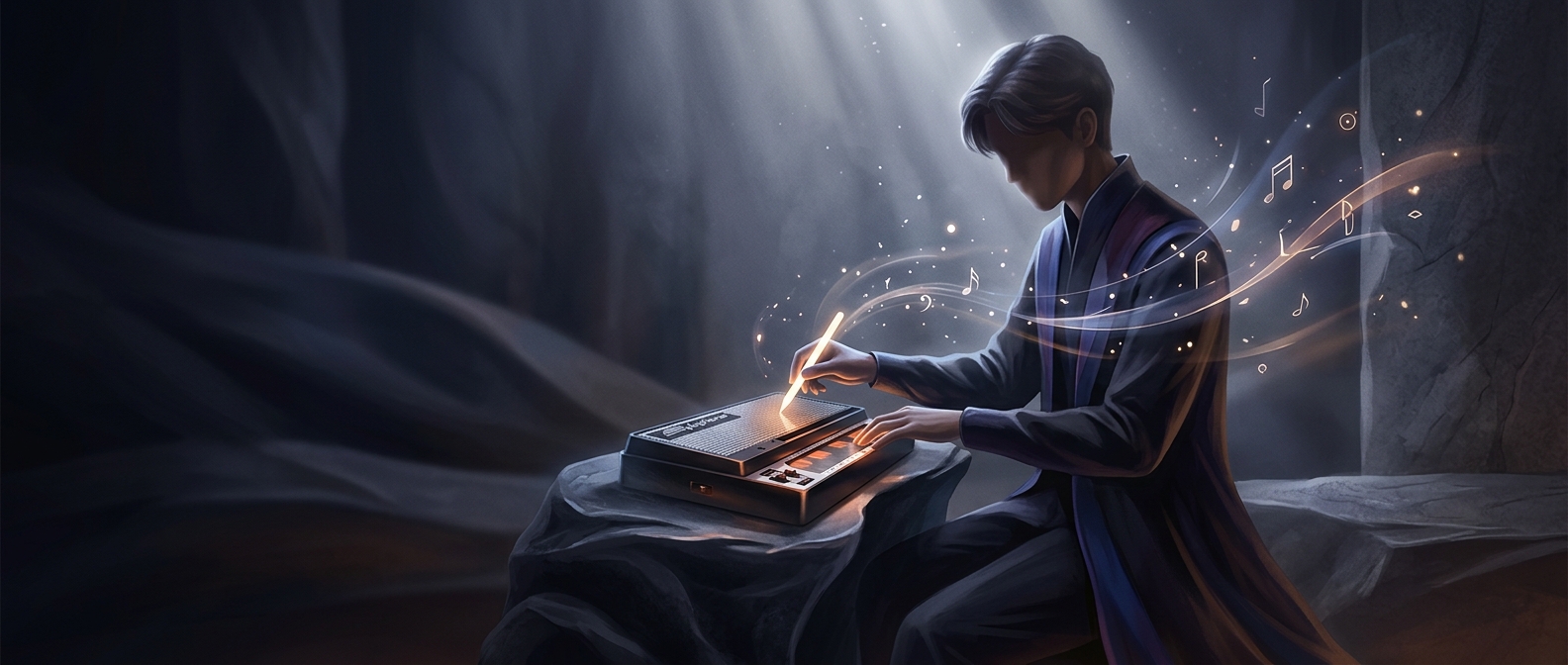
The Otamatone makes pitch with a touch-sensitive strip running along its neck. Pressing different points on the strip changes the electronic tone; moving a finger up or down changes the pitch smoothly, rather than stepping between fixed notes as on a piano. That continuous control makes slides easy—but it also means the player has to find each note by feel.
The result is an instrument that rewards broad gestures more than precise fingering. A quick sweep can sound expressive, while a small misplacement can send a melody noticeably off-key. Players can also use more than one finger to move between notes, much as a string player shifts a hand along a fingerboard.
The face shapes the sound
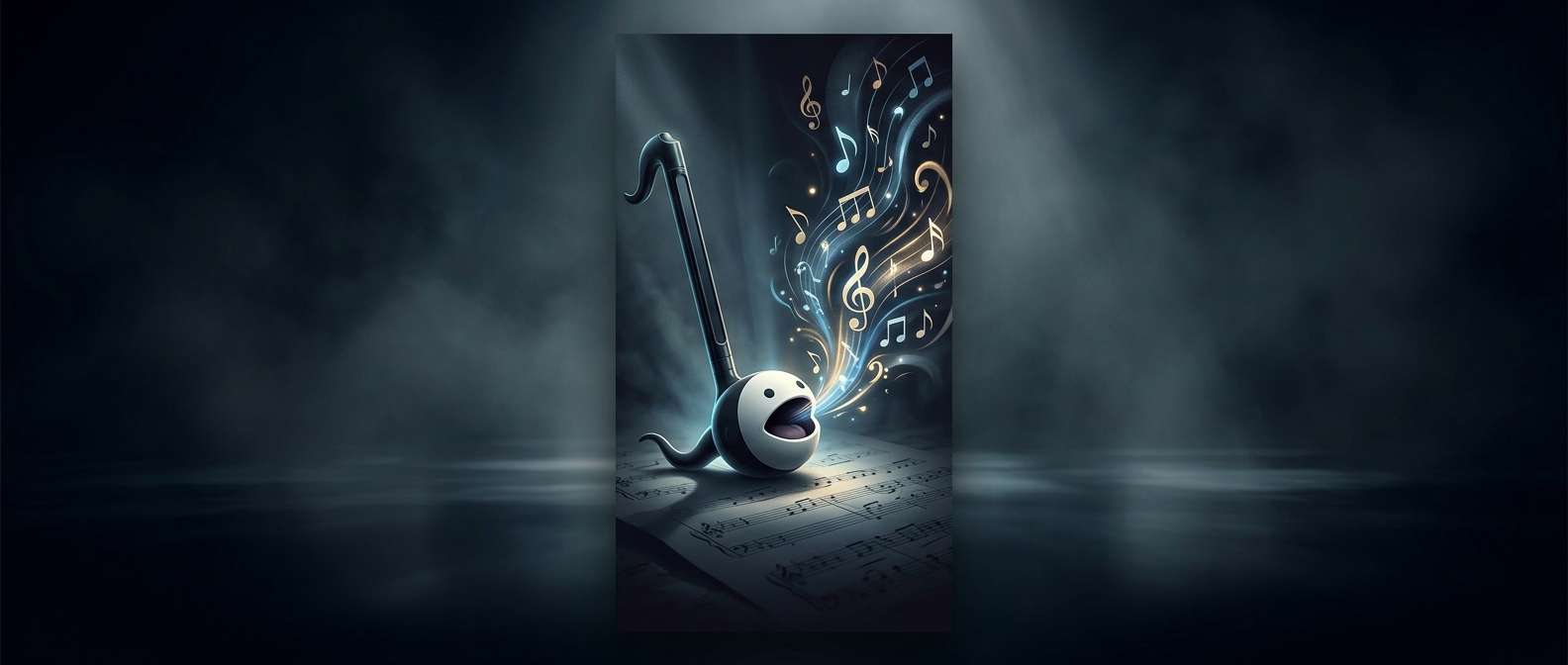
The neck controls which note the electronics produce. The rubbery mouth adds a separate performance control: squeezing it changes the tone’s volume and resonance, giving the sound its vocal, speech-like wobble. The two motions work together—one hand chooses and bends the pitch while the other makes the note seem to complain, sing, or gulp.
That split between pitch and expression is why the Otamatone’s cartoon appearance is more than decoration. Its face gives players an immediately legible way to shape the sound, while its note-shaped body signals that this odd little character is also an instrument. The practical consequence is that a simple tune can become a miniature performance: even a held note can change character as the player works the mouth.