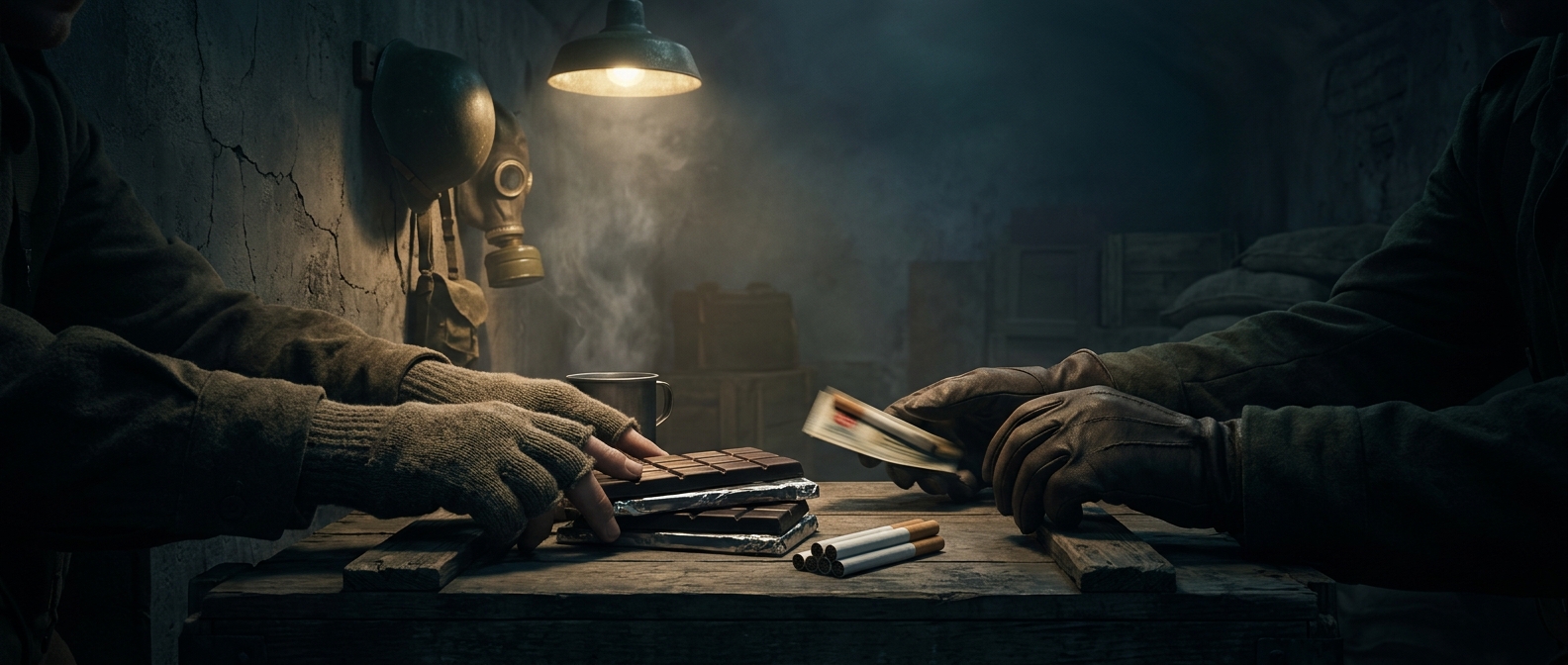
Why familiar goods could outlast a currency
Money works when people expect others to accept it tomorrow. In wartime, that expectation can collapse: governments may print more notes to cover costs, while disrupted trade leaves shops short of goods. Prices then rise quickly, and a bill that bought a meal yesterday may buy much less today.
A branded chocolate bar or cigarette pack offered a different kind of value. It was a recognizable, standardized item with uses people already understood. That made it easier to agree on an exchange than with unfamiliar or rapidly depreciating notes. Soldiers could trade the goods themselves, or pass them on to someone who wanted them.
Scarcity made the exchange work
The key was not that chocolate or cigarettes had some fixed price. Their value came from a practical combination: they were portable, relatively easy to count, and in demand. A cigarette could be used directly; a bar could be eaten or traded. Widely recognized brands also reduced uncertainty about what a trader was receiving.
But this kind of money had limits. Demand varied, supplies could run out, and goods could be damaged or consumed. A pack of cigarettes was useful only to someone who wanted it, and its exchange value could change with local shortages. Unlike a currency, it was not a reliable way to record debts or make large payments.
That is why such goods were best understood as emergency, everyday money, not a replacement for a functioning financial system. When official notes no longer inspired confidence, a soldier could still make a small trade with something the next person recognized—and might want to use.