Jevons’s solar theory of economic crises
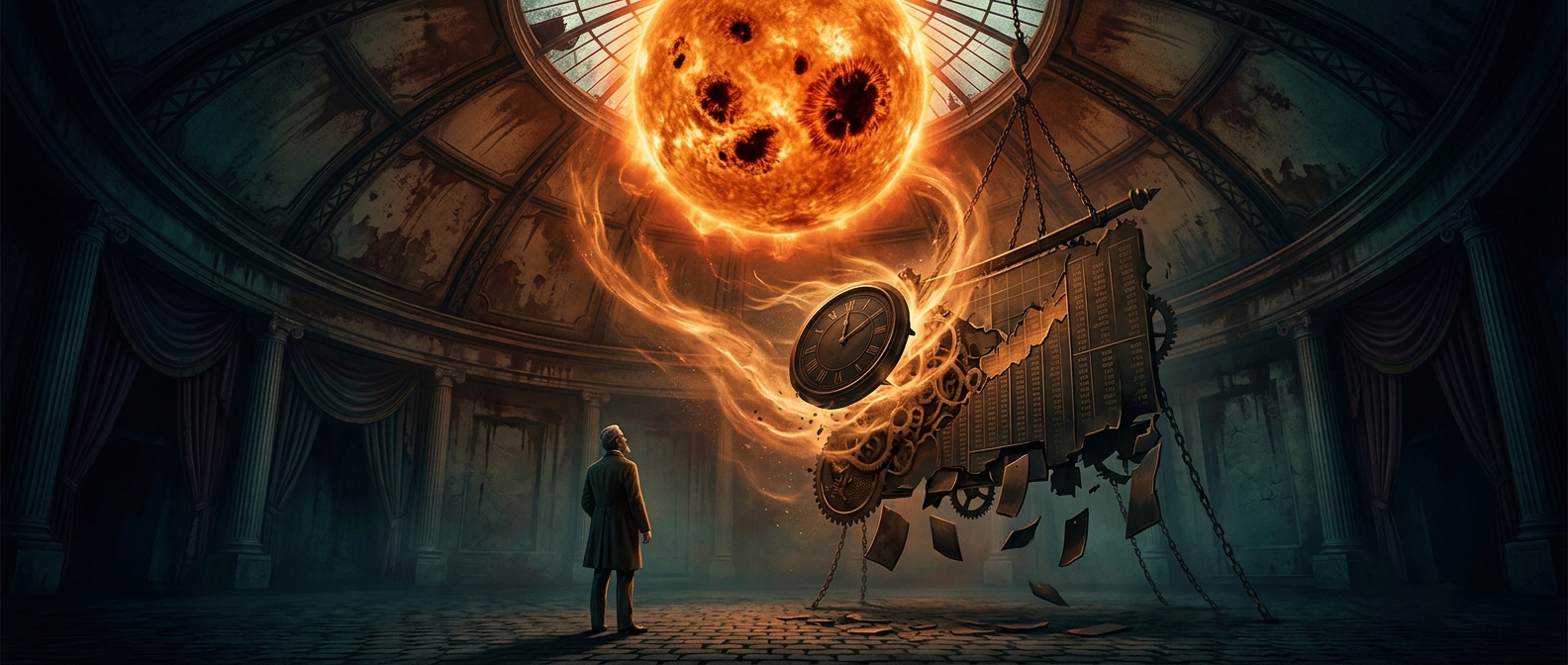
In the 1870s, British economist William Stanley Jevons proposed that recurring commercial crises might be linked to the sunspot cycle. Sunspots—dark patches on the Sun’s surface whose numbers rise and fall in a roughly repeating pattern—offered a possible clock for the economic booms and slumps he was trying to explain.
His proposed chain ran through agriculture. If solar activity altered weather, and weather affected rainfall and growing conditions, then harvests might rise or fail in patterns that echoed the solar cycle. A poor harvest could push up food prices, leaving households with less to spend on other goods and putting pressure on businesses and trade. In an economy where agriculture still mattered greatly, that was a plausible route from the sky to financial distress.
From a pattern to a cause
Jevons compared the timing of commercial crises with the recurring changes in sunspot activity and argued that their rhythms lined up. The appeal was that one natural cycle might help explain why crises seemed to return at intervals rather than arrive at random.
But matching rhythms did not establish every link in the chain. Sunspots would have to influence weather in a way that affected harvests, and harvest shocks would have to help produce the broader credit and business failures counted as crises. Each step involved other forces too: weather varied by region, while financial trouble could spread through trade and lending.
Jevons’s theory is best understood as an early attempt to connect economic cycles to measurable natural processes, not as a dependable crash forecast. Its memorable wager was that a change on the Sun could reach a household budget indirectly—by passing first through clouds, fields, and the price of bread.