The catch-up system behind a crowded finish
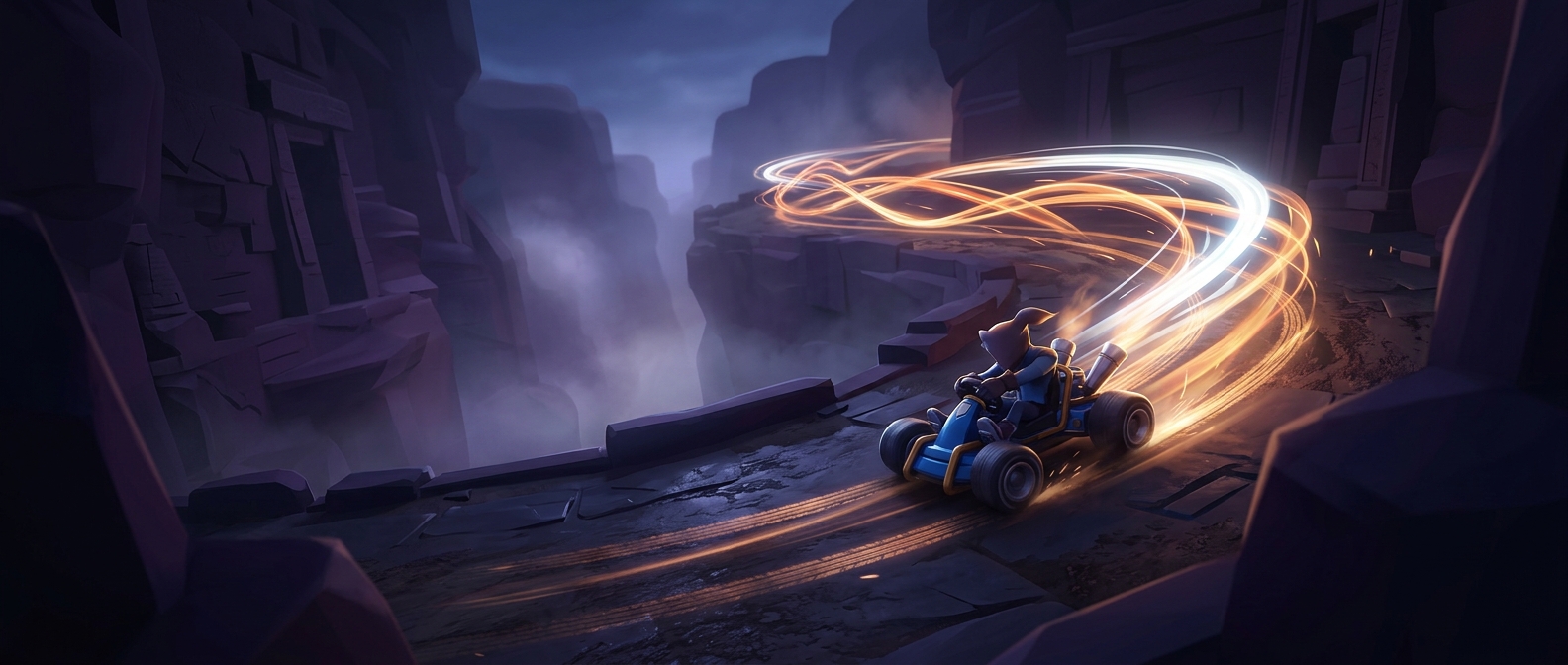
A racer falling behind in a kart game can get help that the leader is less likely to receive. In Mario Kart, the clearest version is position-weighted item selection: the game considers where a racer is on the course when choosing what appears from an item box. Trailing players are more likely to receive powerful tools that can disrupt the pack or help them make up ground; racers near the front tend to get less comeback potential.
That can feel like an invisible speed boost because the result is the same: the gap shrinks. But the help often comes through items and opportunities, not a constant increase to the trailing kart’s engine speed.
Why designers bend the race
In a race with several players, a small early lead can otherwise become hard to overcome. The leader gets a clear track, while everyone behind must pass rivals before they can even reach the front. Giving backmarkers stronger ways to attack makes the order less settled and gives more players a reason to stay engaged until the finish.
The tradeoff is fairness. A comeback item can make a race exciting, but it can also erase a lead that was earned through careful driving. The system favors close, unpredictable competition over a perfectly pure test in which every advantage comes only from driving skill.
The boost is part of the design
These mechanics are most noticeable when a trailing racer suddenly gets a tool capable of changing the race, or when a leader is hit just before the line. They are not a guarantee that the player in last place will win: using an item well, avoiding hazards, and navigating the course still matter. But the game is not simply watching the race unfold. It is shaping the chances each position gets, so a mistake or a strong start does not always decide the result early.