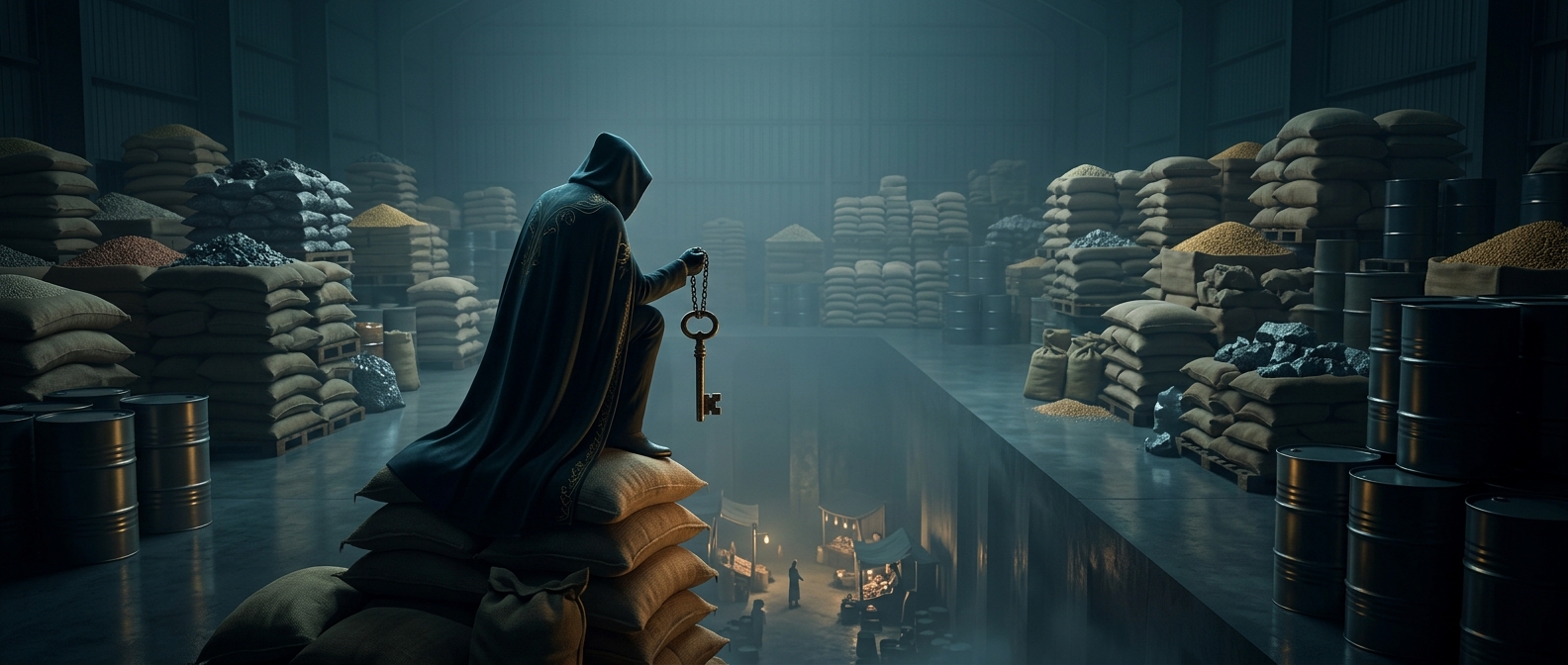
How a stockpile becomes market power
A commodity hoard matters not simply because one trader owns a large pile, but because buyers need the goods now and cannot quickly replace them. If the trader keeps part of the stock off the market, the supply available for immediate purchase shrinks. Buyers compete more fiercely for what remains, and the holder can demand better terms.
This leverage is strongest when the commodity is hard to substitute and new supply takes time to produce or transport. A warehouse full of grain, fuel, or metal can therefore influence today’s market even if more of the commodity may arrive later. The hoarder is effectively making access to stored supply part of the price negotiation.
Why the advantage can fade
Holding stock is costly: goods take space, may spoil or deteriorate, and tie up money that could be used elsewhere. High prices also give other producers an incentive to bring more supply to market. Buyers may conserve, switch to alternatives, or seek other suppliers. If those responses arrive soon enough, the trader’s grip weakens.
The strategy is therefore a bet on timing as well as ownership. The trader must expect that buyers will remain dependent long enough—and that rival supply will remain limited long enough—for the higher price to outweigh the cost and risk of holding inventory. What looks like control over a commodity can become a costly warehouse of unsold goods if the market adjusts first.