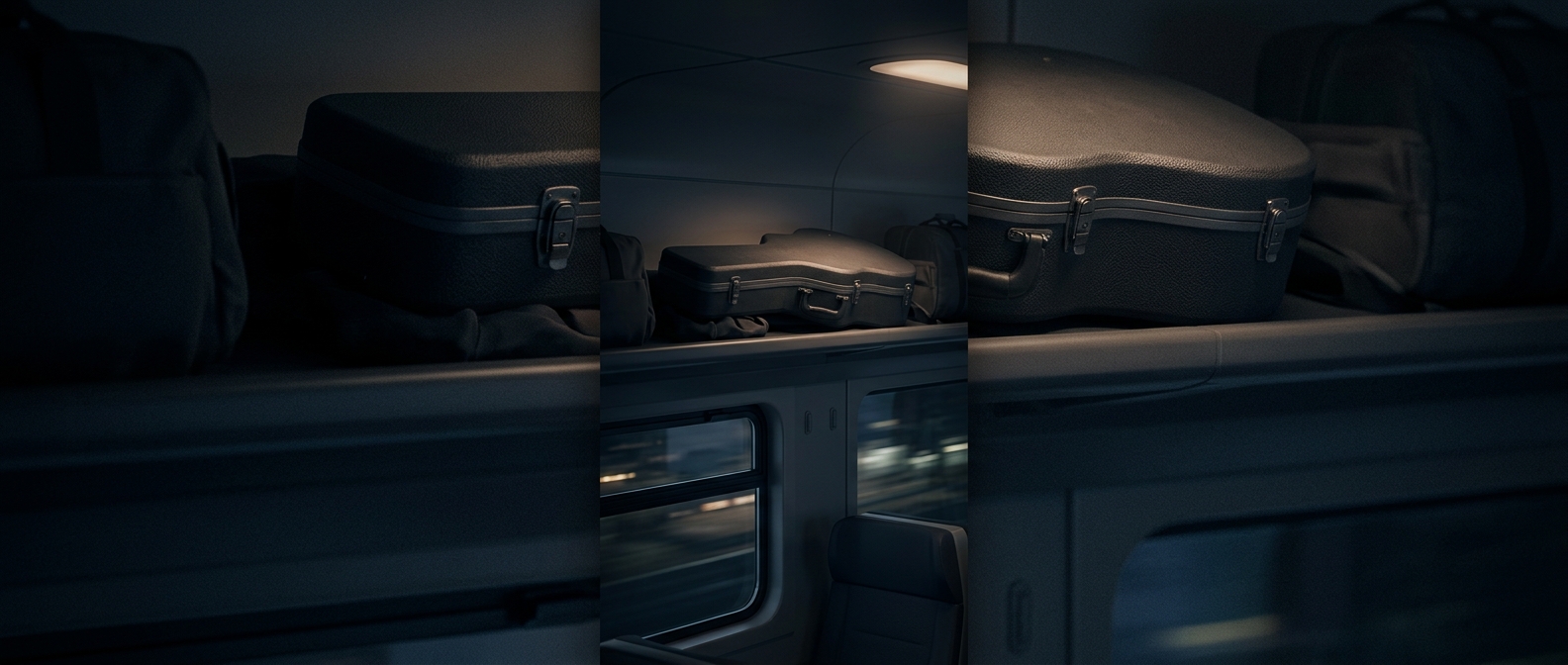
The trouble is the guitar’s shape, not just its weight
A guitar case is a long, rigid object attached to a person who still needs to move through a changing space. On a train, in a crowded station, or along a narrow sidewalk, the case extends beyond the player’s shoulders and hips. The player has to track that extra length while turning, stepping around luggage, or making room for someone else. A small shift in direction can send the far end swinging into a seat, wall, or passerby.
That makes carrying a guitar different from carrying a compact bag. Its awkward outline occupies space even when the player is standing still, and its length makes close quarters harder to navigate. The inconvenience can matter more than the instrument’s weight: an object can be manageable to lift but tiring to keep positioning carefully.
“Portable” depends on the whole trip
A guitar may be easy to take from a car to a room, yet frustrating when the journey involves walking, transfers, or crowded public spaces. Each transition asks the player to find somewhere to set it down, keep it from tipping, and avoid obstructing other people. Those small demands accumulate before the guitar is even played.
The practical test of portability, then, is not whether an instrument can be carried. It is whether carrying it leaves someone enough freedom to move through the trip comfortably. A guitar can be ready for music and still be the one item that makes a casual outing feel like a logistics problem.