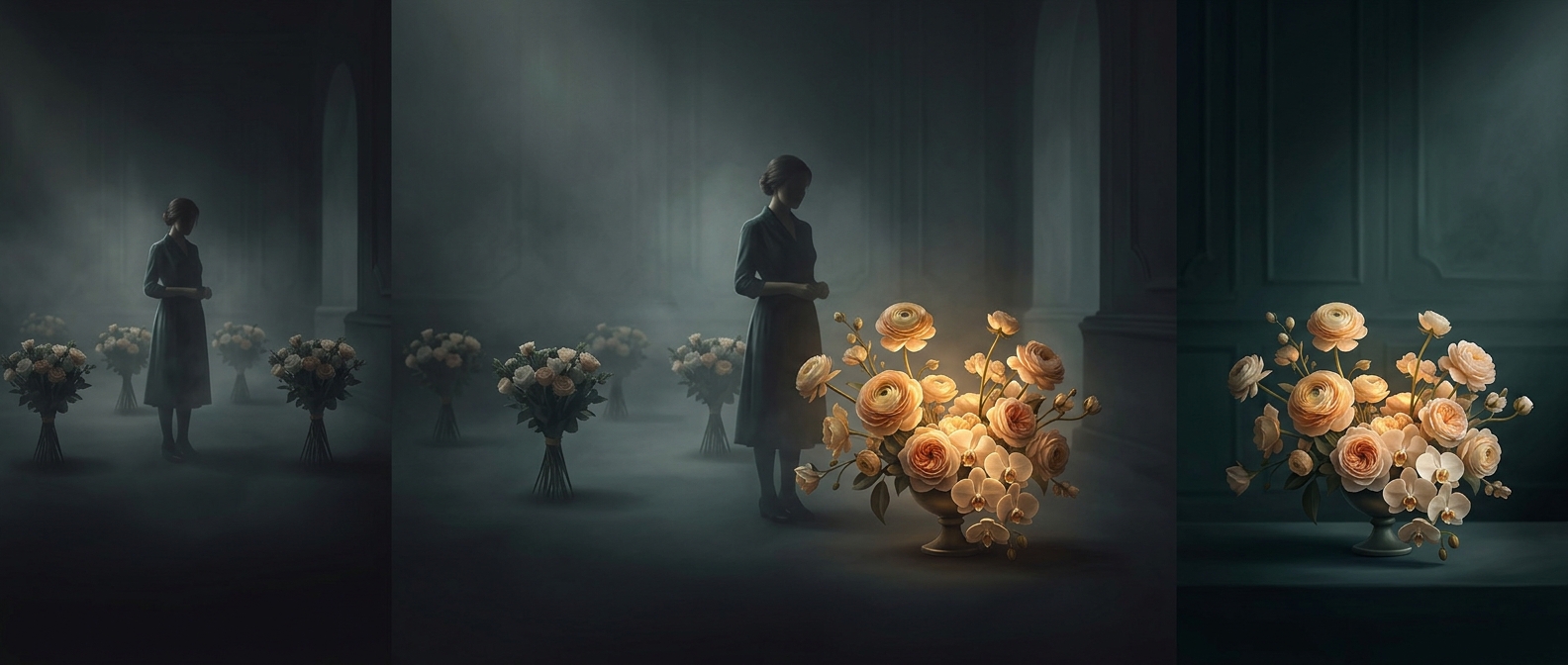
The price covers more than the flowers
A wedding bouquet is not usually priced like a bunch picked up at a shop. It is a made-to-order arrangement, planned around a couple’s colors, preferred flowers, dress, and ceremony. The florist must source the materials, condition them so they hold up, assemble the bouquet, and have it ready for a specific event date. That work takes time even when the design looks simple.
Flowers are also perishable, and wedding plans leave little room for delay. A florist has to coordinate the order so blooms are usable at the right moment, while allowing for the fact that natural flowers vary in color, shape, and availability. If a requested variety is unavailable or arrives in poor condition, the design may need to be adjusted quickly.
A date-specific service with little room to substitute
The event date makes the work harder to reschedule than an ordinary purchase. A bouquet delivered late cannot simply be sent the next day, and a couple may be unwilling to swap out a favorite flower or revise a look they have planned for months. That makes reliability, advance planning, and the florist’s time part of the value being purchased—not just the stems and ribbon.
This also changes the bargaining dynamic. When the wedding is approaching, saving money by choosing a different design can feel like giving up something emotionally important. The premium reflects both the labor of a custom, time-sensitive job and the buyer’s limited willingness to compromise. A simpler-looking bouquet can still carry a substantial price when it must be right for one particular day.