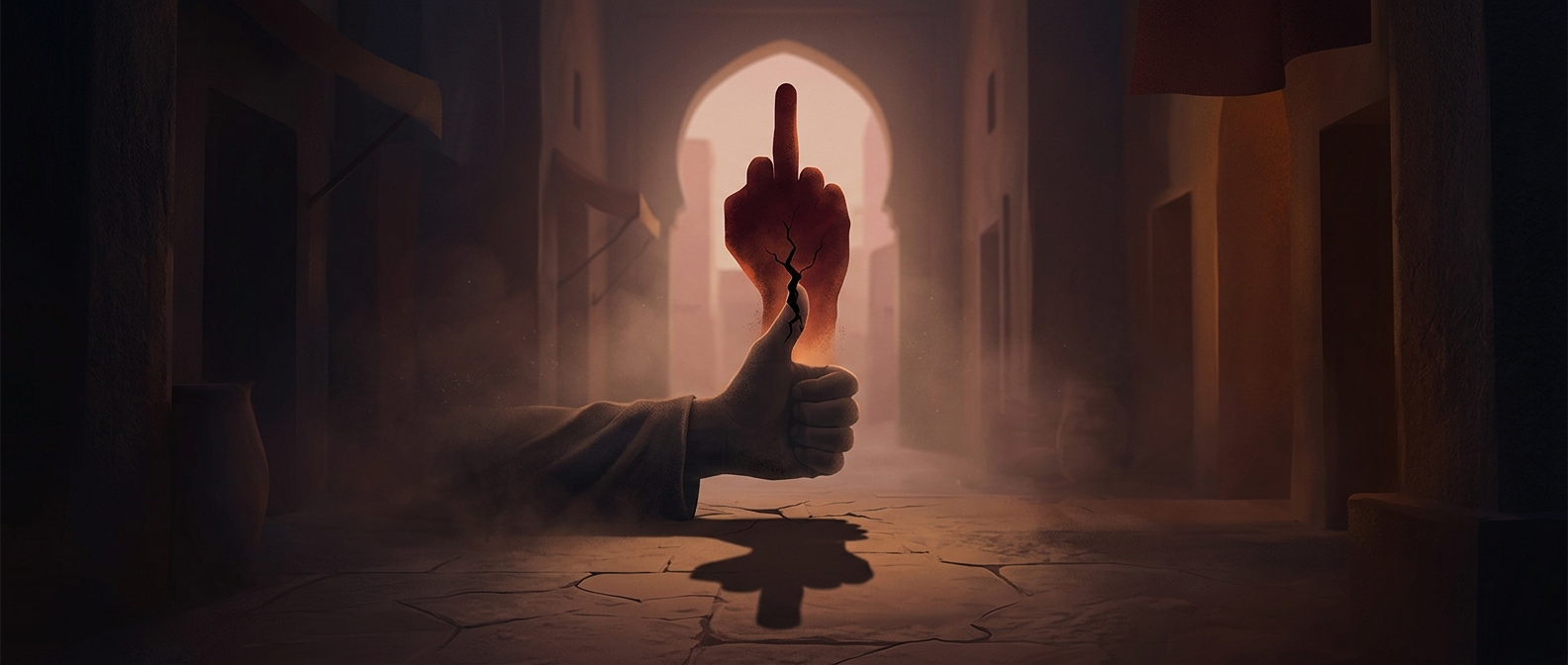
When a Familiar Gesture Changes Meaning
In Iran and Iraq, a thumbs-up has historically carried a meaning far removed from “good job.” It can be read as a vulgar insult—sometimes called bilaakh—rather than as approval. The gesture’s shape is the same, but its social meaning is learned locally, just like the meaning of a word.
That mismatch is easy to create while traveling: someone uses a gesture they consider friendly, while the person receiving it recognizes an offensive one. The result can feel deliberate even when it was an innocent attempt to communicate across a language barrier.
Why Travelers Should Pay Attention
Gesture meanings are not uniform across a whole country or fixed for every person. Interpretation can vary with region, age, and situation, and the historical association does not mean every Iranian or Iraqi will react identically. Still, travelers should not assume that a gesture familiar at home is a safe substitute for words.
If you want to show approval, saying it plainly—or following the other person’s lead—avoids relying on a hand signal whose meaning may not travel with you. A thumbs-up is not a universal symbol; its meaning depends on who is looking at it.