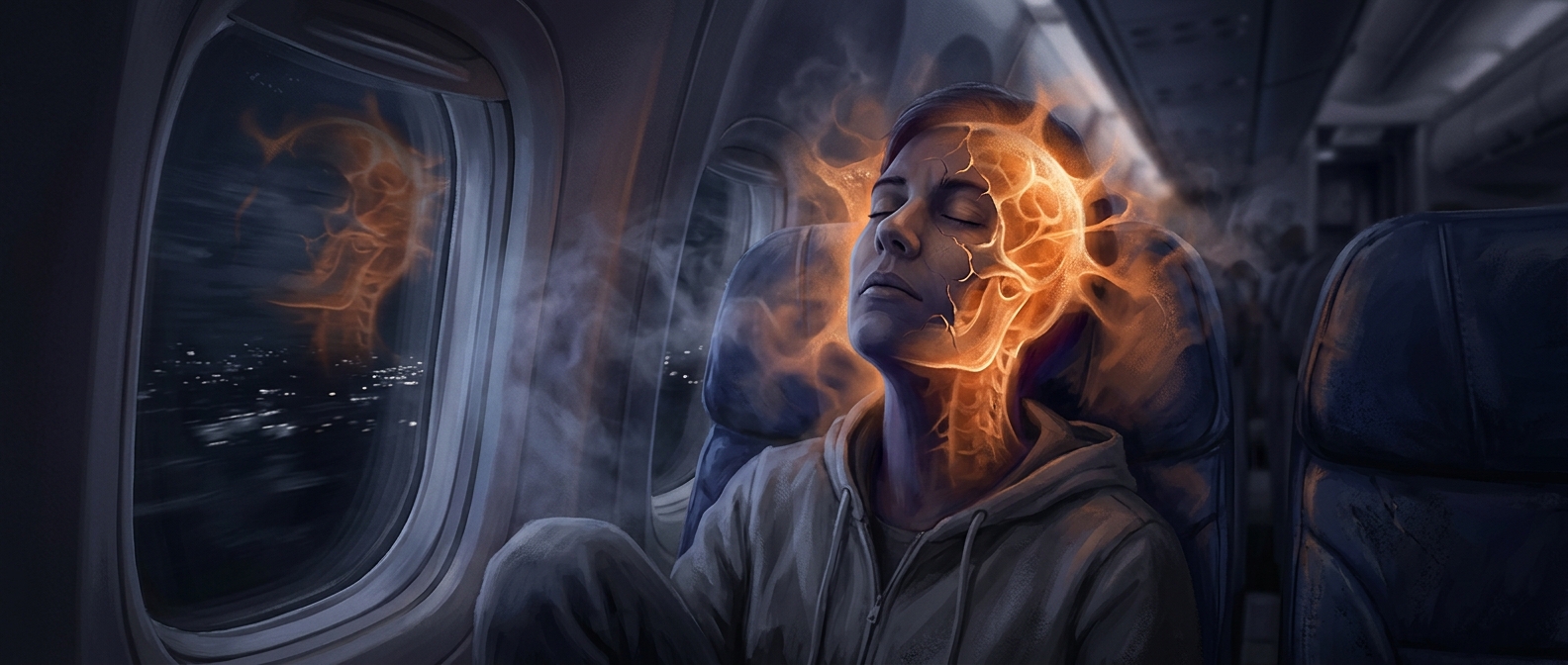
The front of a travel pillow has a job
A travel neck pillow is more than a cushion for the back of the head. When its padded ends reach beneath the chin, they provide a small ledge that helps keep the head from tipping forward as the sleeper relaxes. Without that support, the head can drop toward the chest, then jolt back with a change in motion or a moment of waking.
The effect comes from where the pillow meets the head. A pillow behind the neck supports the head from the rear; the raised sides and front can also steady it from below and at the jaw. That extra contact limits the head’s movement instead of relying on relaxed neck muscles to hold it upright.
Position matters as much as softness
The pillow needs to sit high enough for its ends to support the underside of the jaw, rather than simply bunching behind the neck. Different shapes and body sizes affect how well that works, so a pillow that feels plush may still leave the chin unsupported if it sits too low or its front ends do not meet the jaw.
That design detail matters most in an upright seat, where there is no mattress to catch a falling head. A little support beneath the chin can turn a neck pillow from padding into a brace against the familiar forward nod of dozing in transit.