A desk job built to overload attention
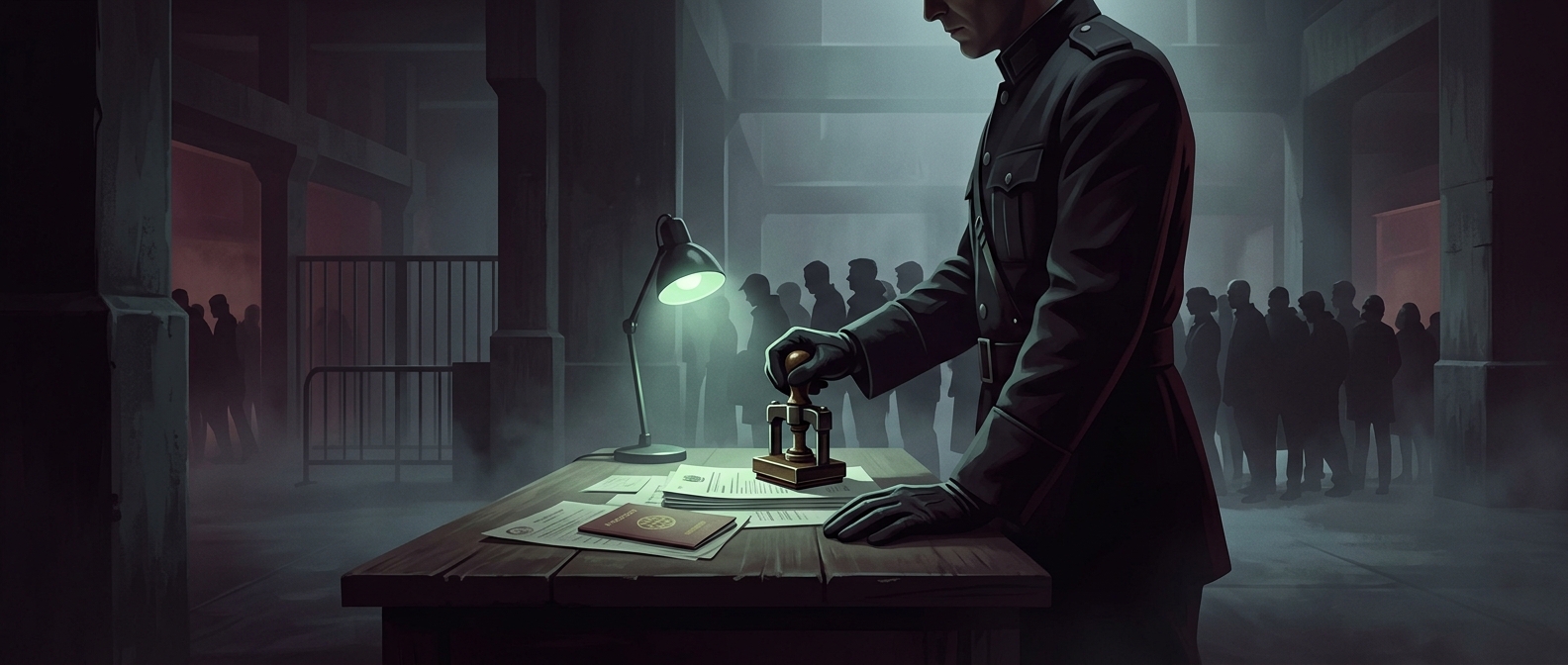
In Papers, Please, the player works at a fictional border checkpoint, processing travelers one document at a time. The tension comes from making routine inspection a manual task: you have to compare details across papers, notice inconsistencies, and apply the current rules instead of relying on a single obvious test. Each traveler becomes a small puzzle, but the line keeps moving.
That setup makes errors feel immediate. A missed discrepancy can cost money, while taking extra time to inspect carefully leaves fewer travelers processed. The player is not simply solving a puzzle; they are deciding how much attention each case deserves when both speed and accuracy matter.
The rules turn routine into pressure
As requirements change, yesterday’s reliable checklist may no longer be enough. The player has to keep track of what is currently required and bring that knowledge to each new inspection. This combines two kinds of work: checking the papers in front of you and remembering the rulebook behind them.
The game also connects desk performance to life outside the booth. Earnings help cover a household’s needs, so a mistake or a slow day has consequences beyond a bad score. That link gives each stamp extra weight: the pressure is not just to get the answer right, but to keep working under conditions that make careful checking costly.
The result is a distinctive kind of suspense. A passport check may look trivial from the traveler’s side of the counter; from behind it, one overlooked detail can mean lost pay, a growing backlog, or both.