When the Afterlife Has Streets
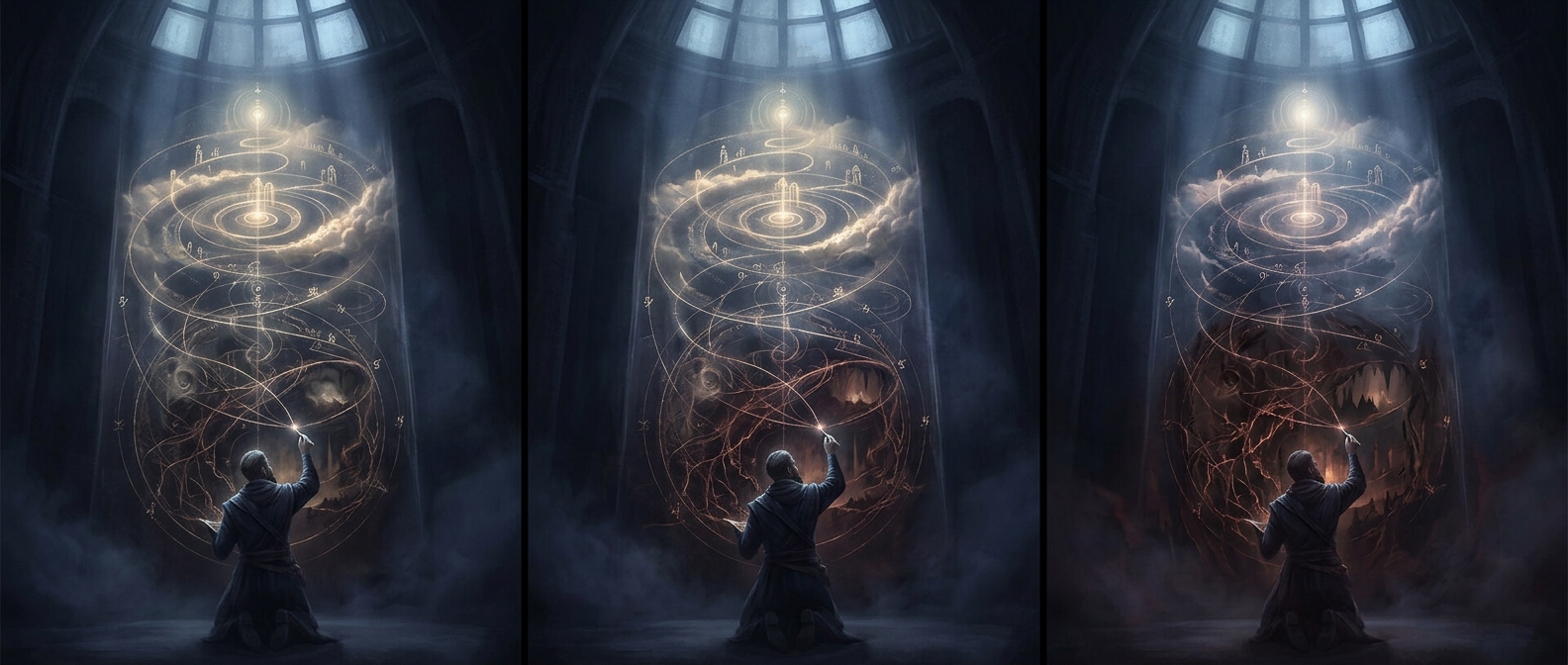
A visionary who describes heaven and hell as places with streets is doing more than giving the invisible a picturesque setting. Roads, neighborhoods, and routes make an otherwise abstract claim feel traversable: the afterlife becomes somewhere a person can enter, move through, and get lost in. The map-like detail invites readers to imagine not just what these realms mean, but what it might be like to encounter them.
That geography can also carry moral meaning. In many religious and visionary accounts, a realm’s landscape reflects the character or condition of its inhabitants. A pleasant district or a bewildering route may therefore function as part of the account’s spiritual logic, rather than as a neutral travel description. The imagined street plan turns an idea about the soul into a setting readers can picture.
A Travelogue, Not a Survey Map
A claim to have explored celestial realms is a claim of personal vision, not evidence that those realms have been physically surveyed. The distinction matters: a visionary’s descriptions tell us how that person presented an experience and made it intelligible to others. Concrete details—streets, districts, directions—lend the account the texture of travel writing, while leaving its supernatural interpretation a matter of belief.
The result is an unusual kind of map: one meant less to help someone find an address than to make an unseen world seem navigable. Its most memorable feature may be precisely that tension—the afterlife is described with the everyday language of a neighborhood, yet remains a place no ordinary traveler can verify.