How Saharan Dust Reaches the Caribbean and Florida
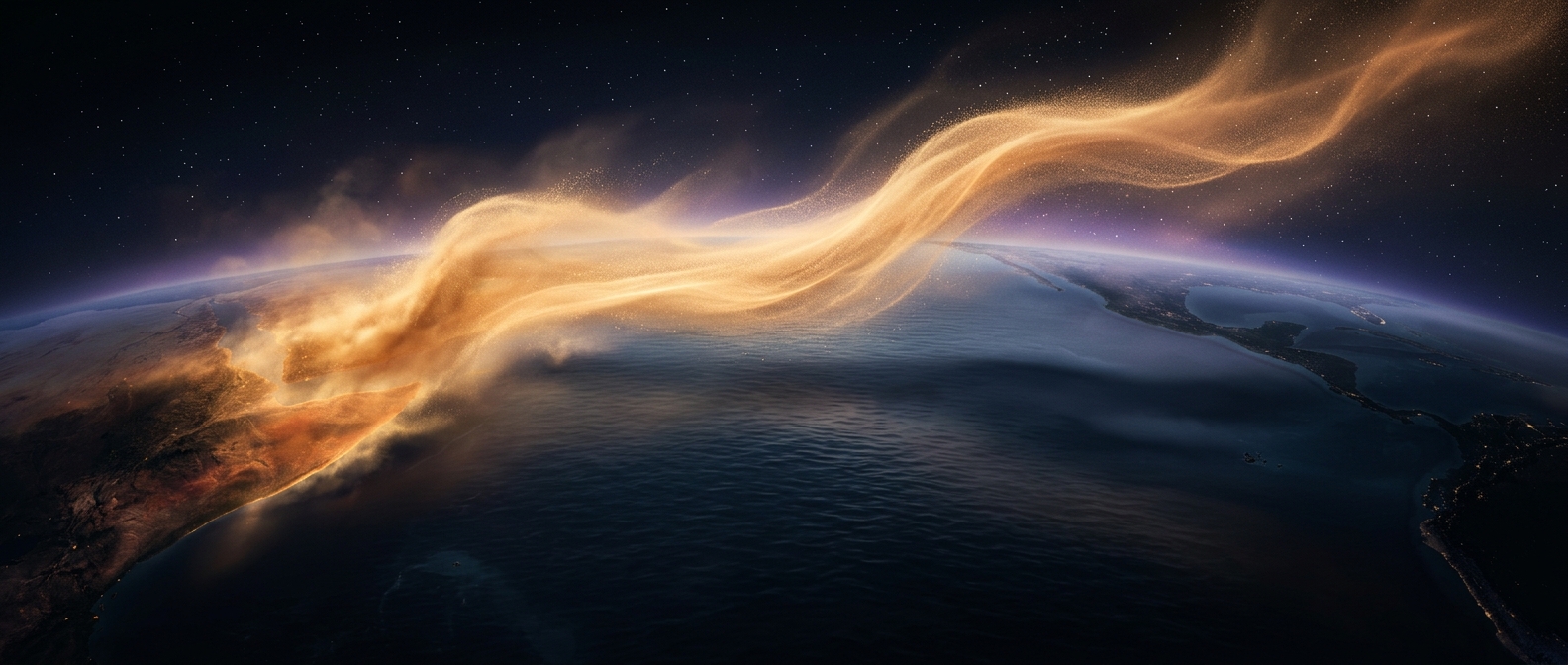
The journey begins when strong winds over North Africa lift tiny mineral grains from dry ground. The finest particles can remain suspended high in the atmosphere, where a broad current of warm, dry air—the Saharan Air Layer—moves west over the Atlantic. Prevailing easterly winds help carry that air toward the Caribbean and, at times, Florida.
Most of the dust does not make the entire trip. Larger grains fall back to Earth sooner, while lighter particles can stay aloft for days. Rain and settling eventually remove them from the air, sometimes leaving a faint coating on outdoor surfaces in places such as Miami. The route is recurring, but how much dust arrives varies with winds, storms, and weather along the way.
A Hazy Sky Has More Than One Cause
When enough dust is suspended overhead, it can soften distant views and give the sky a hazy cast. That haze is a visible sign of a vast atmospheric transfer: material picked up in one continent’s deserts has crossed an ocean before gravity and weather bring it down. The next dusting on a car may be the last, most familiar trace of that journey.