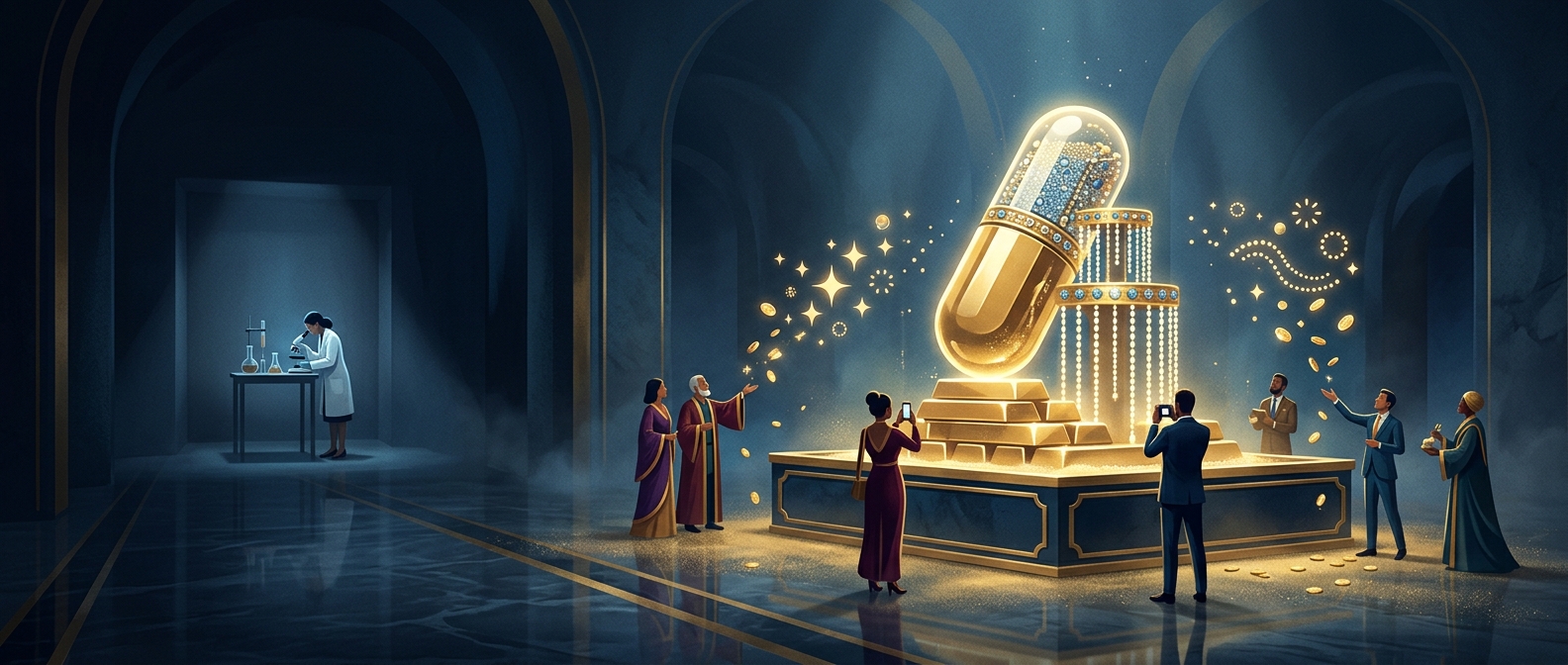
Why promotion can outpace discovery
Drug development is expensive and uncertain: a company can spend years testing a candidate only to learn that it is unsafe, ineffective, or impractical to use. Marketing has a different job. Once a medicine is approved, promotion can help turn an available product into a familiar choice among patients and clinicians—and can keep it visible while competing treatments vie for attention.
That difference shapes spending. Research is concentrated in the search for and testing of medicines; marketing continues across the commercial life of products, through advertising, sales teams, and other outreach. A company may therefore spend more on marketing than on research, even though research is what makes new medicines possible.
Demand is part of the business model
Patient advertising can create interest in a branded drug, but it does not complete the sale. A clinician must decide whether prescribing it fits a patient’s condition, and insurance coverage or out-of-pocket cost can affect whether the patient gets it. The ad’s economic purpose is to make the brand part of that conversation—and, when several medicines could be considered, to distinguish it from alternatives.
This creates a tension: promotion can inform people that a treatment exists, while also encouraging attention toward one company’s product. Research builds the medicine; marketing helps build demand for that particular medicine. The contrast is between discovering a treatment and competing to make it the one people recognize.