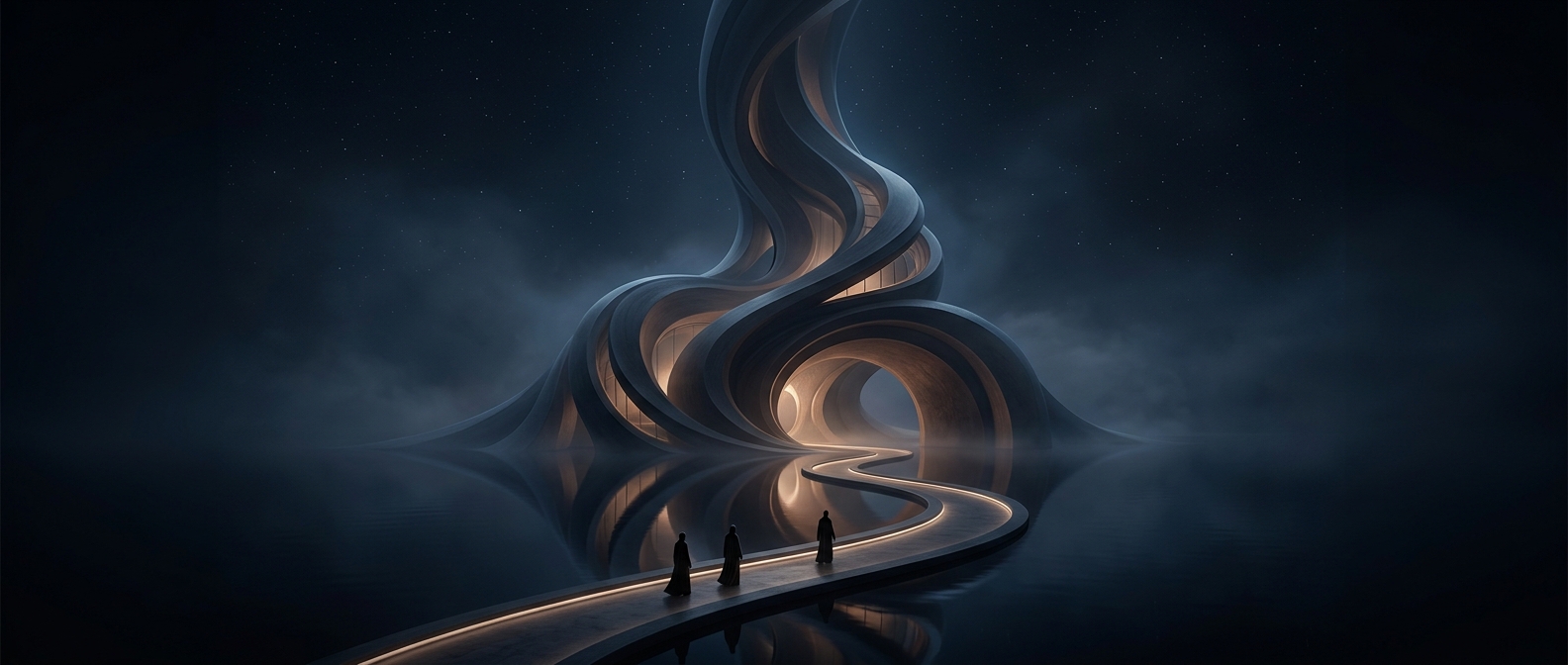
Why Some Beliefs Favor Curved Rooms
In some spiritual traditions and design beliefs, a room’s shape is thought to affect how unseen influences move through it. A sharp corner can be imagined as a pocket where negative energy or harmful presence gathers; a curved wall offers no point for it to collect. The curve is therefore more than a visual choice: it expresses a wish for movement, openness, and fewer stagnant places.
These ideas are not shared by every tradition, and they are beliefs about a space’s meaning—not established explanations of how buildings affect supernatural forces.
A Spiritual Idea With a Building Tradeoff
Corners are straightforward to lay out and build. Curved walls can require more careful planning and specially shaped materials or forms, so choosing them may add work. The design decision weighs that practical effort against the intended experience of the space: a room whose boundaries feel continuous rather than divided into angular pockets.
That makes the curve a visible expression of an invisible concern. Even where a corner would be simpler to construct, avoiding one can embody the belief that a space should leave fewer places for unwanted influences to linger.