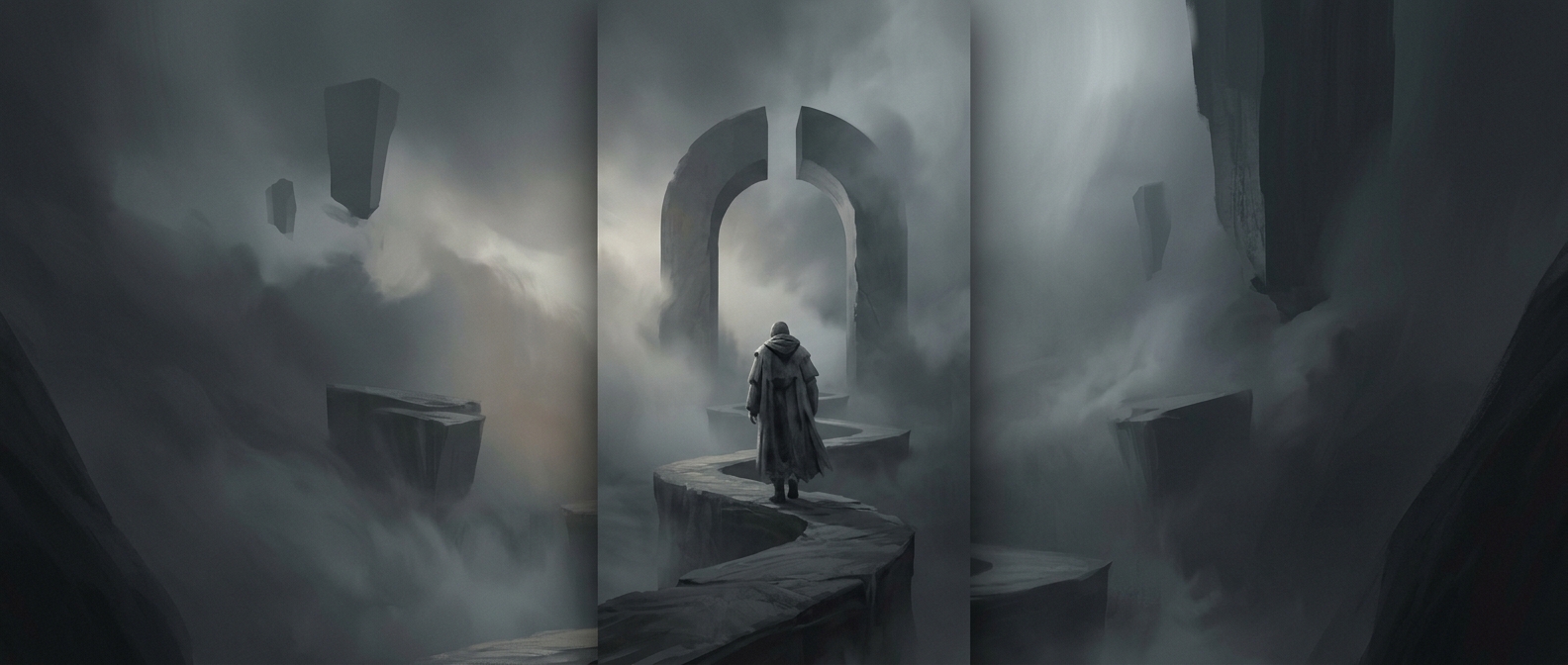
Why Gray Suggests Uncertainty
Gray is made by lowering the contrast between black and white, and that visual in-between helps explain its symbolic role. It does not announce a clear boundary: a gray area can be hard to classify, while a gray decision may resist a simple verdict of right or wrong. In stories and images, the color can therefore signal uncertainty without specifying what the uncertainty means.
Neutrality Has a Cost
That restraint can read as calm, impartiality, or distance. A gray setting may feel subdued because it offers fewer vivid cues about mood; a gray-clad figure may seem to stand apart from the emotional or moral conflict around them. But neutrality is not automatically goodness. Refusing to judge can look fair-minded—or like avoiding responsibility—depending on what is at stake.
This flexibility is what makes gray useful as a symbol of moral ambiguity. It leaves room for competing interpretations rather than resolving them. The same quiet color can suggest a thoughtful pause before judgment or a world in which no choice comes cleanly labeled.