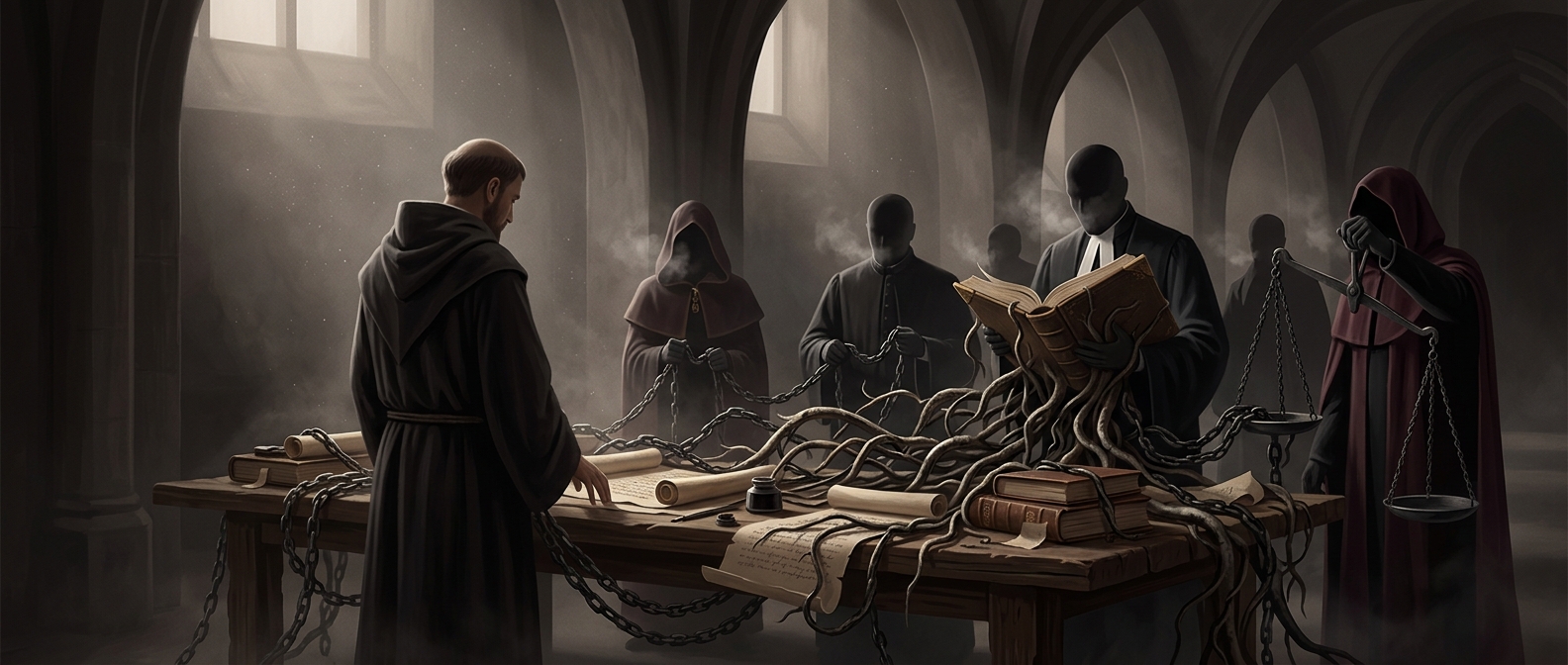
A theologian caught in the city’s accounts
“Tax audit” is a modern shorthand for a more local medieval problem: who controlled a piece of property, and which dues came with it? Monasteries and religious houses held land and buildings within towns. Those holdings could bring rents, fees, or other obligations, while the town had an interest in knowing what was owed and to whom.
Eckhart’s financial entanglements arose through his monastic chapter—the Dominican community he served—not simply from private wealth. When municipal authorities pursued property claims or unpaid dues, they were dealing with the chapter’s place in the town’s economic life. A religious institution could be devoted to prayer and still be a landlord, neighbor, and debtor.
Spiritual authority did not erase civic obligations
Medieval church communities and municipal governments had overlapping interests in land and revenue. Disputes over ownership or payments could therefore draw even a prominent religious figure into negotiations and scrutiny. “Audited” should not suggest a modern tax return or a routine inspection of Eckhart’s personal finances; it conveys the pressure of local authorities checking claims and obligations tied to property.
The episode makes an ordinary but revealing point: medieval religious life was embedded in the same material systems as urban life. A famous theologian could write about the soul while his community still had to account for what it owned—and what the town said it owed.