A film award shaped from a live model
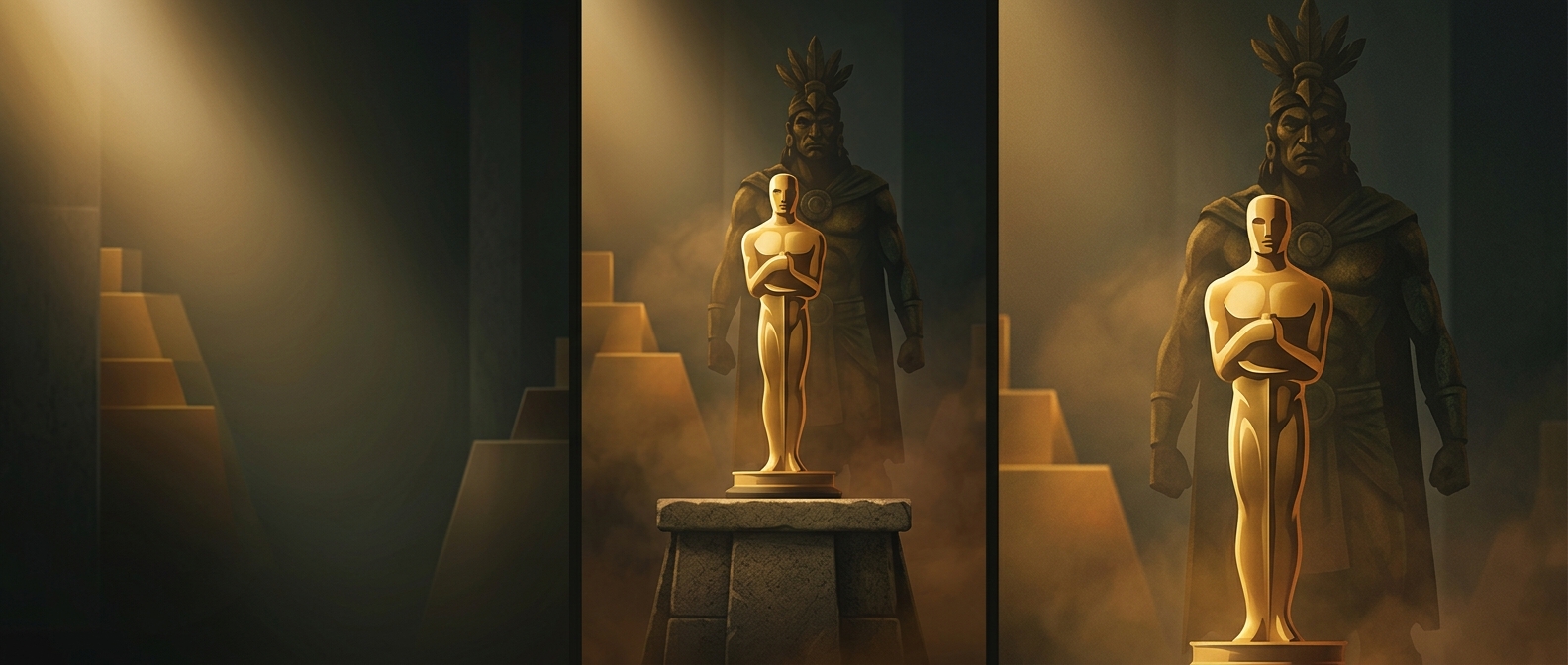
The Oscar’s design turns a few recognizable objects into a compact image of filmmaking: a knight stands with a sword on a reel of film. Cedric Gibbons, MGM’s art director, is credited with the design; according to the account, Mexican actor and filmmaker Emilio Fernández posed nude as its model in 1928.
A model gives an artist a real body to study—its proportions, balance, and stance—while the finished figure can become an idealized symbol rather than a portrait. So Fernández’s reported role is best understood as helping inform the statuette’s physical form, not as evidence that the knight was meant to depict him. The armor and sword belong to the award’s visual language; the model supplied a human reference beneath it.
From reference to symbol
That distinction helps explain how a person can shape an iconic object without being recognizable in it. The statuette preserves the idea of a human figure, but its meaning comes from the combination of knight, sword, and film reel. A living performer may have helped give the design its bodily foundation; the final award turns that foundation into an emblem of cinema.