A Soldier Punished for Choosing Family
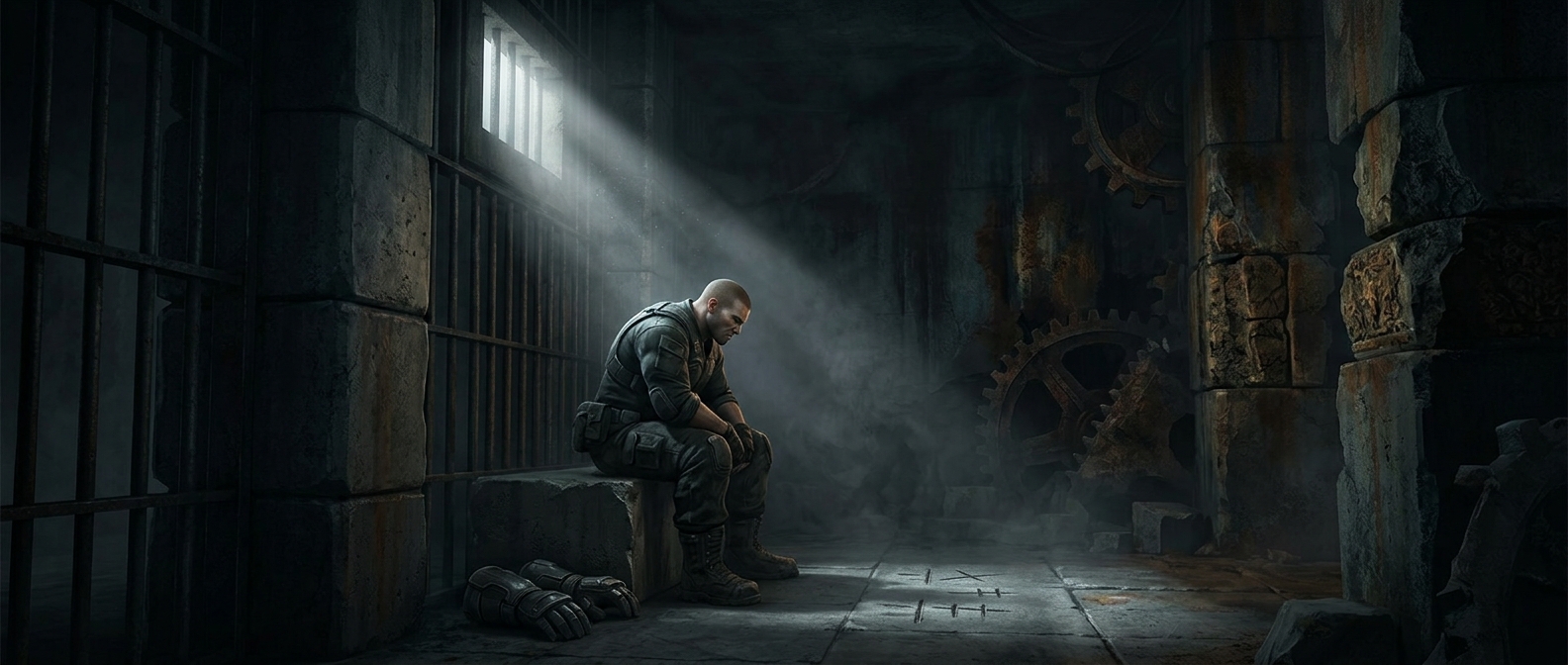
The opening of Gears of War makes Marcus Fenix’s imprisonment part of the conflict, not a detour from it. During the Locust invasion, he leaves his post to try to save his father, Professor Adam Fenix. The rescue is unauthorized, and the military judges the choice as desertion: Marcus has put a personal mission ahead of the orders governing a force trying to survive a planetary assault.
That decision gives the game’s central soldier a history before the player takes control. Marcus is not introduced as a fresh recruit eager to prove himself. He is a decorated fighter whose loyalty has already been tested—and whose idea of duty has clashed with the institution he serves.
The Emergency Reverses the Judgment
Years later, the war has grown desperate enough that the same military needs Marcus back. His old comrade Dominic Santiago comes to the prison to bring him into the fight. The reversal is practical rather than sentimental: the COG, the human military government, needs experienced soldiers, even if one of them was once condemned for disobeying it.
That setup quickly puts Marcus between two kinds of obligation. He has reason to resent the system that imprisoned him, but the people still fighting are also his comrades. The game turns that tension into a useful action-game premise: Marcus begins as an outsider to his own army, then must earn a place in a squad whose survival depends on cooperation. His prison release is therefore more than a convenient way to start the campaign—it makes his return to the battlefield a reckoning with the choice that put him behind bars.