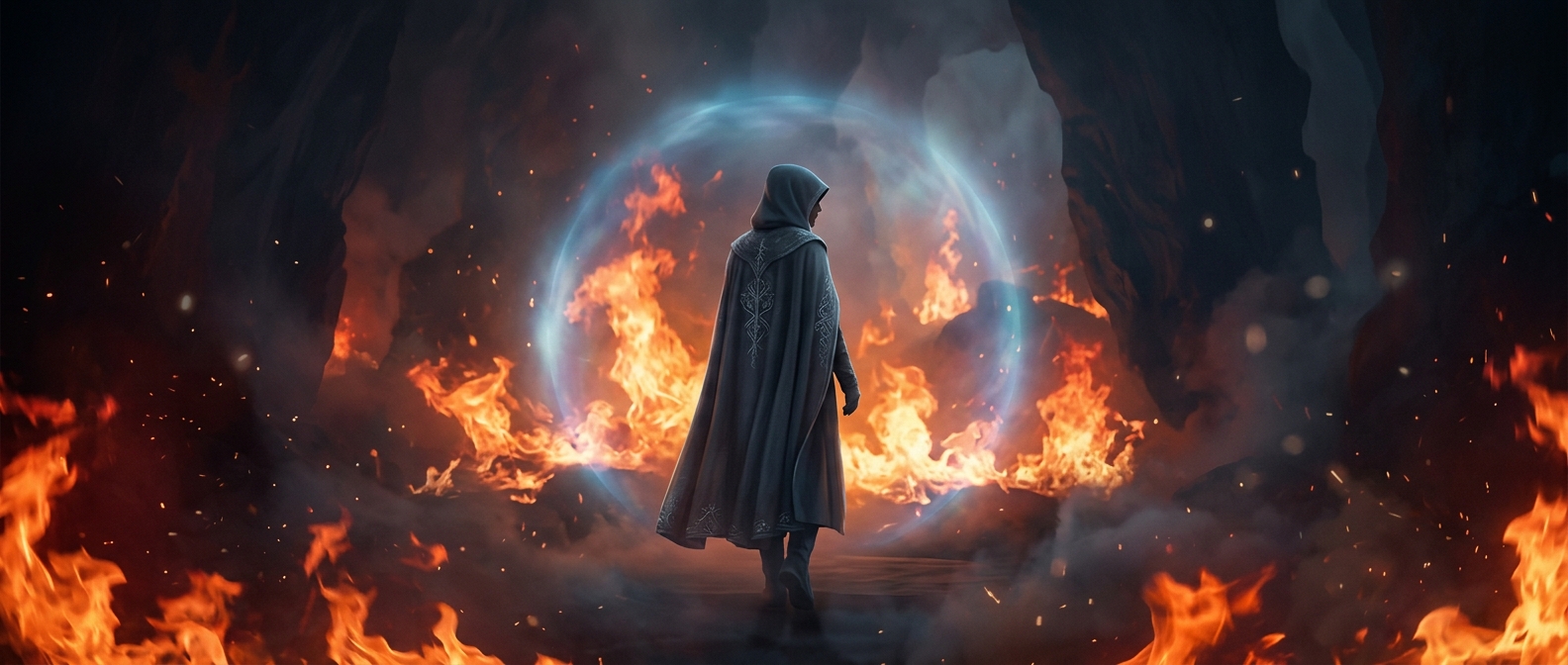
Why a Fire’s Appearance Isn’t the Whole Story
A fire can look uniformly fierce while exposing a person to very different conditions from one moment or place to another. Flames, hot gases, glowing embers, and ash transfer heat in different ways. How much heat reaches skin also depends on contact, movement, and how long the exposure lasts. A brief pass near flame is not the same physical situation as remaining in sustained contact with a hot surface.
That is why “blazing” alone cannot explain whether someone would be burned. To understand a report, readers would need details such as what the person touched, how long the exposure lasted, and whether the skin was protected. Without them, the story conveys an outcome but not the conditions that produced it.
What the Story Can—and Cannot—Tell Us
Accounts of extraordinary endurance may carry spiritual or communal meaning for the people who tell them. That meaning is part of the story, even when the practical circumstances are missing. But a description of someone emerging unscathed cannot, by itself, show that ordinary heat transfer was overcome; it leaves the crucial mechanism unspecified.
The distinction matters because fire is not a single, uniform force. The vivid image may be memorable, while the missing exposure details determine what the event can actually explain.