A controlled roughness, not a coating
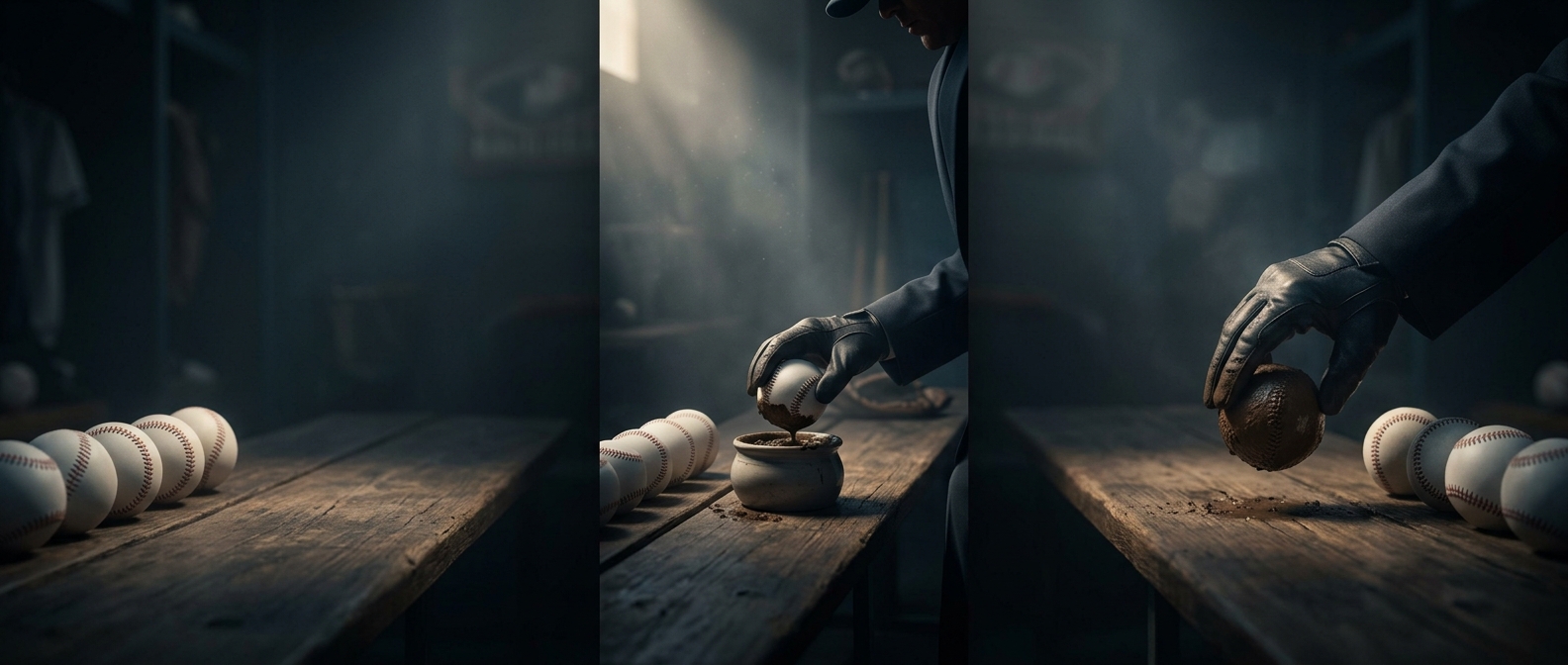
A fresh baseball’s leather is smooth and slightly slick. That matters most to a pitcher, whose fingers need enough friction to hold the ball securely and release it predictably. The rubbing mud works like a very mild abrasive: worked across the leather, it dulls the glossy surface and leaves it less slippery without the heavy scuffing that could damage the cover.
The goal is not to make every ball identical in feel, but to remove the factory-fresh slickness in a consistent, restrained way. Too little rubbing leaves the ball shiny; too much can darken or roughen it excessively. Officials apply the mud by hand and wipe away the excess, turning a new ball into one that is ready for play.
Why use mud at all?
A uniform preparation matters because pitchers handle the ball repeatedly, while the rules limit what they may add to it during a game. The mud provides a standard way to improve grip before play begins without relying on a pitcher’s own substance or technique. It is a small piece of equipment preparation, but it helps keep the ball’s feel from being an unpredictable variable.
The supply comes from a guarded New Jersey source, and the tradition is associated with Lena Blackburne, a baseball coach who found mud that could condition the leather without staining it badly or leaving grit behind. Its usefulness lies in that balance: the ball loses its slick shine, but remains a regulation baseball rather than becoming visibly coated or heavily altered.