A face can turn a shelf into a conversation
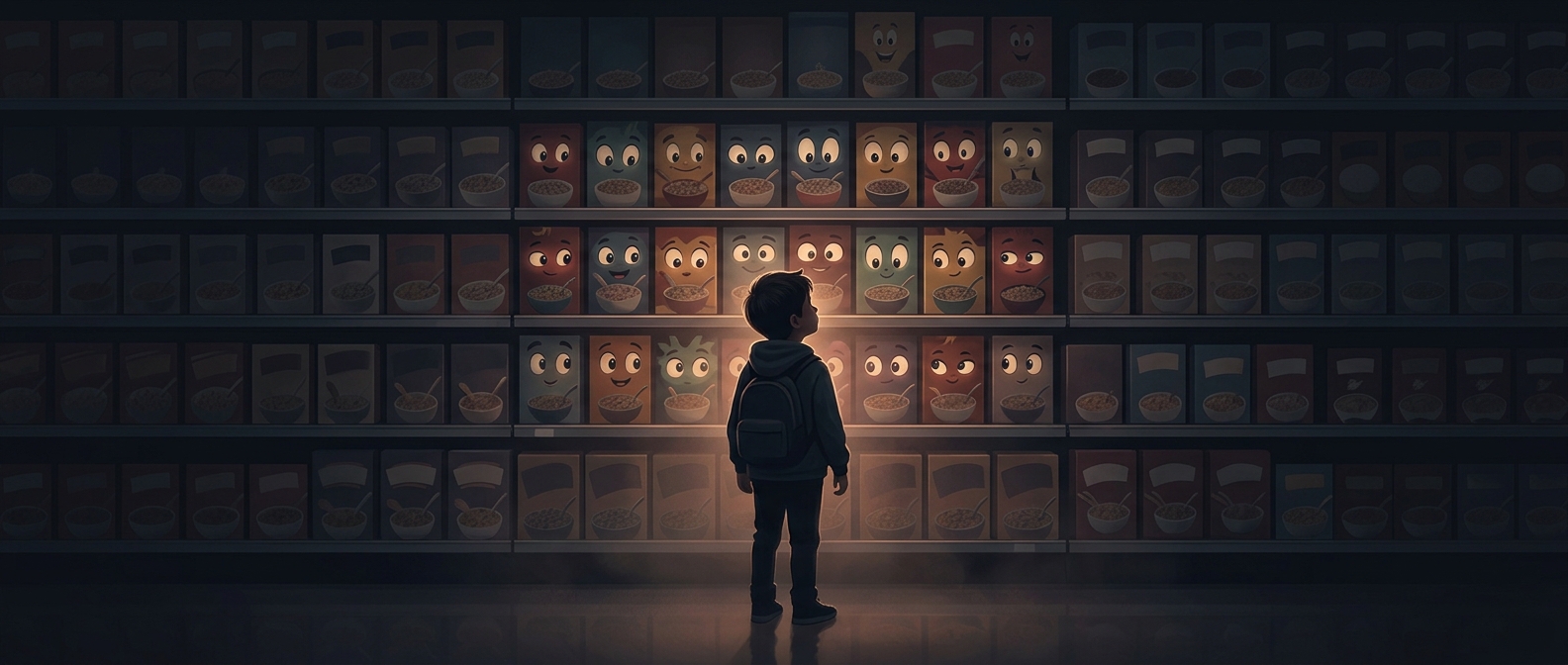
A supermarket shelf is crowded with competing colors, claims, and pictures. A mascot gives a cereal box something more direct: a face. People tend to notice faces, and a character looking toward a child can feel as though it is addressing that child, rather than merely decorating the package.
The downward gaze is a small design choice with a practical audience in mind. A child seated in a shopping cart often sees the lower part of the display from below, so the character’s eyes can meet the child’s line of sight. That makes the box feel less like an item chosen by an adult and more like something the child has encountered personally.
Attention can become a household choice
For a brand, that moment matters because grocery shopping is a shared decision. The child may recognize the character, point to the box, or ask for it; the adult still decides whether to buy it. Marketers sometimes call a child’s influence on a parent’s purchase pester power—the ability of a request to affect what ends up in the cart.
The mascot therefore does more than make a brand memorable. It helps the package compete for a child’s attention at the point when a choice is being made, while giving the child a reason to bring that choice to the parent. A tiny shift in a drawn pair of eyes can help move a box from unnoticed shelf decoration to a product the family discusses.