Why Flour Can Matter on a Candy Tax Form
A tax rule may sort snacks by legal category rather than by how sweet they taste. In some jurisdictions, groceries are exempt from sales tax or taxed differently from candy. The definitions can draw a surprisingly fine line: a chocolate-coated bar containing a baked biscuit may be treated differently from a solid chocolate bar, even if shoppers reach for both in the candy aisle.
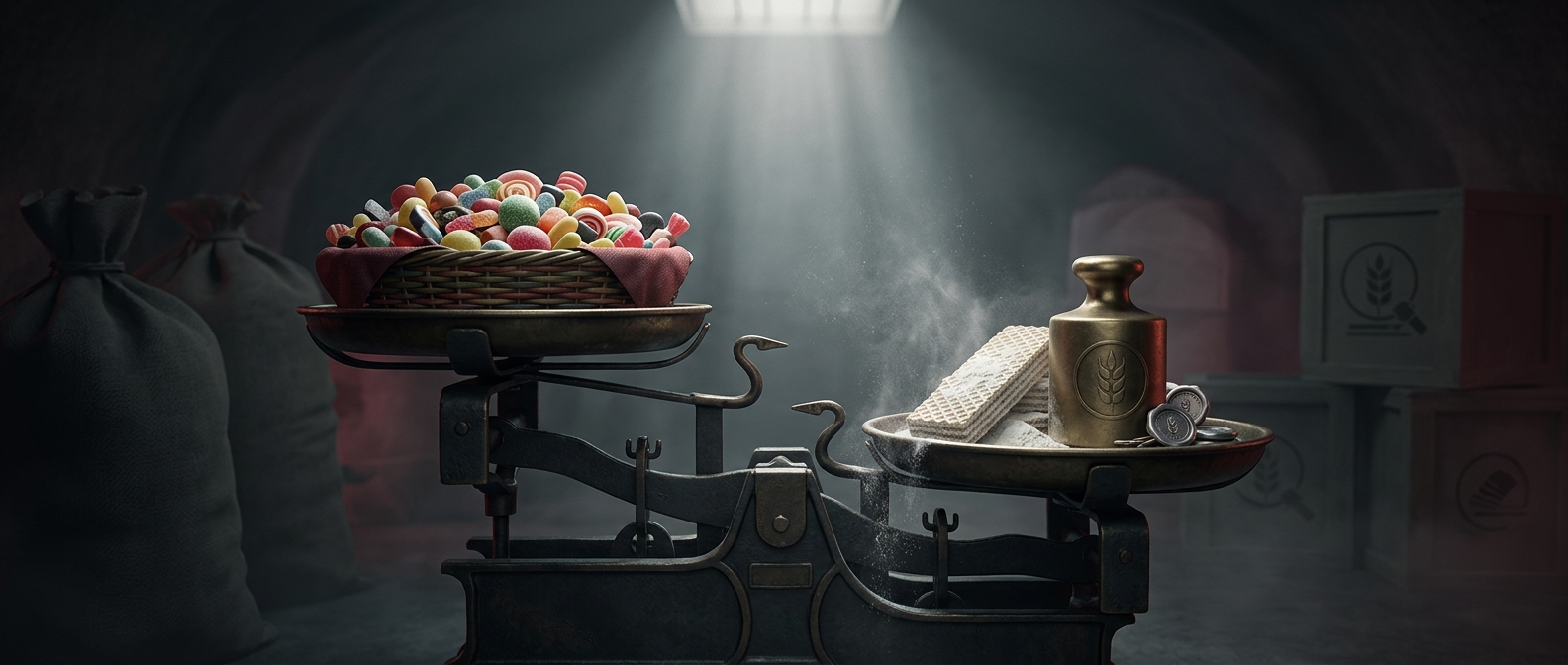
Flour can serve as a shortcut in that line-drawing. Some tax rules define candy in a way that excludes products containing flour. That gives a bar such as Twix—with its cookie layer—a possible route into a different category from a plain chocolate bar. The ingredient is not being judged for its nutritional value; it matters because the law uses it as part of a product definition.
A Small Ingredient, a Larger Classification
These categories affect how a seller rings up the purchase and how much tax a customer pays. A rule based on ingredients or product form is easier to apply than asking whether each snack feels “candy-like,” but it can create odd pairings: two similarly sweet treats may receive different tax treatment because one contains a baked component.
The result depends on the jurisdiction and its precise wording. A flour-based exception in one place does not establish a universal rule for Twix, KitKat, or any other brand. The memorable twist is that, under some tax systems, a crumb of biscuit can matter more to the checkout total than a mouthful of chocolate.