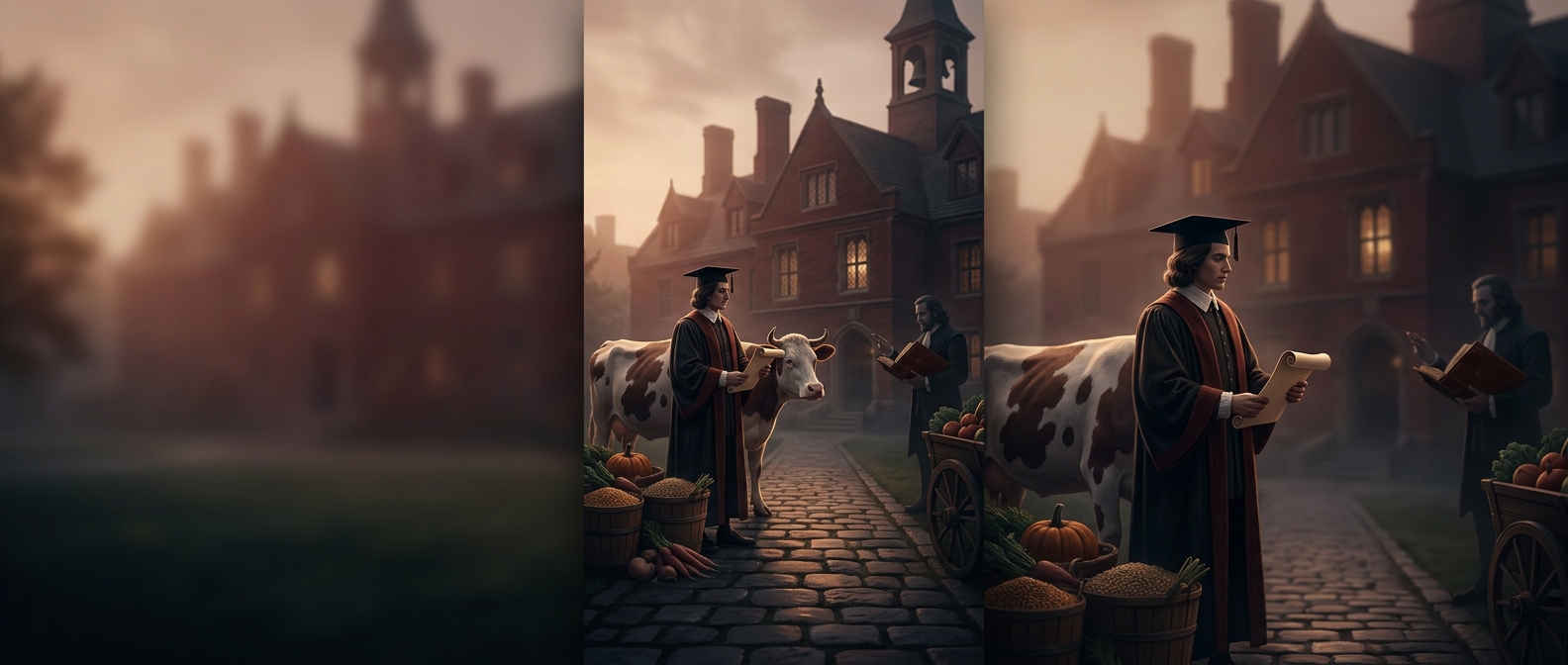
When tuition came with a cow
In colonial America, a bill did not always mean a student handed over coins. Cash was scarce, and families often had more access to food or livestock than to ready money. Harvard could accept useful goods in place of cash, turning a tuition obligation into something a household could actually provide.
That arrangement was a practical response to a thin money supply, not simply a quirky payment custom. A college needed resources to keep operating; groceries could be consumed, while farm animals could provide food or other value. In effect, the institution was willing to take payment in the forms available to its students’ families.
What an ailing animal could settle
The reported payment of a sickly cow makes the bargain especially vivid. It also hints at the uncertainty built into payment in kind: unlike coins, an animal’s value depended on its condition and usefulness. The cow did not have to be healthy to count as payment, but its poor state could affect what the college received in return for the bill.
The episode shows how tuition was shaped by the economy around the college. When cash was hard to come by, the boundary between a family’s farm and a school’s finances could be surprisingly direct: a student’s education might be paid for, in part, by an animal that was already in poor health.