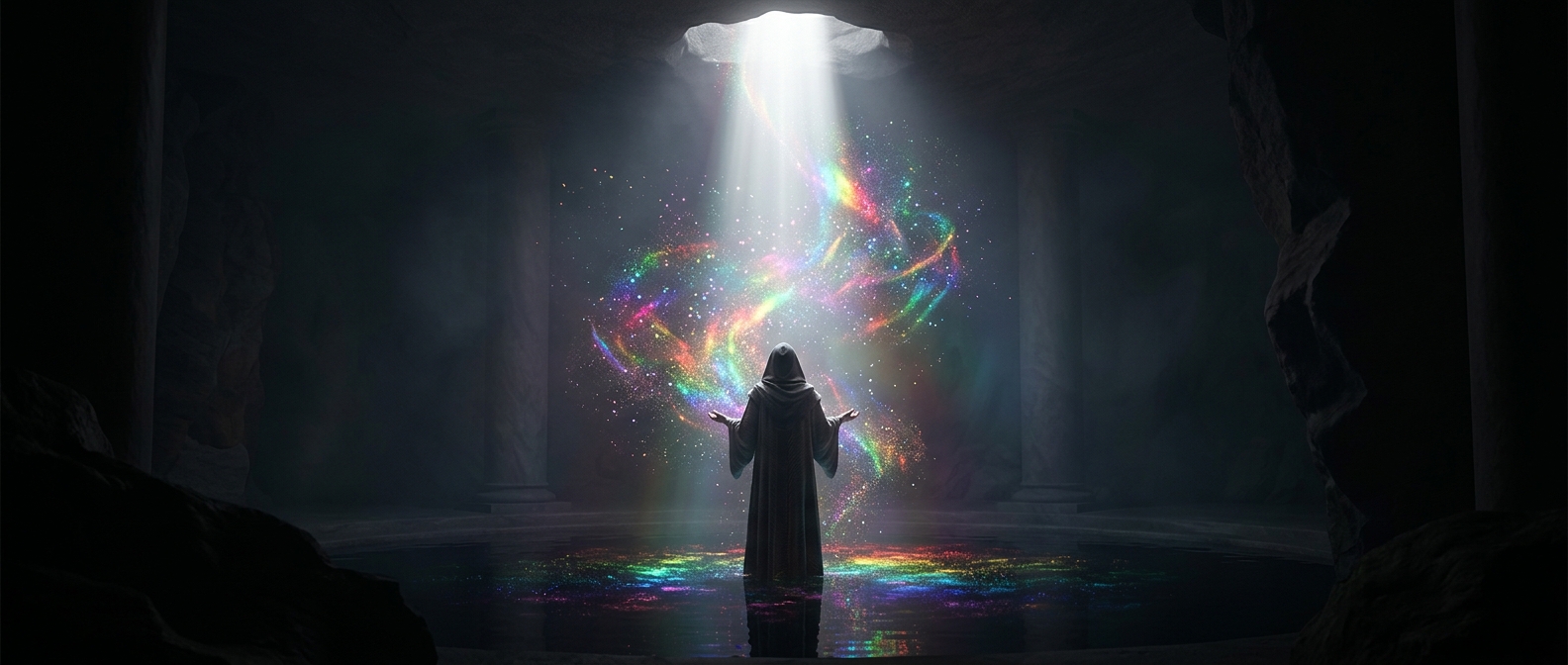
Why White Can Stand for Many Things at Once
White light offers a striking metaphor for unity: it appears as one undivided brightness, yet it can be separated into many visible colors. Mystical traditions that use white to represent unity draw on that contrast. Differences do not have to disappear for a whole to be formed; they can belong together within it.
The image also works in the other direction. A single beam can be understood as containing a range of colors that are not immediately visible as separate parts. Symbolically, white can suggest a shared source or underlying wholeness beneath apparent variety. That is a metaphor, not a claim that physics proves a spiritual doctrine.
Purity as a Symbol, Not a Measurement
White can also signify purity because people may read its brightness and lack of visible color as cleanliness, clarity, or freedom from contamination. These associations are cultural meanings, not properties that make white objects morally pure. The precise meaning depends on the tradition and setting; the color does not carry one universal message.
Together, purity and unity make white a compact symbol: it can evoke both an unblemished state and a whole made up of many parts. Its resonance comes from that tension—one appearance, many possible meanings.