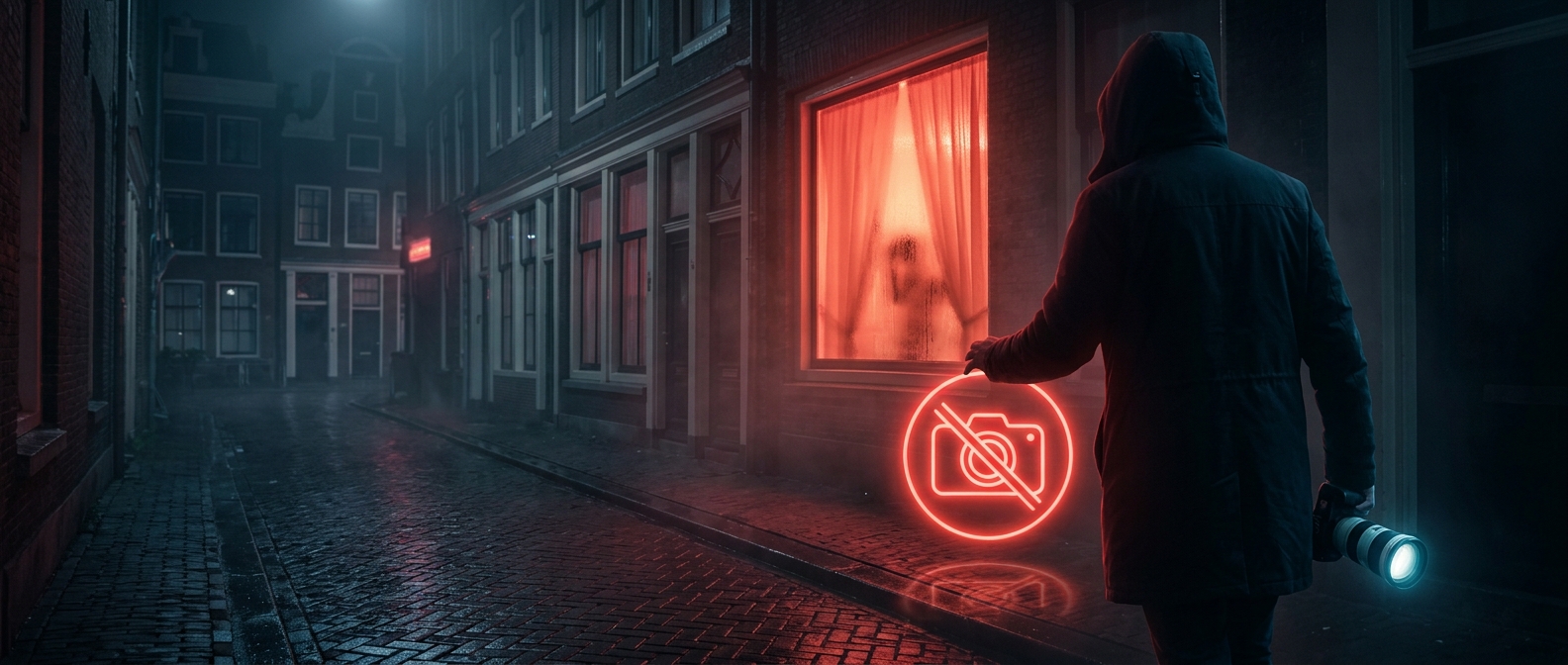
A visible workplace is not an invitation to photograph
Amsterdam’s red-light windows make the district’s work unusually visible: a passerby can see someone at work from the street. But being visible in that setting is not the same as agreeing to have a face or image recorded. A camera can turn a moment at a workplace into a picture that travels far beyond the street, potentially reaching family, acquaintances, or strangers online.
Regulation does not erase privacy
Sex work’s legal and regulated status in the Netherlands does not mean every interaction around it is welcome. The rules that govern the work do not amount to consent to be photographed. For the person behind the window, a camera pointed at them can feel less like ordinary sightseeing and more like an intrusion into a space where they earn a living.
That mismatch helps explain why photographing workers can provoke a sharp response. The district may draw visitors, but the people in its windows are not attractions. Treating the window as a boundary—and putting the camera away—recognizes that distinction.