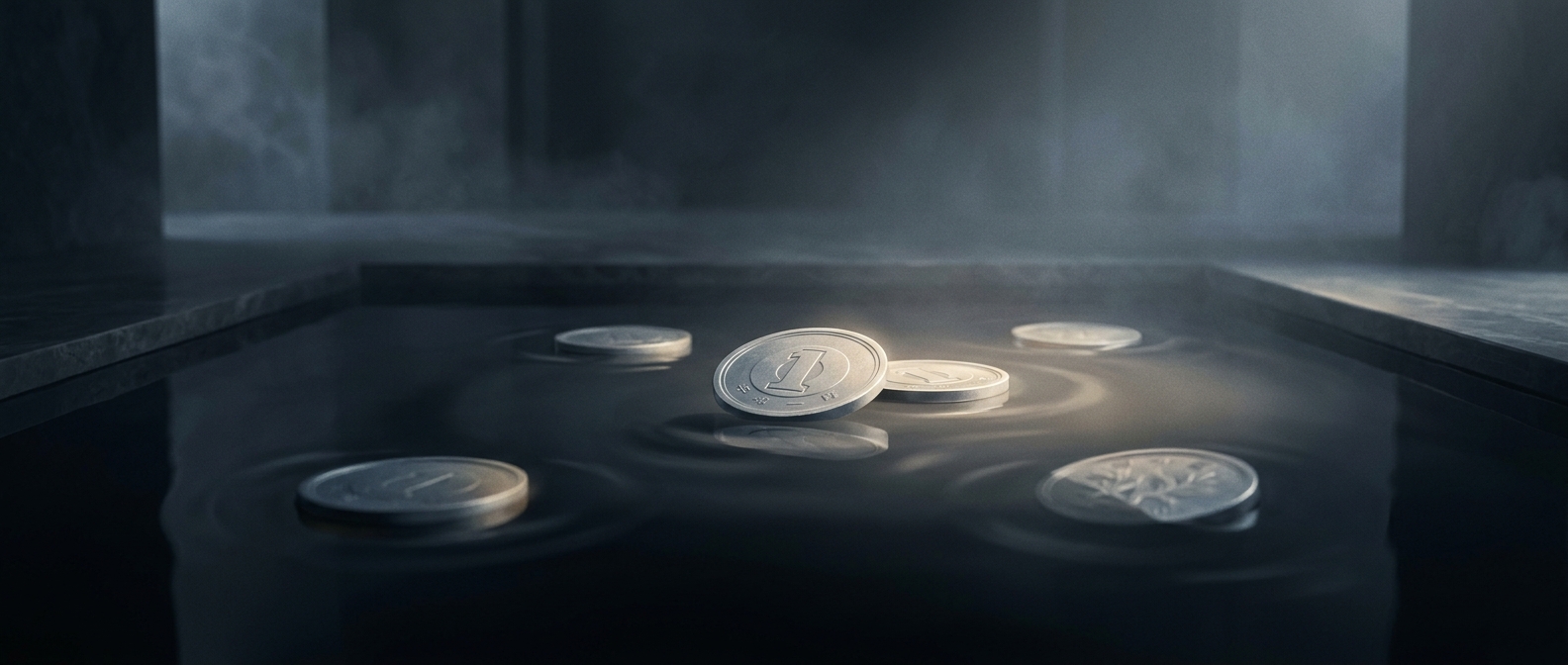
How a One-Yen Coin Can Rest on Water
Aluminum is denser than water, so a one-yen coin would sink if it were simply dropped in. The trick works because the coin can be supported at the water’s surface before it breaks through—not because aluminum suddenly becomes buoyant.
Water molecules attract one another. At the surface, that attraction makes the water resist being pulled apart, a property called surface tension. If the coin is lowered gently and kept level, the surface bends slightly around its edge. The resulting upward force along that edge can balance the coin’s weight.
Why the Placement Matters
The support is delicate. Dropping the coin gives it enough momentum to push through the surface, while tilting it can concentrate its weight at one point and break the water’s grip. A careful placement spreads the load around the coin’s perimeter, where the water’s surface can hold it.
Soap and other substances that reduce surface tension can make the feat harder. So can a ripple: moving water changes the shape and forces of the surface, disrupting the balance. The coin’s apparent float is therefore a temporary contest between its weight and the water’s ability to hold together at the edge.