Why a Quarters shot is harder than it looks
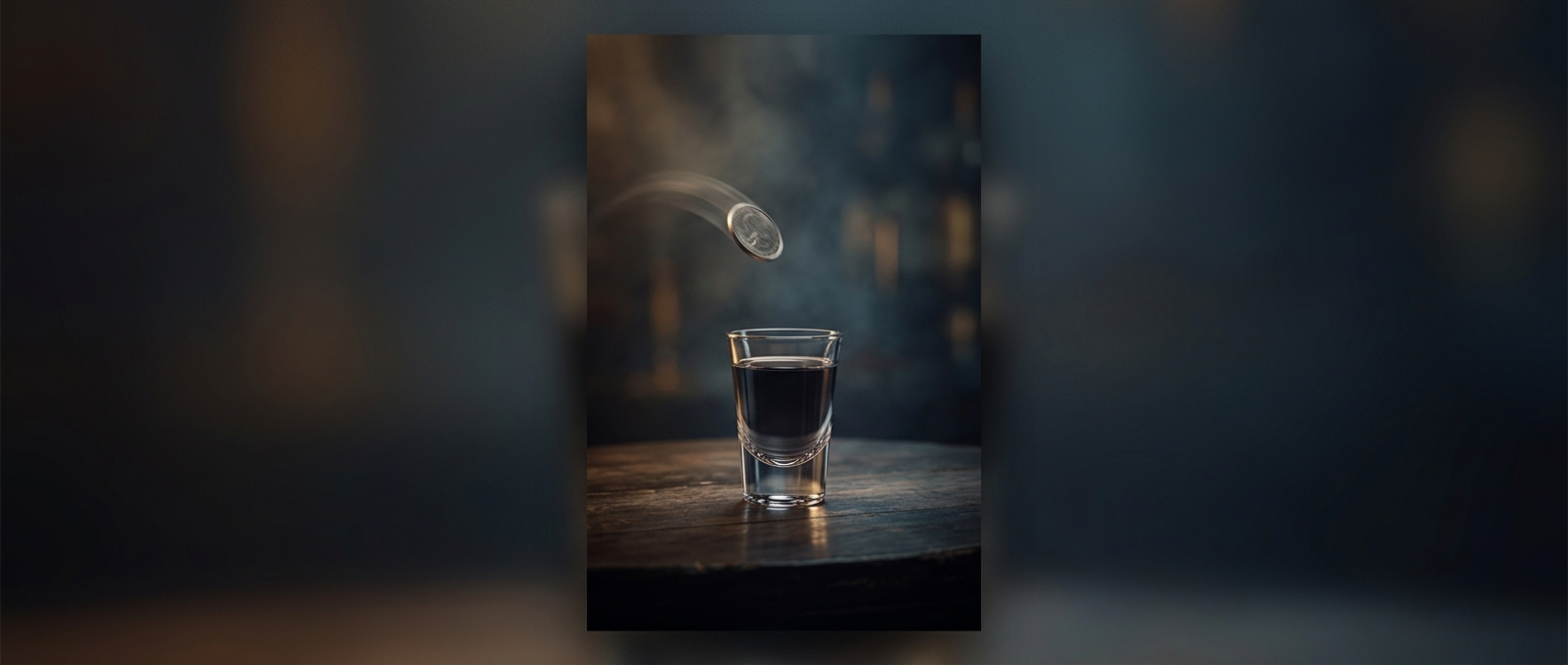
The challenge is not simply to aim a coin at a glass. The coin must strike the tabletop first, then leave the surface on a path that carries it over the rim. That first impact changes its motion: the coin loses some energy, and its angle and spin help determine where it goes next. A small difference in the bounce can send it short, wide, or skittering across the table.
What a drink-soaked table changes
A thin film of spilled drink can make the coin interact differently with the tabletop. Friction is the force that resists sliding between surfaces; more of it can reduce how far a coin skids and alter how its spin is transferred at impact. That may make the coin’s motion easier to control in some shots, but it does not guarantee a clean bounce. A patchy or tacky surface can catch one edge more than another and send the coin off course.
The result is a game of feel as much as aim. Players adjust how hard they flick and how much spin they put on the coin, using each miss to judge the table’s response. The glass turns a tiny change in force or contact into an obvious outcome: the coin either drops in, or the bounce makes its mistake visible.