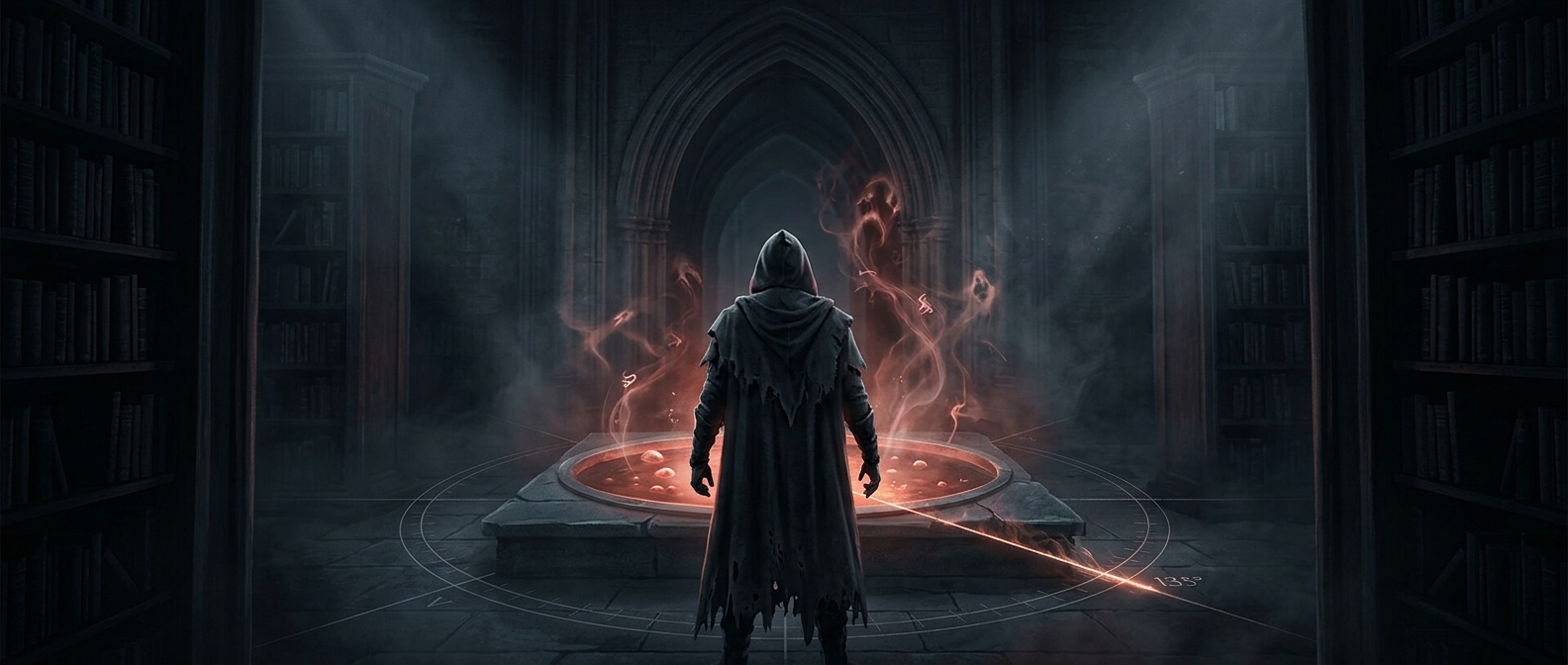
Why 135 degrees carries a sense of friction
Astrologers divide the zodiac’s 360-degree circle into angular relationships, or aspects, between planets. A sesquiquadrate forms when two planets are about 135 degrees apart—three-eighths of the circle. Its name reflects that geometry: it is one and a half times a 90-degree square, an aspect traditionally associated with friction.
That arithmetic helps explain the interpretation. The sesquiquadrate is often treated as a subtler, less obvious form of strain than a square. In an astrological reading, the planets involved represent different drives or areas of life; the aspect suggests they may rub against each other without producing an immediate, clear confrontation.
Tension that accumulates before it shows
The image is less of a sudden explosion than a pressure point. Someone might repeatedly accommodate a small annoyance, for example, until an ordinary inconvenience brings the underlying irritation into view. In astrology, the aspect can be read as a prompt to notice that buildup and address its source rather than focus only on the latest trigger.
The interpretation is part of astrology’s symbolic framework, not a scientifically established way to predict behavior. Its practical meaning depends on which planets are involved and how a chart is read. The memorable implication is that a minor flare-up may, in this tradition, point to a conflict that has been quietly accumulating.