The target is cheap; the experience is the product
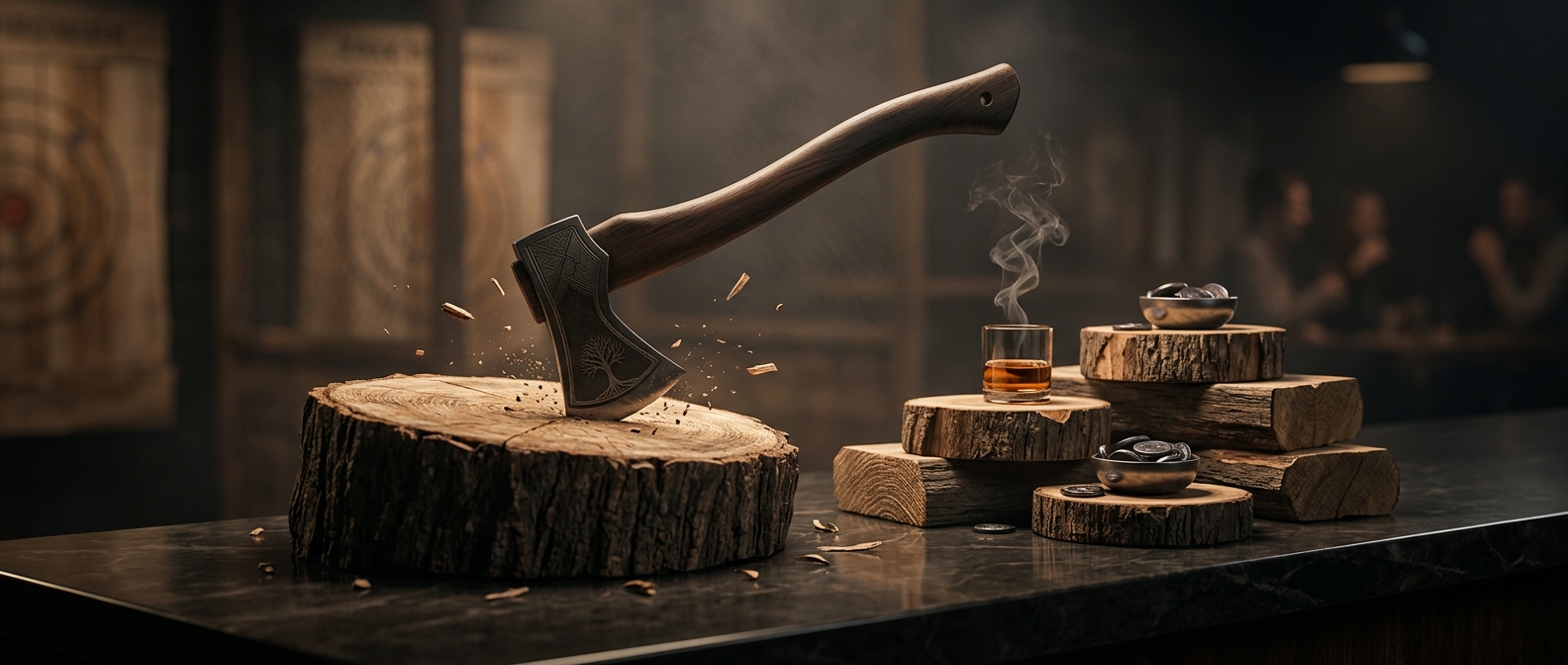
A throwing lane needs little specialized hardware: a sturdy target, a marked throwing area, and axes suited to the activity. That keeps the cost of outfitting a venue relatively low. But customers are not paying mainly for lumber or metal. They are paying for a reserved place to throw, time with a group, and an activity that feels novel enough to anchor an evening out.
That distinction changes the economics. A bar can sell access in timed sessions, often to several people sharing a lane, while the physical setup occupies far less space than a full restaurant or entertainment complex might need. The basic materials may be inexpensive, but each session still requires staff attention and a controlled layout.
Wear is part of the operating model
A target has to absorb repeated impacts, so its surface wears down. Replaceable boards make that damage manageable: the venue can maintain the target by changing the worn wood rather than rebuilding the entire lane. Axes also need inspection and upkeep, and the throwing area has to be kept clear and orderly.
The simple equipment therefore does not mean a hands-off business. Staff must explain how to throw and enforce rules that keep people behind the line and clear of the target. Those safeguards are essential to making a forceful activity workable in a social setting.
Low-cost materials, high-value occasion
The commercial advantage is the gap between the modest materials and the value customers place on doing something together. A group can turn a few rounds into a birthday outing, date, or team event, while the bar can earn additional revenue from food and drinks. The wood may be ordinary; the scarce thing being sold is a supervised lane and a memorable block of time.