Why obsidian makes a portal feel earned
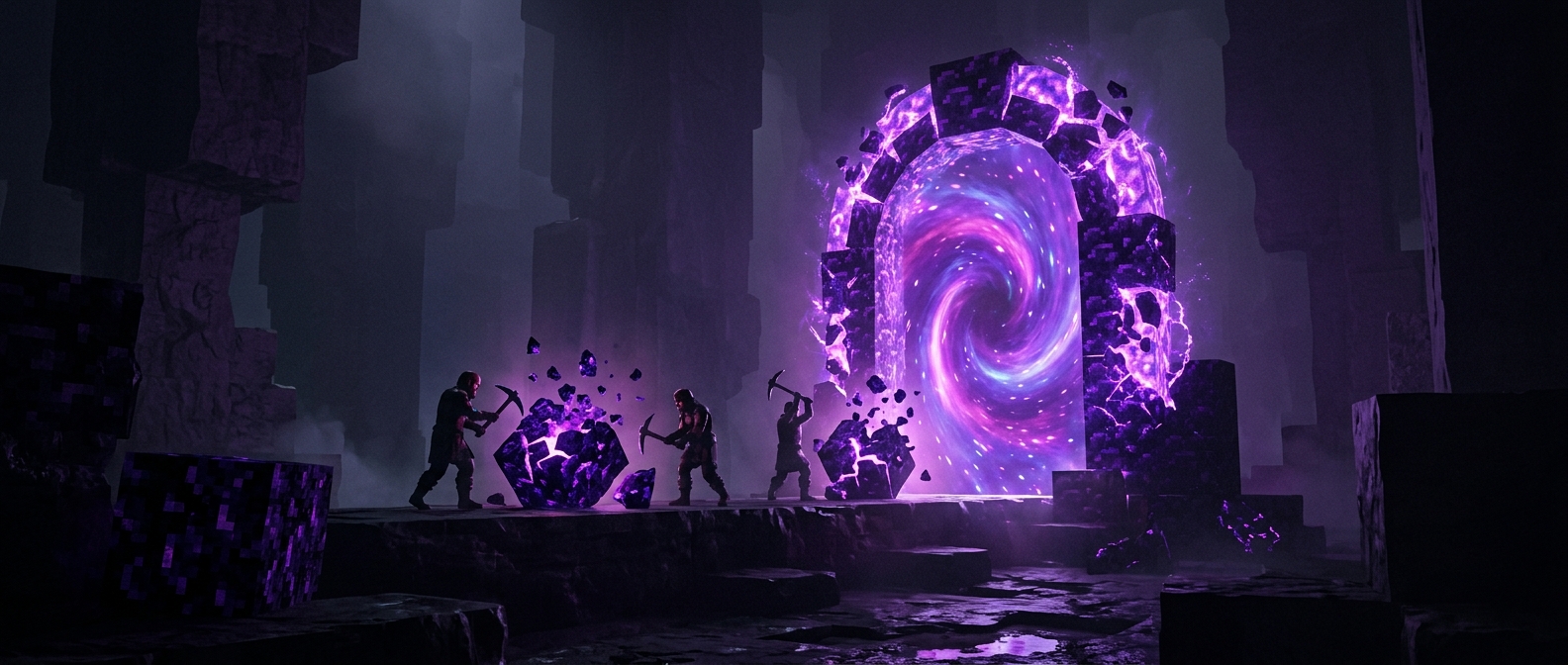
Obsidian is not just a dark building block: it is one of the game’s toughest materials to mine. Players generally need a diamond or netherite pickaxe to collect it; breaking it with a weaker tool does not yield the block. That makes a portal a small project rather than an instant doorway, especially early in a survival world.
The material can be made where water meets a source block of lava, then mined and carried back to a chosen site. Players can also use a lava-and-water technique to form the frame in place, avoiding the need to harvest every block first.
From frame to passage
A basic Nether portal has a rectangular obsidian border with an opening two blocks wide and three blocks tall. The four corner blocks are optional, so the smallest frame uses ten obsidian blocks. Once the player sets the opening alight—commonly with flint and steel—the game fills it with shimmering portal blocks. Stepping through transfers the player to the Nether, a dangerous dimension with its own terrain and resources.
That sequence gives the portal its practical weight: players must secure a rare tool, gather or carefully place a demanding material, and choose where to build a permanent route. The frame is also flexible enough to fit into a base or be made on an expedition, but its opening always signals a threshold between the familiar Overworld and a much riskier world.