A language built for a game world
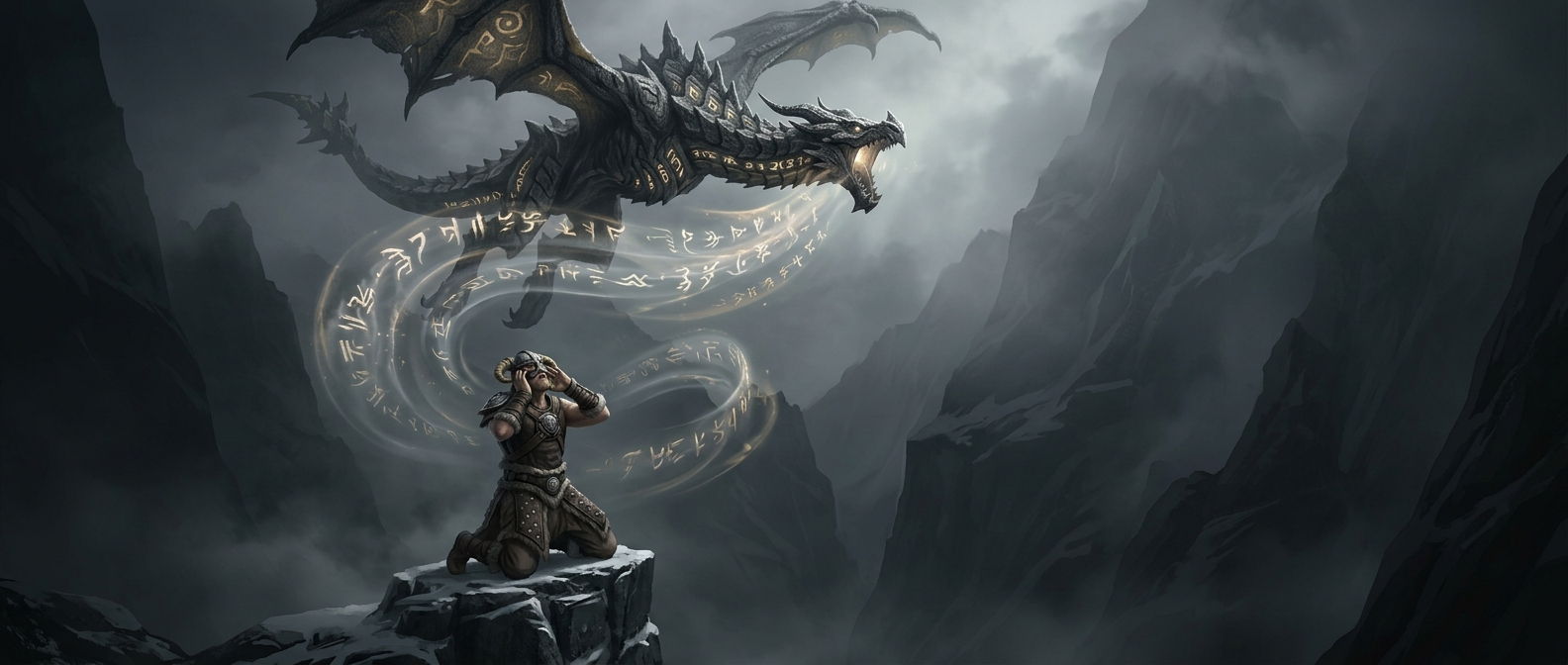
A dragon’s words in Skyrim are more than decorative marks: they belong to a constructed language, often called Dovahzul, with rules for forming phrases and a runic writing system. That distinction matters. A made-up alphabet can make a wall look ancient; a language lets the same words recur in names, inscriptions, and spoken lines, giving those details a shared logic.
From carved marks to spoken commands
The writing is designed to suggest scratches left by claws, tying the alphabet’s appearance to the creatures who use it. But each rune also stands for part of a readable system, rather than serving only as an illustration. Players can encounter the language in more than one form: carved into stone and heard in the dragons’ speech.
That overlap makes the language useful to the game’s storytelling. An inscription can hint that a place or phrase matters before the player understands every word; a spoken line can make the same invented vocabulary feel like something characters actually use. Repeated words and patterns give attentive players clues to notice, even when translation is incomplete.
Why give dragons grammar?
A consistent set of rules helps the language feel as though it exists beyond any one scene. The developers could reuse its vocabulary and writing throughout the world instead of inventing a fresh visual effect for every dragon-related object. The runes look like marks made by claws, but their recurring rules are what make them read as a language.