Why the Central Bank’s cash could be taken by taxi
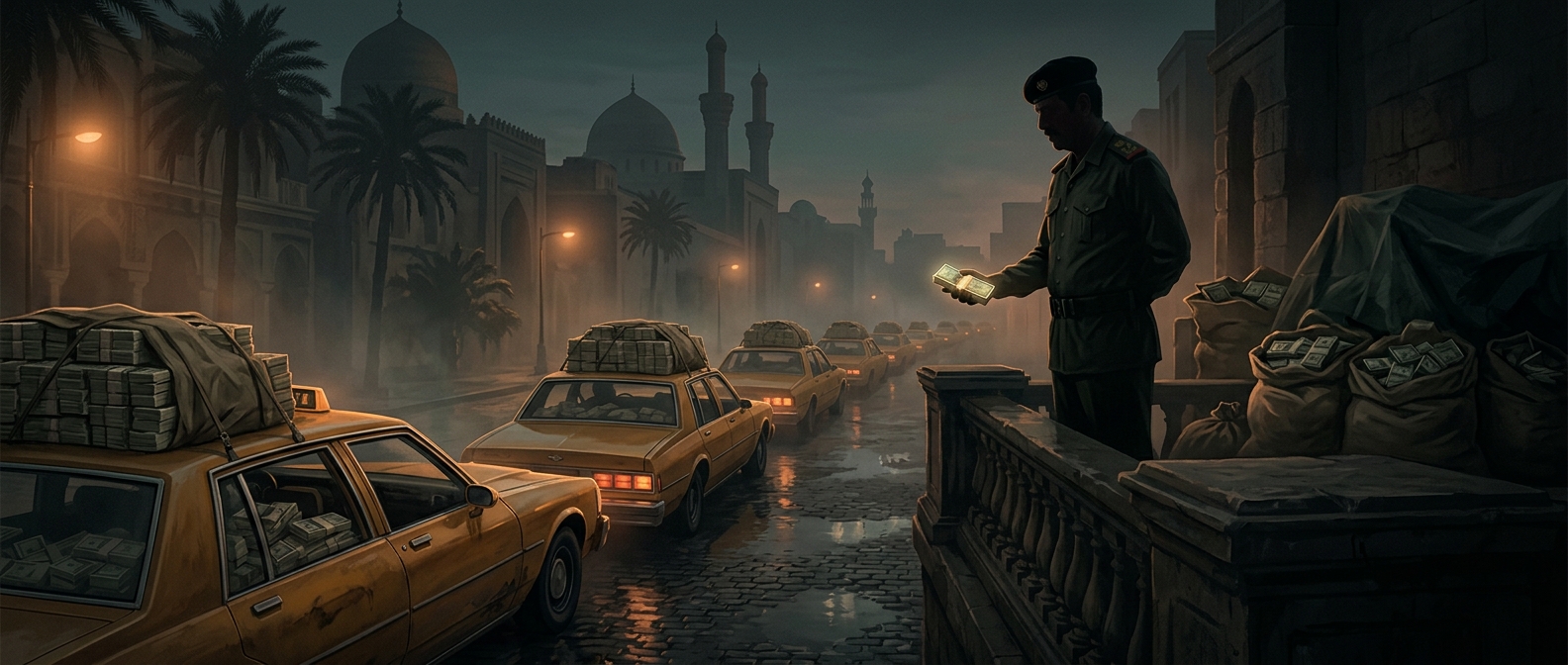
In the hours before the 2003 invasion of Iraq, Saddam Hussein sent his son to the Central Bank with a handwritten order to remove roughly a billion dollars in cash. The striking detail is not just the amount: it was a state leader using personal authority to turn public reserves into a hurried, physical pickup.
Cash made that possible. Unlike a bank transfer, which leaves a trail through accounts and payment systems, bundles of notes could be moved immediately, without waiting for an ordinary transaction to be approved. But cash is also bulky and difficult to transport. The reported order to load it into three taxis captures the urgency of the operation—and the extraordinary strain such a haul would place on ordinary vehicles.
A bank reserve became a regime resource
Central banks hold money to support the country’s financial system, not as a ruler’s private emergency fund. Taking large reserves out of the vault could deprive the institution of resources it needed to operate just as war threatened to disrupt payments, commerce, and public life.
The episode also shows how quickly formal safeguards can lose force when political power overrides them. A handwritten command from the country’s leader could accomplish what an ordinary customer could never do: direct the removal of an immense amount of public cash.
The cost of making money portable
Physical dollars offered one immediate advantage: they could travel with the people who controlled them, even if normal banking and communications faltered. The tradeoff was that the money became harder to secure, account for, or use safely. Once it left the vault, it was no longer supporting the bank’s ordinary functions—and its movement depended on hurried logistics rather than a traceable electronic record.
That is what makes the taxi detail so memorable: a national financial reserve was treated not as an institution’s safeguard, but as cargo to be loaded and driven away.